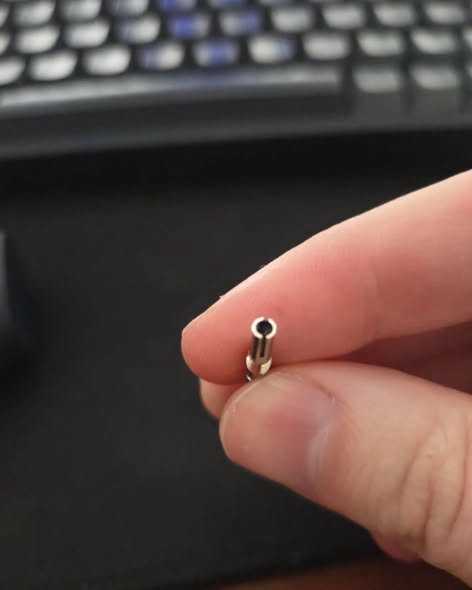
This tiny slotted collet tube grips pencil lead firmly with balanced mechanical friction.
You know that tiny, hollow silver cylinder rattling around in your junk drawer? At first glance, it looks like a loose screw or an obscure bicycle valve. However, that mysterious gadget is actually an authentic compass lead holder from your old school geometry set.
Back in math class, this micro-hardware held your graphite tight for technical drawing. Without it, your drafting tool instantly turned into a wobbly pair of useless metal legs. So, discovering one today is like finding a forgotten piece of personal history.
In fact, these precision metal collets still deliver reliable performance for modern sketch artists and woodworkers. Let us explore how this tiny mechanism works and how to restore it easily at home.
The Mechanical Design of the Compass Lead Holder
Most people assume a school compass relies on basic spring tension to draw arcs. However, the humble compass lead holder uses an ingenious split-collet design to grip brittle graphite. As a result, you get steady downward pressure without snapping delicate 2mm pencil leads.
Look closely at the tiny tip of this metal sleeve. You will notice two or four precision slots cut directly into the cylindrical barrel. When you tighten the side thumbscrew, those flexible metal tines pinch inward with balanced mechanical friction.
Consequently, the lead core stays centered along the exact axis of rotation. This design prevents graphite from wiggling loose while you rotate the tool across paper. Naturally, professional draftspeople relied on this exact mechanical principle for hand-drawn architectural blueprints for decades.
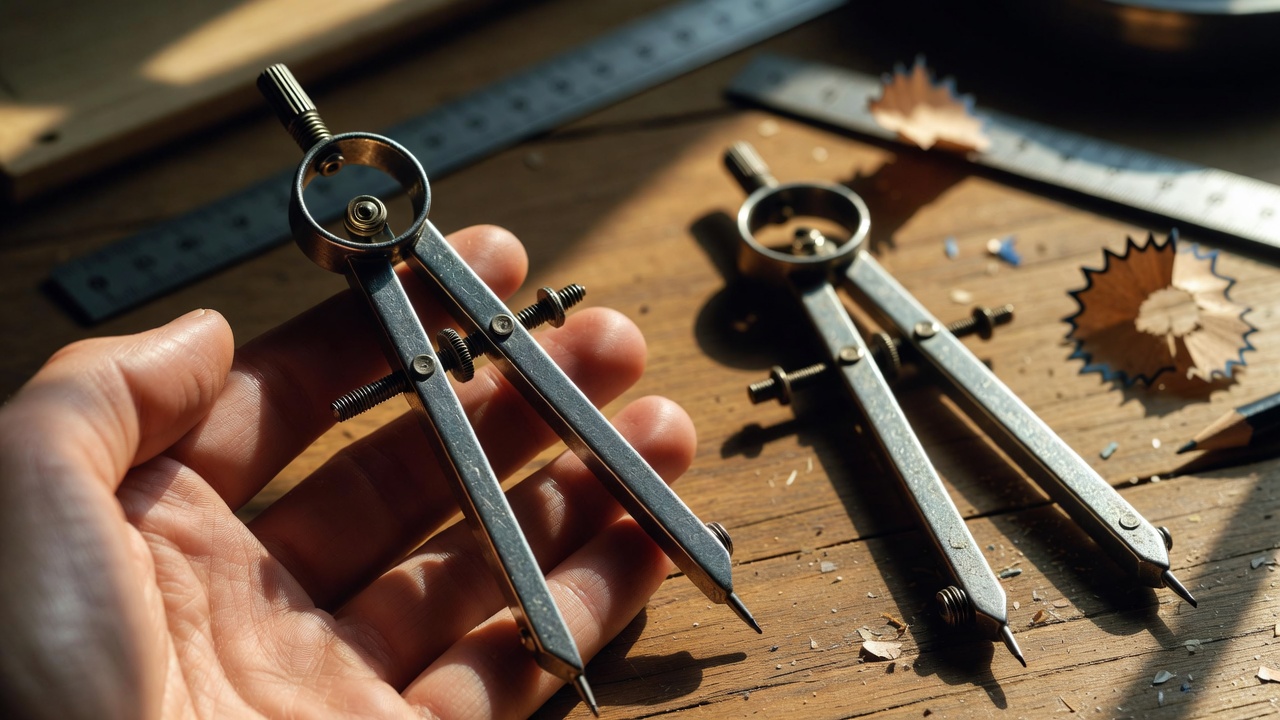
A solid metal bow compass relies on balanced thumbscrew tension to hold accurate drawing angles.
Furthermore, solid steel bow compasses distribute weight evenly across both sturdy legs. Therefore, turning the central adjustment wheel gives you micro-level precision down to the millimeter. In contrast, modern plastic compasses flex and warp under normal hand pressure.
Why School Geometry Kits Always Lost This Tiny Piece
Do you remember that classic translucent plastic case sitting at the bottom of your school backpack? It held a yellow plastic ruler, a clear protractor, and two metal scribes. However, that small metal collet slipped out of its molded slot almost immediately.
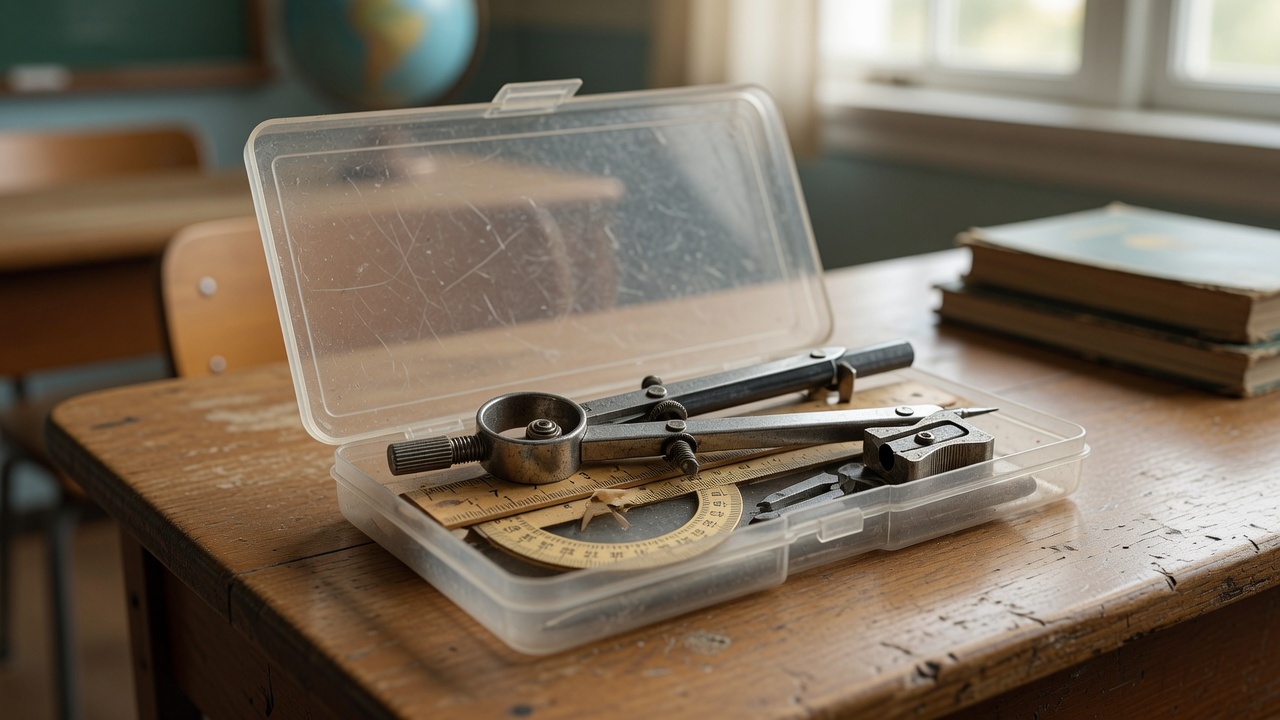
Classic school geometry cases held everything you needed, but tiny metal fittings easily slipped loose inside backpacks.
Because the lead clamp lacked a locked storage latch, it easily tumbled into desk cracks. Additionally, heavy classroom pencil sharpeners constantly shook the loose hardware during daily transit. As a result, millions of students resorted to messy tape fixes to finish homework assignments.
Naturally, shoving wooden pencils into empty metal clamps never produced neat circles. The uneven pencil weight threw off the balance and scratched deep gouges into notebook paper. So, keeping that original metal fitting was the only true way to get clean geometry marks.
How to Fix a Slipping or Jammed Graphite Lead
If you unearth an old geometry kit, the metal clamp might feel stuck or loose. Decades of dried graphite powder can easily lock the tiny mechanical threads in place. Fortunately, you can restore smooth clamping action with a few simple household maintenance steps.
First, unscrew the thumbscrew completely and soak the metal barrel in warm soapy water. This step dissolves old pencil wax, oil residue, and compressed graphite dust safely. Next, clean the inner hollow sleeve using a stiff nylon bristle or a clean sewing needle.
After drying, inspect the tiny flexible tines at the end of the collet. If the tines spread open too wide, press them inward gently with smooth needle-nose pliers. However, apply very light pressure so you do not crush the delicate hollow tube.
Finally, insert a fresh 2mm drafting lead and tighten the thumbscrew firmly with your fingers. For instance, standard HB or 2B graphite refills provide dark, smooth lines without excessive crumbling. Now, your vintage tool will hold graphite securely without slipping during fast technical rotations.
Modern Craft and Workshop Uses for Your Compass Lead Holder
Old drafting tools are definitely not just nostalgic relics for display shelves. Actually, artists, quilters, and woodworkers use vintage geometry tools daily for layout work. A well-maintained metal compass gives you tactile control that computer software simply cannot duplicate.
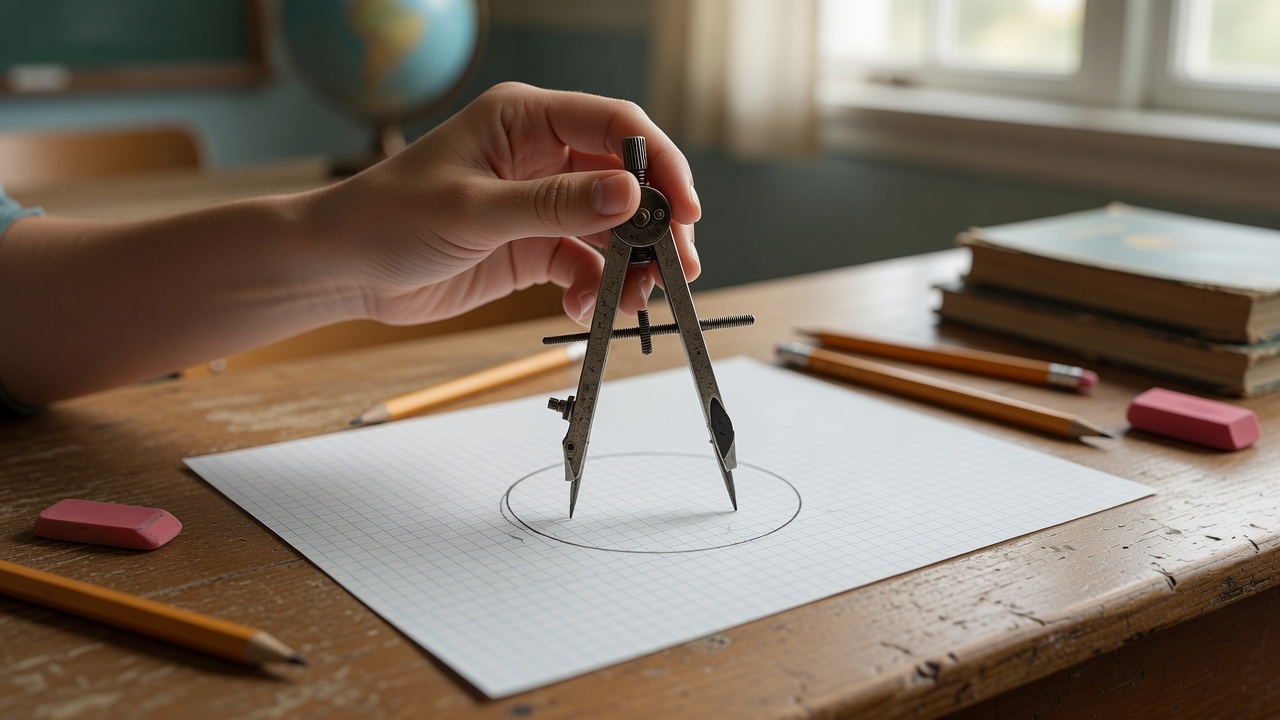
Drawing clean concentric rings on graph paper provides relaxing, tactile creative focus for artists and crafters.
For example, illustrators use sturdy drafting compasses to map out intricate geometric mandalas. The metal needle anchors firmly into graph paper without tearing the fibers. Meanwhile, the lead holder delivers uniform line weights across complex overlapping circles.
Likewise, home woodworkers use metal compasses to scribe curved joinery and rounded cabinet corners. Swapping soft graphite for a hard 4H drafting lead creates sharp layout lines on hardwood boards. Therefore, you get crisp cut lines that stay visible throughout cutting and sanding steps.
Furthermore, leather crafters use these rigid tools to mark evenly spaced stitch lines along edges. Because the metal frame resists flexing, your stitch holes stay completely uniform from start to finish. So, saving this vintage tool gives you a dependable layout instrument for countless workshop projects.
Smart Organization Hacks for Tiny Stationery Hardware
Losing small drafting attachments is frustrating when you are in the middle of a creative project. However, simple workspace organization methods keep your micro-accessories safe and easy to spot. Here are four practical organization tips to protect your vintage drafting accessories:
- Magnetic Parts Trays: Keep a small shallow magnetic dish on your craft desk to catch loose screws instantly.
- Clear Pill Organizers: Store extra graphite sticks, needle points, and metal collets in labeled daily compartments.
- Custom Foam Inserts: Cut dense craft foam to line your vintage metal storage tins neatly.
- Mini Zipper Pouches: Tuck full geometry sets into mesh pencil cases to prevent pieces from escaping into bags.
As a result, your drafting accessories stay organized, clean, and ready for immediate drawing sessions. Additionally, these storage solutions prevent loose metal points from puncturing canvas bags or scratching tabletop surfaces. Naturally, a well-organized art station saves you valuable time during detailed layout tasks.
Troubleshooting Common Compass and Collet Issues
Even sturdy vintage drafting tools encounter occasional mechanical hiccups after years in storage. Fortunately, you can fix most common compass problems in just a couple of minutes. Let us review three frequent issues and their quick, budget-friendly home solutions.
If your lead spins freely while drawing, the collet barrel is likely worn or stripped. To fix this, wrap a single layer of paper masking tape around the graphite stick before inserting it. This simple shim increases outer diameter friction and locks the lead tightly inside the collar.
When the center compass hinge feels loose, your drawn circles will drift out of round. However, tightening the pivot friction screw with a small eyeglass screwdriver restores firm leg resistance. In contrast, if the legs bind stiffly, apply a drop of mineral oil to smooth out rotation.
Sometimes the pointed steel anchor leg slips off smooth drawing paper during wide arcs. To solve this, place your drawing sheet over a soft rubber cutting mat or heavy blotter. The soft backing gives the metal anchor point a secure grip without punching large holes in paper.
Why the Compass Lead Holder Still Matters Today
In our modern screen-filled lives, working with analog drawing tools offers a deeply grounding sensory experience. The rhythmic click of metal legs and the clean scent of graphite connect us to timeless craftsmanship. Every exact circle reminds us that thoughtful engineering does not require batteries or complex digital apps.
So, the next time you spot a loose compass lead holder in a thrift shop or desk drawer, keep it. Clean the metal threads, load a fresh stick of graphite, and draw a few test rings on paper. You will instantly appreciate the dependable mechanical design that guided generations of young thinkers and creators.

Emma D. is the creator, administrator, and voice behind Forum Sever. With a deep-rooted passion for vintage charm and practical living, Emma shares thoughtful homemaking guides, creative DIY projects, heirloom gardening advice, and stories celebrating everyday nostalgia.
Whether reviving timeless family recipes, propagating backyard perennials, or transforming thrifted finds into cozy home centerpieces, her goal is simple: helping readers cultivate a warm, intentional, and handcrafted life. When she isn’t managing the community at Forum Sever, you’ll likely find her in the garden with dirt on her hands, a notebook by her side, and a warm cup of herbal tea nearby.