Reach your hand into your coat pocket or dig down to the bottom of your tote bag, and you can instantly tell what you are touching without looking. Your thumb brushes against a flat metal disc. You feel the crisp, serrated border of a quarter, distinctly different from the silky, rounded rim of a nickel or penny.
Most of us take that tactile texture for granted. We drop change into parking meters, feed vending machines, and toss shiny discs into entryway jars without a second thought. Yet if you have ever stopped to wonder, why do coins have ridges along their borders, you are tapping into a centuries-old tale filled with daring thieves, financial crises, and one of history’s greatest scientific minds.
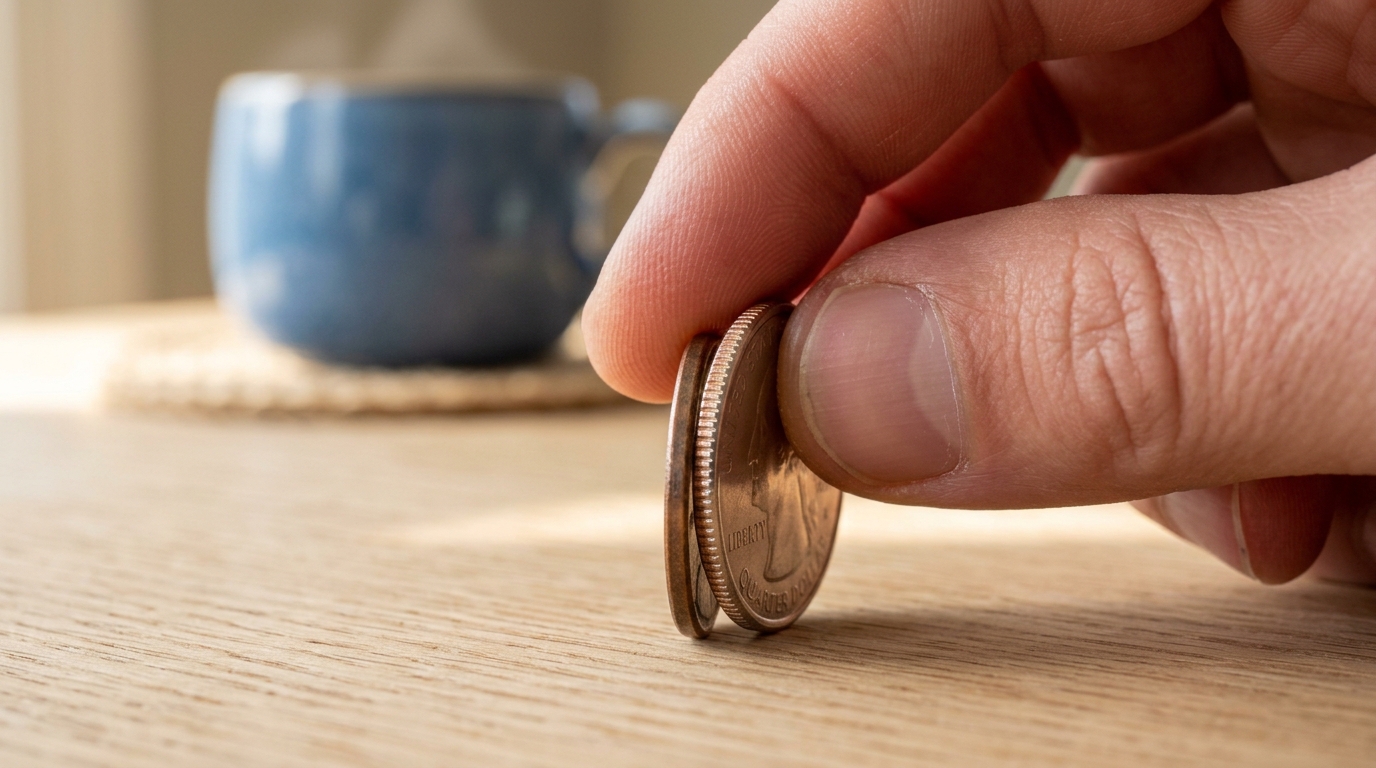
Running your finger along the rim of a quarter instantly reveals the serrated ridges designed to protect precious metal centuries ago.
Why Do Coins Have Ridges? The Great Theft of Ancient Shavings
To understand those tiny parallel grooves—known in coin-collecting circles as reeding—we have to step back to a time when money carried real, intrinsic weight. Before paper bills and digital bank accounts took over, coins were stamped directly from solid precious metals like sterling silver and solid gold.
A gold guinea or a silver crown had value because of the raw bullion melted into the coin itself. That physical value created a massive temptation for dishonest citizens. People discovered that if they carefully shaved or clipped tiny slivers of metal from the outer perimeter of a coin, they could hoard the shavings while still spending the damaged coin at full face value.
This dishonest practice became known as coin clipping. Shrewd operators would collect clippings from hundreds of coins, melt the shavings into raw ingots, and sell the metal to black-market dealers for a hefty profit.
Some unscrupulous handlers practiced “sweating,” placing hundreds of gold coins into a rough burlap sack and shaking it vigorously for hours. The tiny flecks of gold dust knocked loose at the bottom of the bag provided free wealth while leaving the coins looking merely worn down by natural trade.
Over time, clipped coins circulating through open markets became horribly deformed, lightweight, and ragged. Merchants lost faith in payments, shopkeepers refused worn currency, and international trade suffered because nobody trusted the stated value of the coins changing hands.
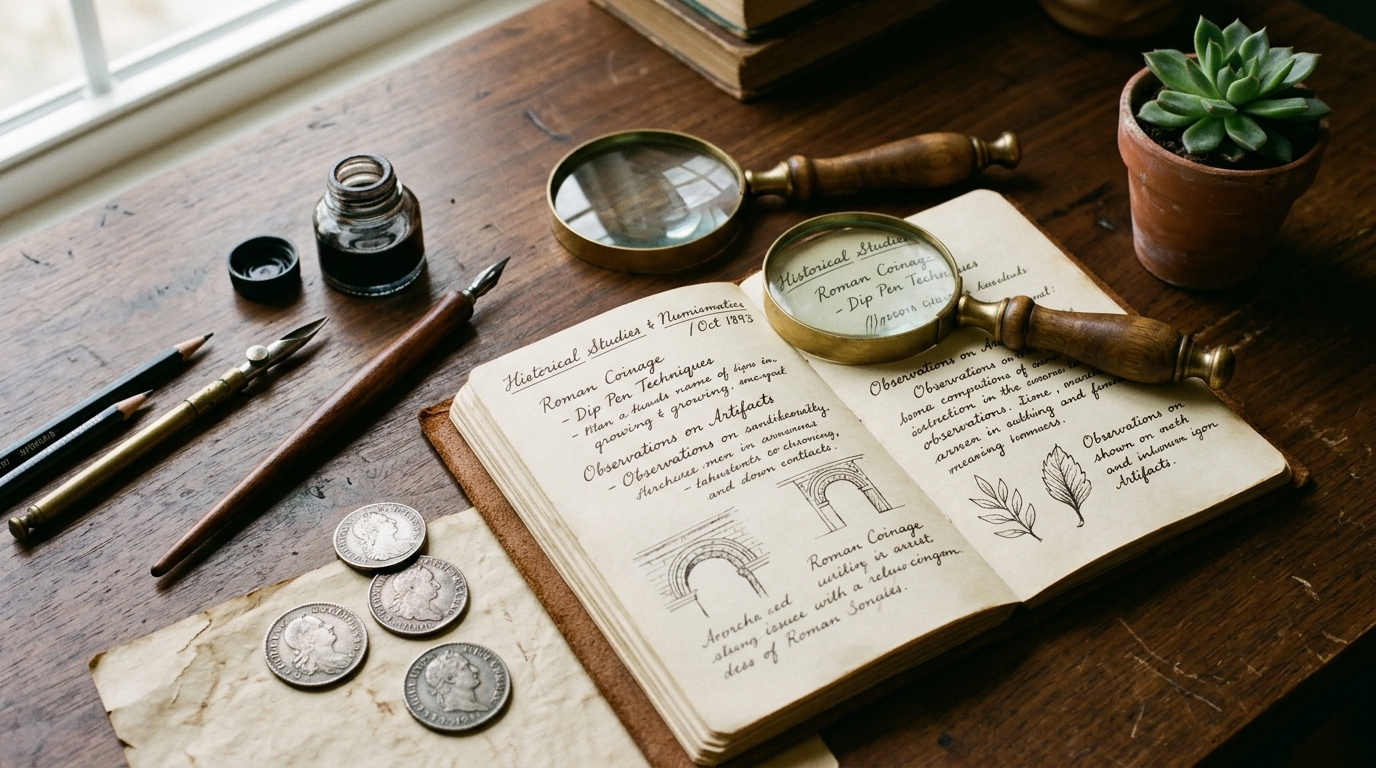
Milled coin edges were engineered during the late seventeenth century to outsmart counterfeiters and protect national currency.
Sir Isaac Newton and the Battle of the Royal Mint
By the late 1600s, clipping had grown so rampant in England that the entire economy stood on the brink of collapse. Harsh penalties, including public executions, failed to deter criminals because smooth-edged coins made it impossible to prove whether metal had been deliberately shaved off or simply worn away by years of handling.
Enter Sir Isaac Newton. While we usually remember him for his laws of motion and discoveries in optics, Newton took on a completely different role in 1696 when he became Warden—and later Master—of the Royal Mint in London.
Newton did not treat the job as a quiet retirement post. He went undercover into smoky taverns, gathered evidence against counterfeiters, and supervised the Great Recoinage. His goal was to replace every hand-hammered, irregular coin in the country with machine-milled currency that featured crisp, mechanical edge grooving.
Using specialized mechanical screw presses and edging collars invented by engineers like Jean Castaing, the mint began stamping coins with serrated patterns and embossed lettering directly into the metal rims. If a thief attempted to shave off even a fraction of a millimeter, the pattern broke instantly, alerting merchants that the coin had been tampered with.
The Exact Ridge Count on Your Everyday Pocket Change
Today, our pocket change is no longer minted from pure silver or gold. Modern American coins are struck from durable clad alloys of copper and nickel. Yet those traditional reeded edges remained, stamped with mathematical precision by industrial minting presses.
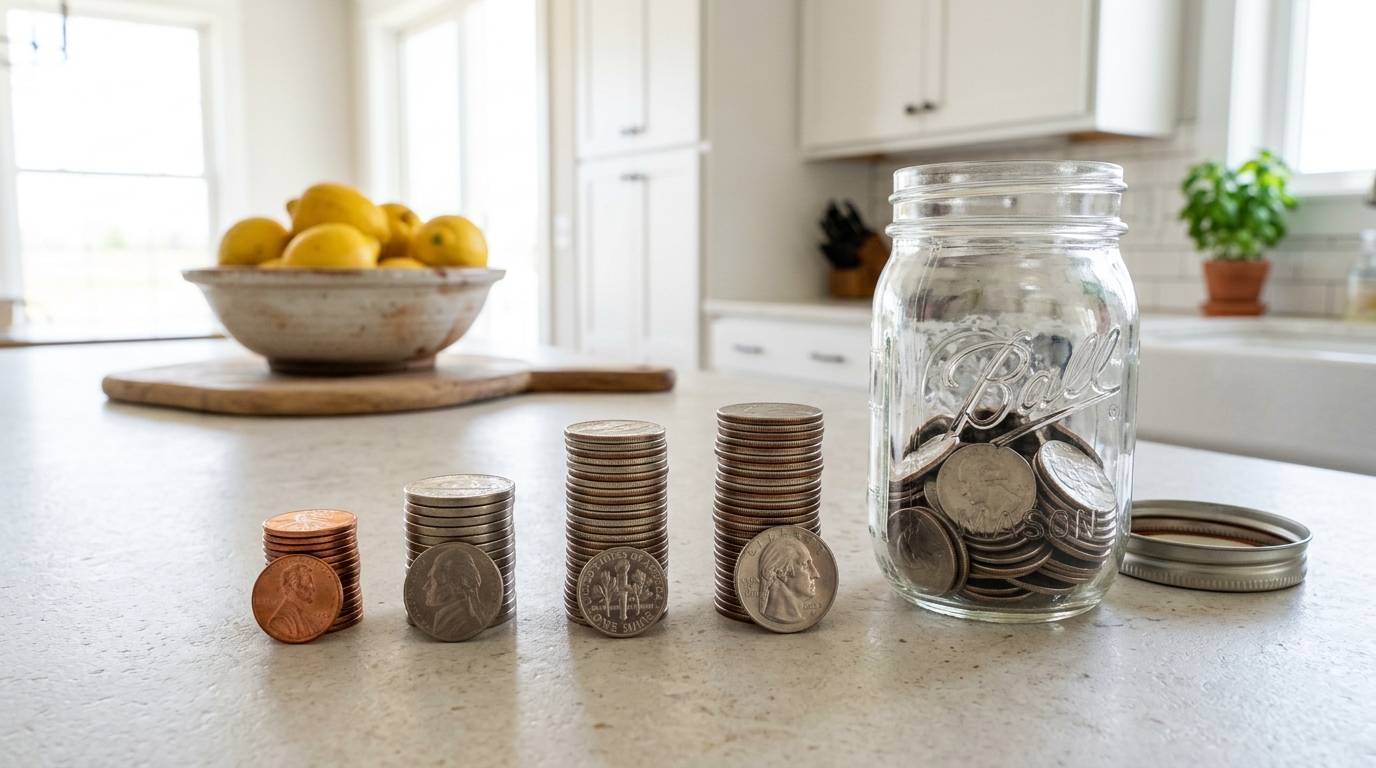
Stacking pocket change by denomination shows how size and edge texture work together for instant tactile recognition.
Each denomination has its own unique engineering blueprint:
- The Roosevelt Dime: Features exactly 118 ridges along its slender circumference.
- The Washington Quarter: Carries exactly 119 ridges, making it slightly coarser to the touch than a dime.
- The Kennedy Half Dollar: Boasts a grand total of 150 ridges around its broad rim.
- The Lincoln Cent and Jefferson Nickel: These coins have completely smooth edges with zero reeding.
Why do pennies and nickels skip the grooves? Historically, pennies were pressed from inexpensive copper and nickels from base metal alloys. Because the raw metal inside them was never worth the immense effort of clipping, the mint never needed to apply protective reeded collars to those smaller denominations.
Everyday Accessibility and Tactile Identification
While anti-theft security was the original reason for reeding, these textured patterns serve an indispensable purpose in modern daily life: accessibility. For visually impaired individuals, tactile feedback is the primary method for distinguishing different denominations without sight.
A penny and a dime are very close in physical diameter. If both coins had smooth rims, telling them apart in the palm of your hand would be frustrating and slow. Thanks to reeding, your fingertips can immediately confirm that the coin with the grooved edge is a ten-cent dime, while the smooth-edged disc is a one-cent penny.
The same logic applies to quarters and nickels. A nickel is thick and smooth, while a quarter is wider and distinctly ridged. This intentional tactile contrast lets anyone quickly identify loose change by touch alone, whether checking bus fare or reaching into a dark coat pocket on a winter evening.
How Vending Machines and Coin Sorters Read the Edges
Beyond human fingertips, modern automated machinery relies heavily on coin architecture. When you drop a quarter into an automated transit gate, a laundromat washer, or a snack machine, the coin drops through an intricate sensory raceway.
Inside the machine, mechanical and optical sensors check the coin in milliseconds:
- Diameter and Thickness Gauges: Precision rollers verify that the coin matches exact federal dimensions.
- Edge Friction and Roll Speed: The textured ridges create specific rolling friction along internal tracks, allowing mechanical sorters to verify proper speed and weight.
- Electromagnetic Sensors: As the coin rolls past internal coils, sensors detect its electrical conductivity and magnetic signature to ensure it is not a plastic token, zinc blank, or foreign slug.
Charming Ways to Organize and Use Loose Change at Home
There is something comforting about a jar filled with shiny pocket change. Instead of letting coins scatter across dressers or vanish into sofa cushions, you can turn your loose change into fun household habits and charming decor accents.

A simple ceramic catchall bowl near the front door turns everyday loose change into a tidy, functional drop spot.
- The Entryway Catchall: Place a shallow handmade stoneware bowl on your foyer console. Tossing daily change into a designated vessel keeps tables tidy while giving you easy access to parking coins when running out the door.
- Sensory Counting with Kids: Use a mixed bowl of change to teach young children tactile sorting. Have them close their eyes and separate smooth pennies and nickels from rough dimes and quarters to sharpen fine motor skills.
- Mason Jar Vacation Banks: Label a clear glass jar on your kitchen bookshelf. Watching coins accumulate over months of grocery runs creates an old-fashioned, visual reward for family weekend outings.
- DIY Indoor Plant Weights: Clean spare pennies and nickels make excellent weights to stabilize top-heavy flower vases or line the bottom of indoor planters to keep lightweight containers upright on breezy windowsills.
A Small Marvel of Everyday History
The next time you pull a quarter from your pocket, take a brief moment to run your finger along its textured border. Why do coins have ridges? Those small grooves began as an ingenious defense against medieval thieves, were perfected by Sir Isaac Newton during an economic crisis, and continue to serve us today as an essential aid for accessibility and automated convenience.
It is easy to look past the small objects we handle every day. Yet right there in your pocket, stamped into a few cents of metal, sits hundreds of years of human ingenuity you can feel with a single touch.

Emma D. is the creator, administrator, and voice behind Forum Sever. With a deep-rooted passion for vintage charm and practical living, Emma shares thoughtful homemaking guides, creative DIY projects, heirloom gardening advice, and stories celebrating everyday nostalgia.
Whether reviving timeless family recipes, propagating backyard perennials, or transforming thrifted finds into cozy home centerpieces, her goal is simple: helping readers cultivate a warm, intentional, and handcrafted life. When she isn’t managing the community at Forum Sever, you’ll likely find her in the garden with dirt on her hands, a notebook by her side, and a warm cup of herbal tea nearby.