Have you ever stumbled across a strange, heavy iron spoon in an old barn or flea market? At first glance, you might assume it once stirred thick stews over an open hearth fire. However, this heavy tool is actually an authentic cast iron lead ladle from the nineteenth century. In fact, bringing this mysterious object into your modern kitchen could cause severe health hazards.
Long before neighborhood hardware stores existed, rural families relied entirely on their own hands for daily survival. Therefore, homesteaders transformed raw scrap metal into essential hunting ammunition, fishing gear, and plumbing parts. In addition, these specialized ladles formed the backbone of every self-reliant homestead workshop. Understanding how early settlers used these tools reveals a fascinating story of American ingenuity.
The Mystery of the Heavy Spoon: What It Was Really Used For
Why Homesteaders Melted Metal at Home
During the eighteenth and nineteenth centuries, frontier families lived miles away from commercial trading posts. Consequently, running out of bullets or fishing weights meant going without food for days. Buying factory-made supplies was often far too expensive for average farming families.
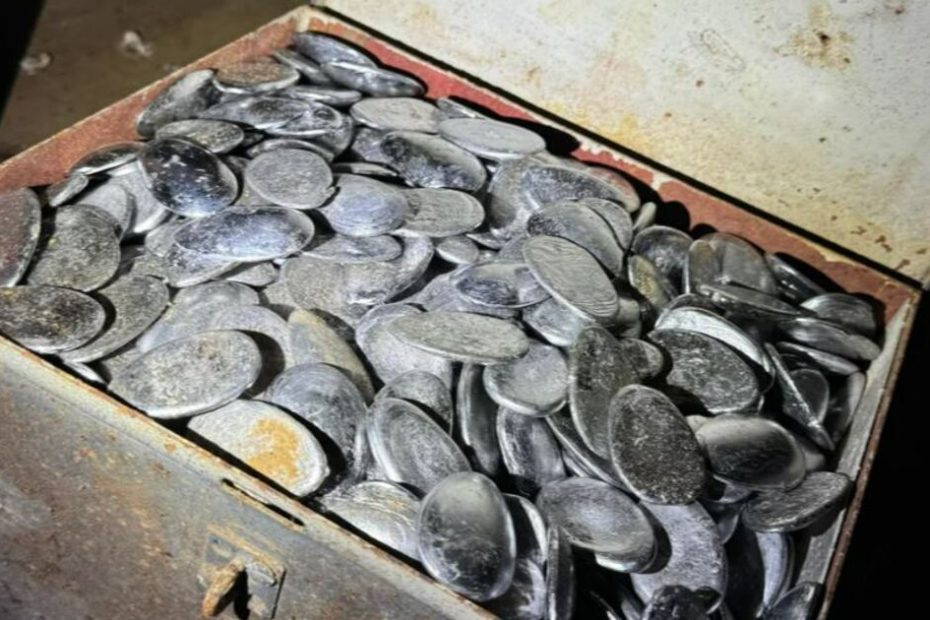
Therefore, settlers collected discarded lead pipes, wheel weights, and old scrap metal to melt down at home. They placed the metal pieces directly inside the iron bowl over hot stove coals. Within minutes, the solid metal melted into a shimmering, silvery liquid ready for pouring.
Homesteaders then carefully poured the molten metal into specialized iron bullet molds or sinker clamps. After cooling for several seconds, the mold popped open to reveal fresh projectiles. As a result, a single small ladle kept a family well-supplied with food all season long.
Casting Fishing Sinkers and Pipe Joints
Beyond hunting ammunition, these sturdy tools served numerous practical tasks around the homestead. For instance, coastal and lakeside families cast custom lead sinkers for their heavy fishing nets. They shaped split-shot weights and anchor sinkers right beside their workbenches.
In addition, pioneer builders and early plumbers relied on these ladles to seal heavy cast-iron water pipes. Workers heated lead over portable furnaces and ladled the liquid into pipe joints packed with oakum rope. The cooling metal expanded slightly, creating a completely watertight plumbing seal.
Furthermore, early printers used handheld ladles to cast fresh metal type blocks for local newspapers. Thus, this simple iron scoop supported communication, food gathering, and home construction across early America. It was truly an all-purpose tool for everyday frontier survival.
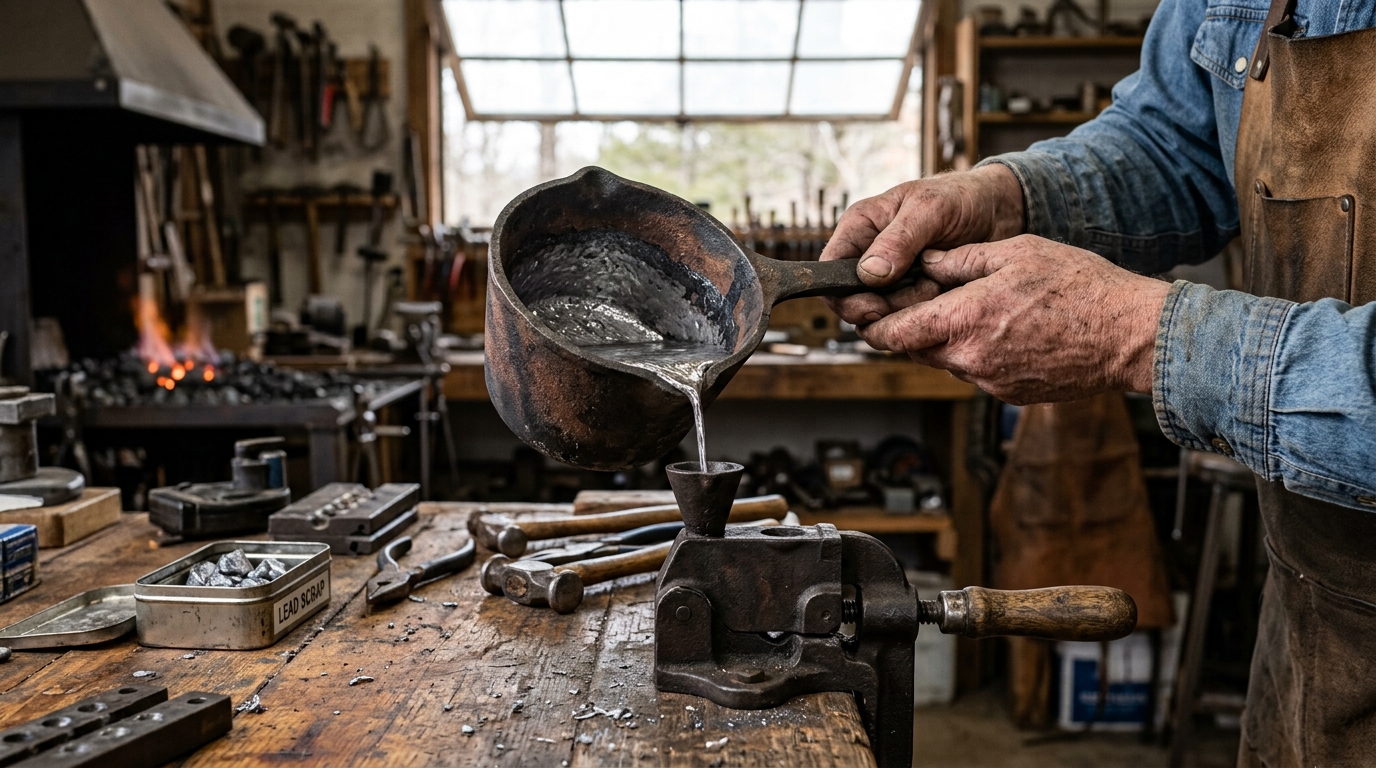
Early homesteaders used heavy iron ladles to melt scrap lead over open coals for bullets and fishing sinkers.
The Science of Smelting: Why Cast Iron Was the Ultimate Material
Extreme Thermal Durability and Heat Resistance
Melting heavy metals requires materials capable of handling intense thermal punishment without failing. Specifically, pure lead reaches its melting point at 621 degrees Fahrenheit. In contrast, standard grey cast iron remains solid until reaching roughly 2,100 degrees Fahrenheit.
Consequently, cast iron provided the ultimate safety buffer for domestic smelting work. The thick bowl endured direct contact with glowing wood coals without warping, sagging, or burning through. As a result, early craftspeople worked confidently without risking sudden structural failure.
Thin stamped tin or copper spoons would quickly burn out or warp under such extreme heat. However, heavy cast iron absorbed the high temperatures smoothly and evenly. Therefore, the metalworker maintained complete physical control during every delicate pour.
Thermal Mass and Smooth Pouring Physics
Liquid lead cools rapidly when removed from a direct heat source. For example, if molten metal cools too fast inside the bowl, it solidifies before filling the mold cavities. That premature cooling ruins bullet castings and creates dangerous blockages.
Fortunately, the thick iron walls of a cast iron lead ladle retain thermal energy remarkably well. This dense thermal mass keeps the liquid metal superheated during transit from coals to mold. As a result, the metal flows like warm water into the narrowest mold channels.
Moreover, molten lead does not chemically bond with seasoned cast iron at domestic smelting temperatures. Therefore, the liquid pours cleanly out of the bowl without sticking to the sides. This clean release allowed homesteaders to produce hundreds of clean castings in one sitting.
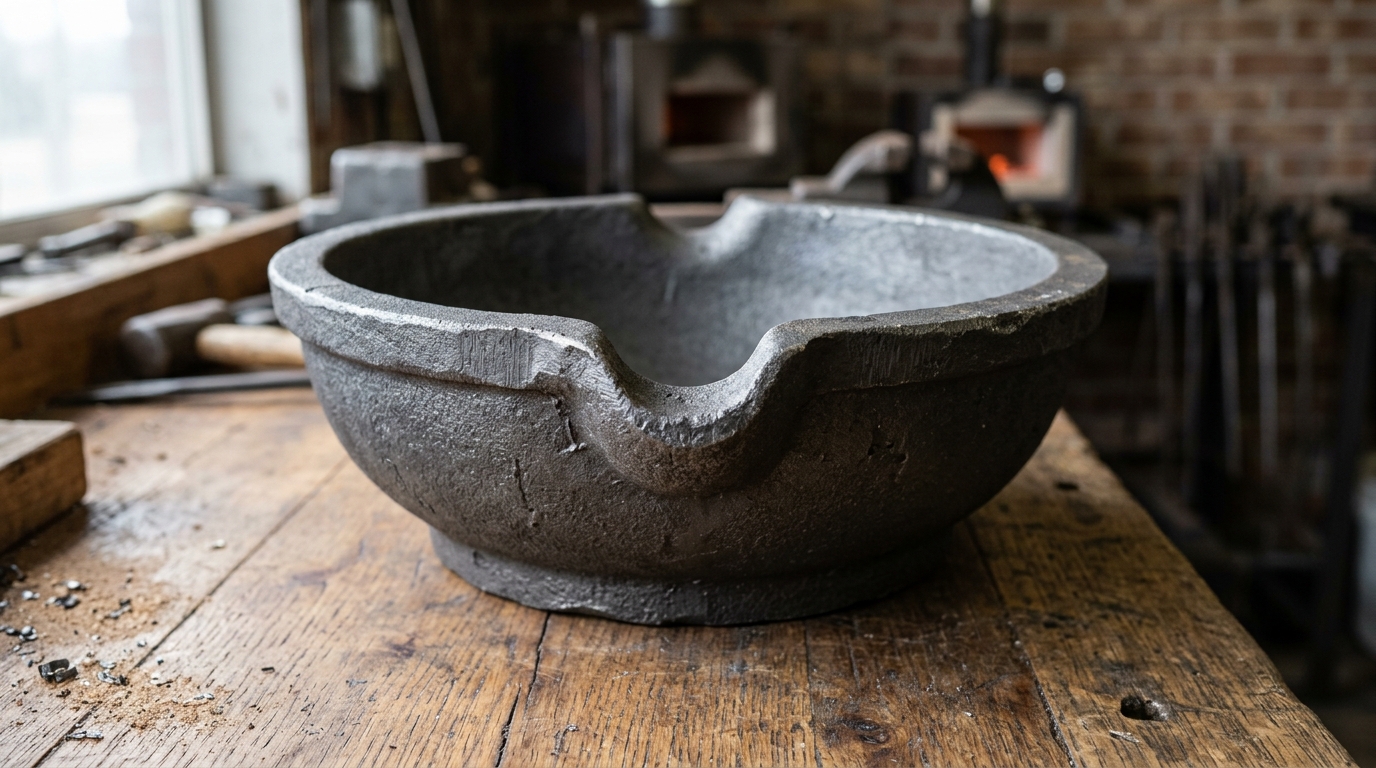
The thick iron walls maintain high temperatures, allowing liquid metal to flow smoothly into detailed molds.
How to Tell a Lead Ladle Apart from an Antique Kitchen Spoon
Inspect the Pouring Spouts and Rim Shape
Identifying an authentic casting ladle begins with a close examination of the rim. Culinary soup spoons feature smooth, rounded rims designed for easy stirring and skimming liquids. In contrast, casting ladles feature distinct, narrow pouring channels pressed directly into the lip.
Specifically, many vintage ladles feature dual pouring spouts on opposite sides of the bowl. This clever design accommodated both left-handed and right-handed workers in busy workshops. Therefore, if you spot defined pouring grooves on an iron spoon, it was built for molten metal.
In addition, casting ladles usually have deep, hemispherical bowls with flat, stable bottoms. This flat base allowed the worker to set the hot tool down without spilling liquid. Consequently, the physical shape alone reveals the true industrial heritage of the object.
Examine the Handle Design and Thermal Breaks
The handle of a tool tells an equally important story about its original purpose. Traditional kitchen ladles often feature flat, one-piece iron handles designed to hang from kitchen wall racks. However, handling molten metal required specialized protection against dangerous heat conduction.
Therefore, casting ladles frequently incorporate turned wooden handles fitted over an iron tang. The wood acts as an effective thermal break, keeping the user’s hands safe from blistering heat. In other designs, makers forged hollow wire coil grips that dispersed heat into the air.
Furthermore, casting handles are noticeably sturdier and shorter than long kitchen fire-tending spoons. This compact length gave the craftsman precise leverage and wrist control during heavy pours. Thus, examining the handle reveals whether the tool was made for soup or smelting.
- Deep Pouring Lips: Molded rim spouts direct molten streams safely into narrow openings.
- Thick Bowl Walls: Heavy iron construction prevents tipping and holds heat during pouring.
- Wooden Heat Grips: Insulated handles protect hands from extreme heat conduction.
- Flat Sturdy Base: Stable bottom prevents accidental spills on flat workshop tables.
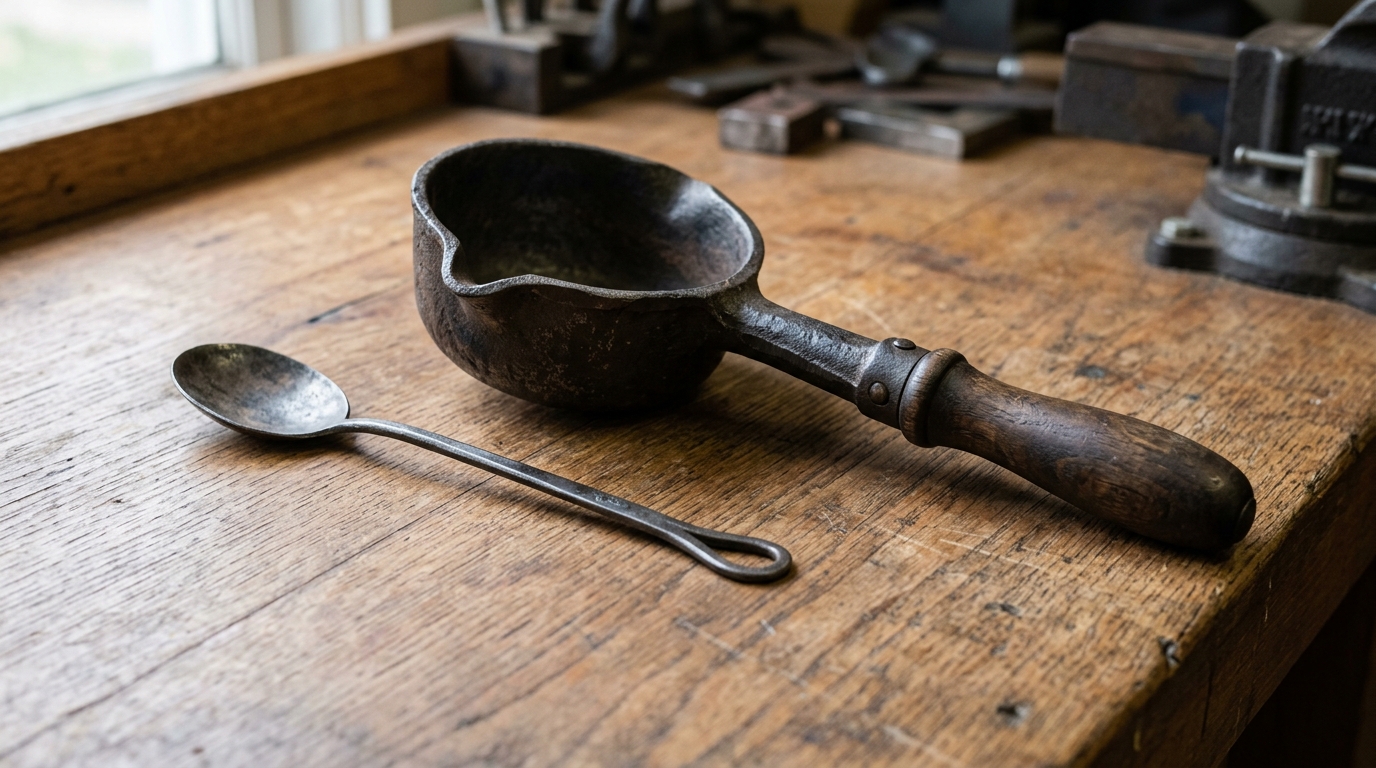
Distinct pouring spouts and turned wooden handles clearly separate smelting ladles from antique kitchen spoons.
The Lost Art of Backyard Smelting and Self-Reliance
Generational Knowledge Passed Down by Hand
In past centuries, practical self-reliance was an essential part of growing up on American homesteads. Children learned metalworking, tool repair, and ammunition casting by observing parents and grandparents at the workbench. There were no digital manuals or instant video guides available to answer questions.
Instead, mastery came through careful observation, patient practice, and hands-on trial and error. A young homesteader learned to judge metal temperature simply by observing its color and surface crust. For instance, a dull silvery sheen meant the metal was ready for pouring.
This hands-on education fostered deep respect for tools and raw materials. People repaired worn equipment, sharpened dull blades, and melted damaged parts into new tools. Consequently, nothing of value was ever wasted on a traditional family homestead.
How the Industrial Era Replaced Home Casting
By the early twentieth century, modern manufacturing factories began producing cheap, mass-market ammunition and fishing weights. Automated machinery stamped out uniform products faster and more accurately than any home craftsman could manage. As a result, domestic smelting slowly faded from daily rural life.
Hardware stores stocked pre-packaged bullets, lead weights, and threaded pipe fittings in every town. Consequently, families no longer needed to spend cold winter evenings melting scrap metal over stove coals. The old iron ladles were gradually retired to dusty toolboxes, sheds, and barn rafters.
Today, these surviving tools remind us of an era when households produced their own supplies. They stand as tangible symbols of human grit, patience, and independent living. Therefore, finding one connects us directly to the resourceful spirit of earlier generations.
Vintage casting ladles reflect the resourceful spirit of early homesteaders who crafted their own everyday supplies.
Antique Collector Safety: Why You Must Never Cook with These Tools
The Invisible Danger of Heavy Metal Contamination
Antique ironware has become wildly popular among vintage collectors, home decorators, and rustic cooking enthusiasts. However, bringing an unidentified iron spoon into your kitchen can lead to serious toxic hazards. Specifically, porous cast iron absorbs microscopic metal residues deep into its surface grain.
If an unsuspecting cook uses an old smelting ladle to stir food, toxic particles leach into the meal. For instance, acidic foods like stewed tomatoes or lemon marinades break down embedded toxins rapidly. In addition, high cooking heat releases trapped contaminants straight into your food.
Never assume an old iron tool is safe simply because it looks clean and scrubbed. Even after decades in storage, dangerous residues remain trapped inside the porous iron matrix. Therefore, seasoned collectors always treat unknown antique iron implements with extreme caution.
How to Test and Preserve Vintage Workshop Iron
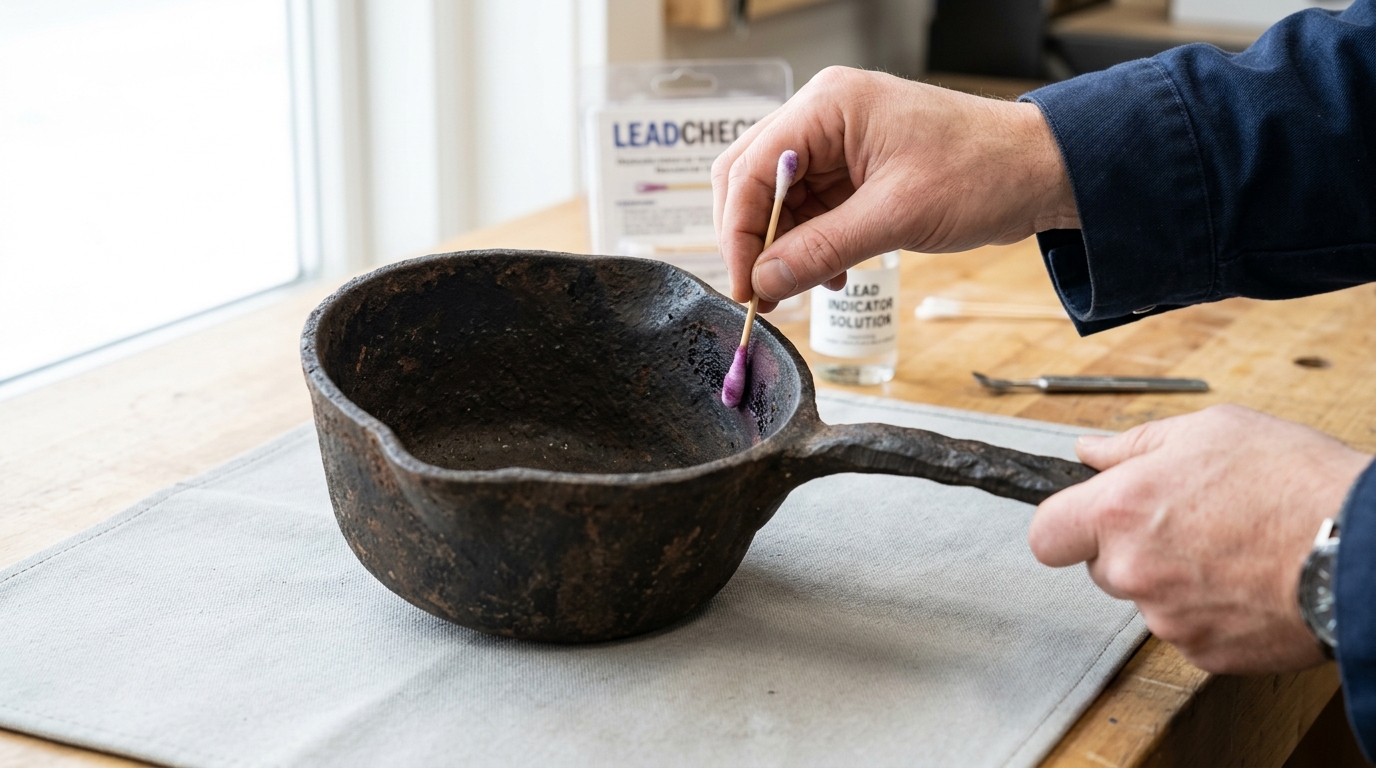
Fortunately, you can easily verify whether an old iron spoon contains toxic residues at home. Inexpensive chemical indicator swabs are readily available at local hardware stores and online retailers. Follow these simple steps to evaluate and preserve your antique tool safely:
- Step 1: Clean the Surface: Wipe away loose dust and surface grime with a dry cloth.
- Step 2: Rub the Test Swab: Rub the activated chemical swab firmly against the inside bowl for thirty seconds.
- Step 3: Check the Color: Watch for any bright pink or red color reaction indicating toxic residues.
- Step 4: Tag for Display: If positive, clearly mark the tool as a decorative workshop artifact.
- Step 5: Apply Mineral Oil: Coat the iron lightly with mineral oil to prevent rust without damaging historic patina.
Preserving these unique artifacts allows us to appreciate historic craftsmanship without endangering our households. Displaying them on a workshop pegboard or study bookshelf keeps their stories alive. Thus, we can honor our heritage while maintaining a safe modern home.
Honoring the Craftsmanship of the American Frontier
Finding a weathered cast iron lead ladle in an old toolbox connects you to a lost world of self-sufficiency. Rather than a forgotten kitchen spoon, you are holding a tool that built homes, gathered food, and defended families. In addition, its rugged design reflects the practical wisdom of craftsmen who mastered their materials.
The next time you spot an unusual iron spoon with a pouring spout, pause and admire its history. That humble piece of dark iron tells a compelling story of frontier grit, resourcefulness, and ingenuity. By preserving and understanding these fascinating tools, we keep the spirit of early American craftsmanship alive.

Emma D. is the creator, administrator, and voice behind Forum Sever. With a deep-rooted passion for vintage charm and practical living, Emma shares thoughtful homemaking guides, creative DIY projects, heirloom gardening advice, and stories celebrating everyday nostalgia.
Whether reviving timeless family recipes, propagating backyard perennials, or transforming thrifted finds into cozy home centerpieces, her goal is simple: helping readers cultivate a warm, intentional, and handcrafted life. When she isn’t managing the community at Forum Sever, you’ll likely find her in the garden with dirt on her hands, a notebook by her side, and a warm cup of herbal tea nearby.