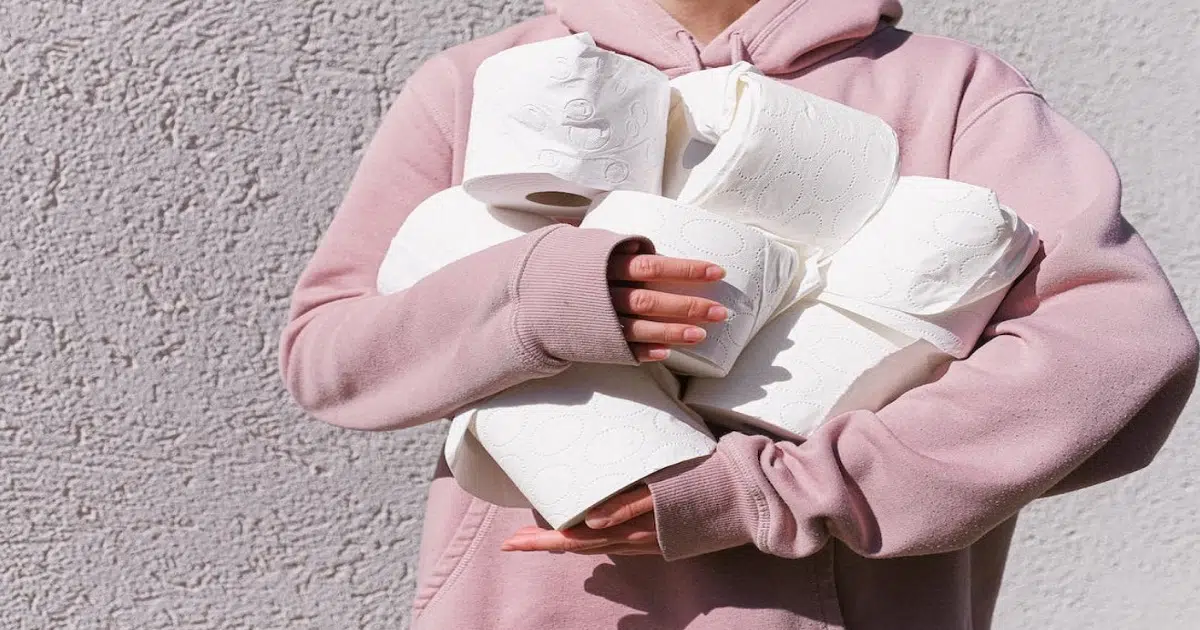
You are standing in the paper goods aisle, surrounded by towering walls of plastic-wrapped packs. Ultra-plush, double-ply, quilted, unscented, ripples, ridges. Despite the dizzying variety of textures and claims, almost every single roll shares one universal trait: it is crisp, spotless white.
Most of us never give this second thought until a curious kid asks from the bathroom door, or we spot an unbleached roll at a natural grocery store and wonder how we got here. Why is toilet paper white by default, and how did a simple household essential become so uniform?
The answer is not just a marketing trick. It comes down to wood chemistry, manufacturing mechanics, human health, and a wild mid-century design craze that completely collapsed.
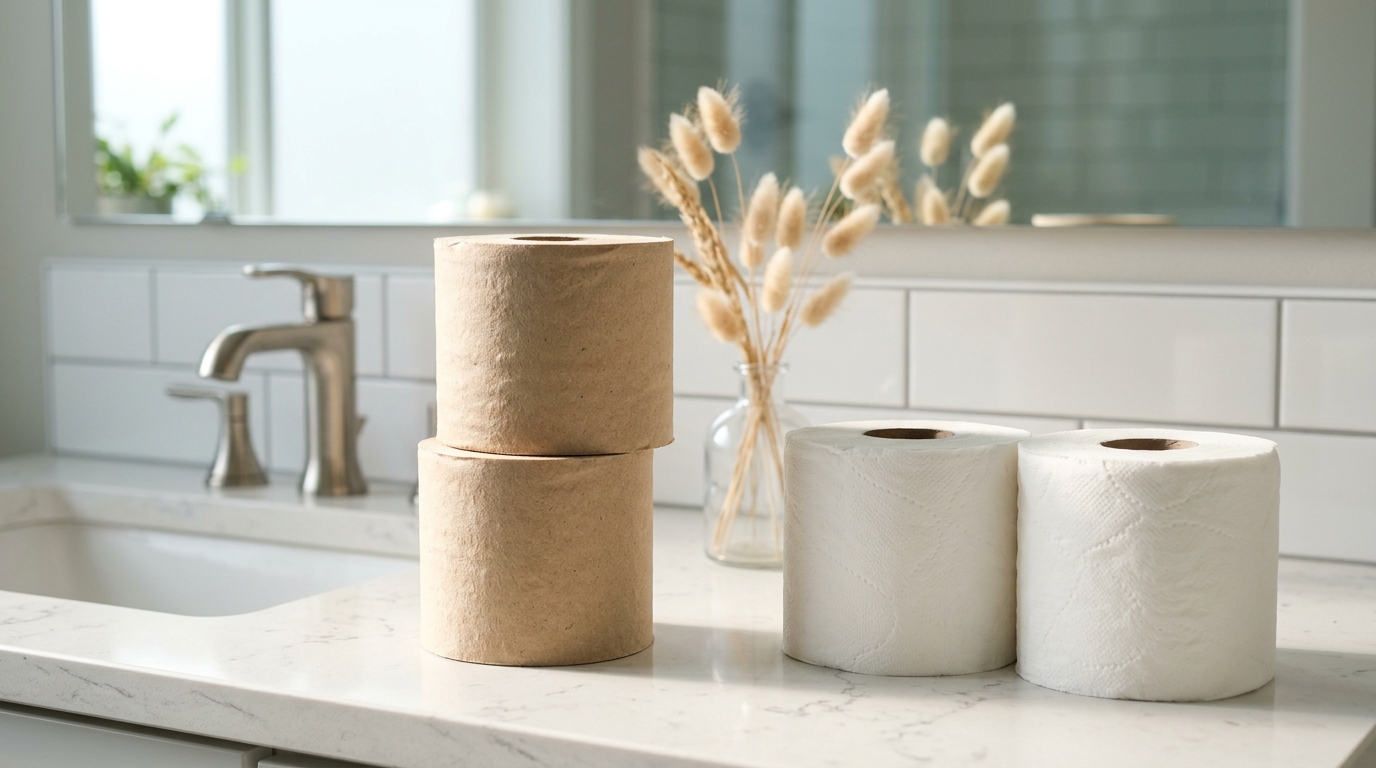
Comparing unbleached paper fibers with bright white rolls reveals the natural brown shade of raw wood pulp before it undergoes purification.
Why Is Toilet Paper White? The Science of Wood Pulp and Lignin
At its origin, traditional bath tissue starts as harvested softwood and hardwood trees like pine, spruce, maple, and oak. Mills chip these logs down and cook them in a chemical bath to separate the usable plant fibers—known as cellulose—from the natural glue that holds tree trunks upright.
That natural glue is a complex organic polymer called lignin. In a living tree, lignin provides rigidity, channels water through the trunk, and protects the plant from pests. In a roll of bath tissue, however, lignin is your worst enemy.
Lignin is naturally dark brown. If you leave it in the pulp mixture, you end up with stiff, cardboard-like paper that feels scratchy against sensitive skin. Think of standard brown cardboard shipping boxes or unbleached grocery bags. They are durable, but you would certainly not want to wipe with them.
Lignin also reacts rapidly with sunlight and oxygen. When exposed to air, it breaks down and oxidizes, which is why old newspapers turn brittle and yellow on your porch within a few sunny days.
To turn rugged wood chips into something gentle enough for everyday bathroom use, manufacturers must extract that stubborn lignin. Once the dark brown binder is cooked out and washed away, the remaining cellulose fibers are left in their natural state: a soft, off-white cream color.
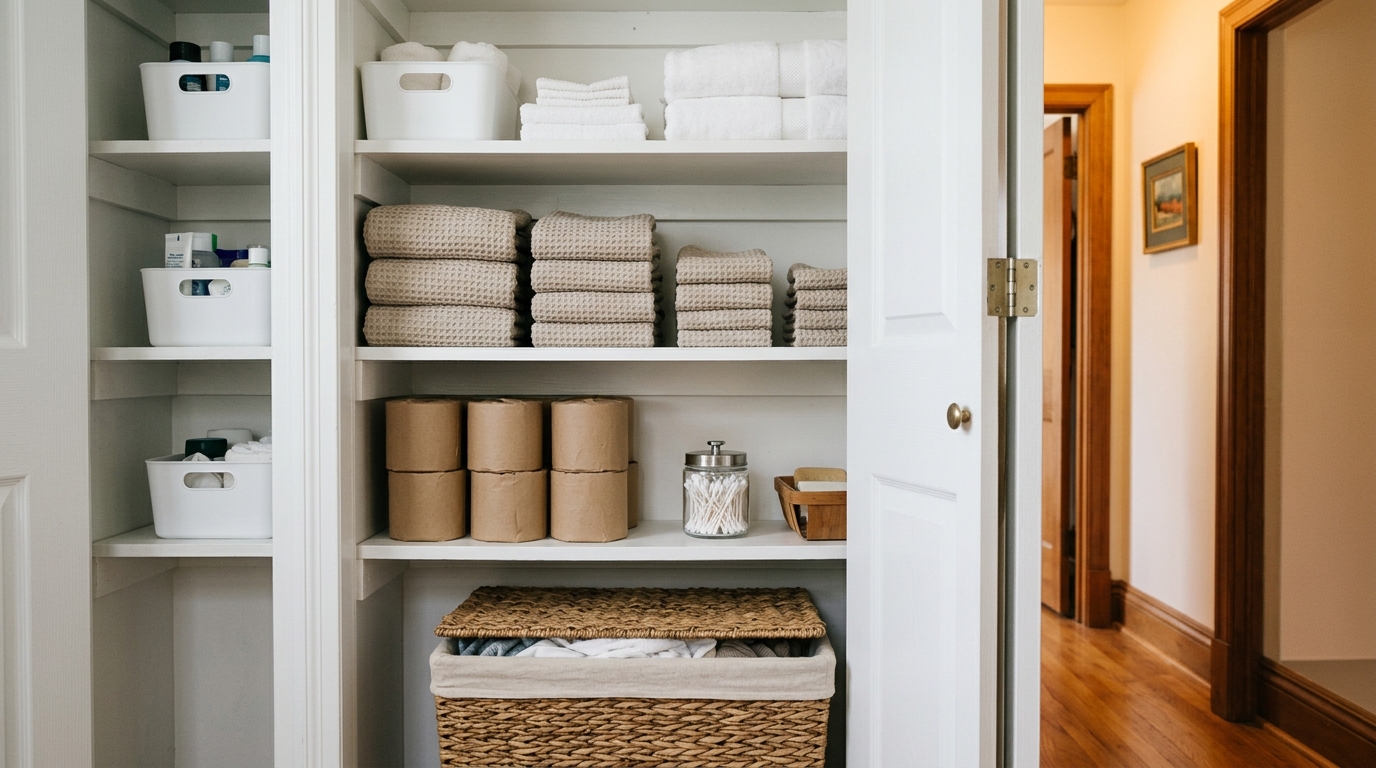
Modern manufacturing strips stiff wood resins out of raw pulp so the final sheets stay soft and absorbent on our closet shelves.
The Bleaching Process: Softness, Strength, and Modern Methods
Removing the lignin gets you halfway to a usable roll, but the leftover fibers still need help before they can turn into velvety two-ply tissue. That is where bleaching steps in.
Bleaching does far more than change the shade of the paper. The process breaks down trace resins, softens the cellular walls of the plant material, and conditions the fibers so they interlock smoothly without turning rigid. Without this step, sheets would feel coarse, absorb moisture poorly, and deteriorate quickly in your bathroom cabinet.
Decades ago, paper mills relied on elemental chlorine gas to bleach wood pulp. While effective, that older method created harmful chemical byproducts like dioxins that contaminated coastal waterways. Fortunately, modern paper production has largely shifted toward safer, cleaner technologies:
- Elemental Chlorine-Free (ECF): This widely used standard relies on chlorine dioxide rather than raw chlorine gas, dramatically slashing harmful emissions while creating clean, bright fibers.
- Totally Chlorine-Free (TCF): The gold standard for eco-conscious shoppers. This approach uses hydrogen peroxide, oxygen, and ozone to brighten pulp without any chlorine derivatives whatsoever.
- Processed Chlorine-Free (PCF): Applied to recycled paper goods where reclaimed office paper or cardboard is washed and sanitized using oxygen-based bleaches.
By the time those conditioned fibers are pressed, dried on giant steam-heated rollers, and perforated into squares, the final product emerges naturally bright white, exceptionally soft, and ready for your dispenser.
What Happened to Pink, Blue, and Green Toilet Paper?
If white is simply the result of stripping out wood resins, why did bathrooms in the 1960s and 1970s look like a candy shop? If you grew up in or visited a mid-century home, you probably remember rolls of pastel pink, baby blue, mint green, and pale yellow sitting proudly on chrome stands.
While pastel rolls once matched retro bathroom tile schemes of the 1970s, modern homes have shifted back to simple, dye-free paper.
During that era, interior design trends encouraged matching every accessory to the bathroom’s fixtures. If you had seafoam ceramic tile and a matching mint toilet, your tissue had to match. Brands even introduced heavily scented rolls infused with floral perfumes to double as room deodorizers.
By the late 1980s, colored rolls began vanishing from grocery shelves almost overnight. The sudden shift was driven by several practical and medical discoveries:
- Skin Irritation and Allergic Reactions: Doctors, dermatologists, and gynecologists began connecting synthetic dyes and fragrances to contact dermatitis, recurrent yeast infections, and vulvar irritation. Stripping the dyes proved to be an instant relief for sensitive skin.
- Septic Tank and Plumbing Woes: Heavy synthetic dyes slowed down the rate at which tissue dissolved in water. Old plumbing lines clogged more frequently, and septic tanks struggled to digest the colored paper fibers.
- Environmental Impact: Dye-heavy wastewater from manufacturing plants posed risks to aquatic life, prompting stricter municipal water regulations.
- Shifting Aesthetic Tastes: As bold retro bathrooms gave way to crisp white porcelain, natural stone, and neutral paint colors, colored tissue quickly went from trendy to tacky.
White vs. Unbleached vs. Bamboo: Finding What Works for You
Today, white tissue is the undisputed champion of the household aisle, but conscious shoppers now have more choices than ever. Understanding the differences helps you pick the right balance of comfort, plumbing safety, and environmental impact for your home.
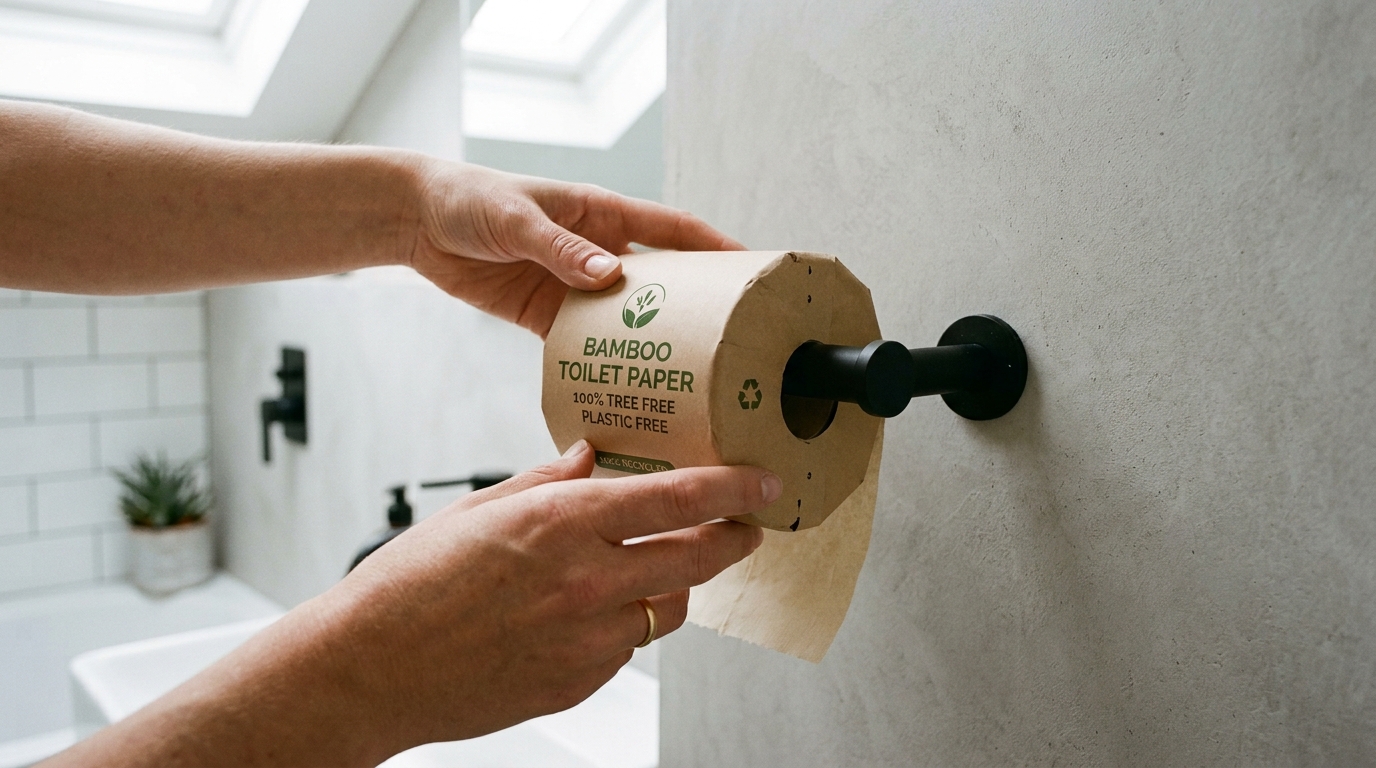
Bamboo and unbleached rolls offer gentle, tree-free options for households looking to reduce their environmental footprint.
Here is a quick look at how the three main options on store shelves compare:
- Standard Bleached Virgin Pulp: The traditional choice. It delivers maximum plushness, high absorbency, and consistent strength because it uses long, virgin tree fibers. Look for TCF or ECF labels on the packaging to ensure cleaner processing.
- Unbleached Recycled Paper: Often tan or light oatmeal in color, this option skips chemical brightening agents entirely. It uses less water and energy during manufacturing, though the shorter recycled fibers can feel slightly firmer.
- Bamboo Toilet Paper: Fast-growing bamboo grass reaches maturity in just a few years without requiring replanting. Bamboo fibers are naturally pale, remarkably soft, and break down quickly in septic systems, making them a stellar renewable swap for classic wood pulp.
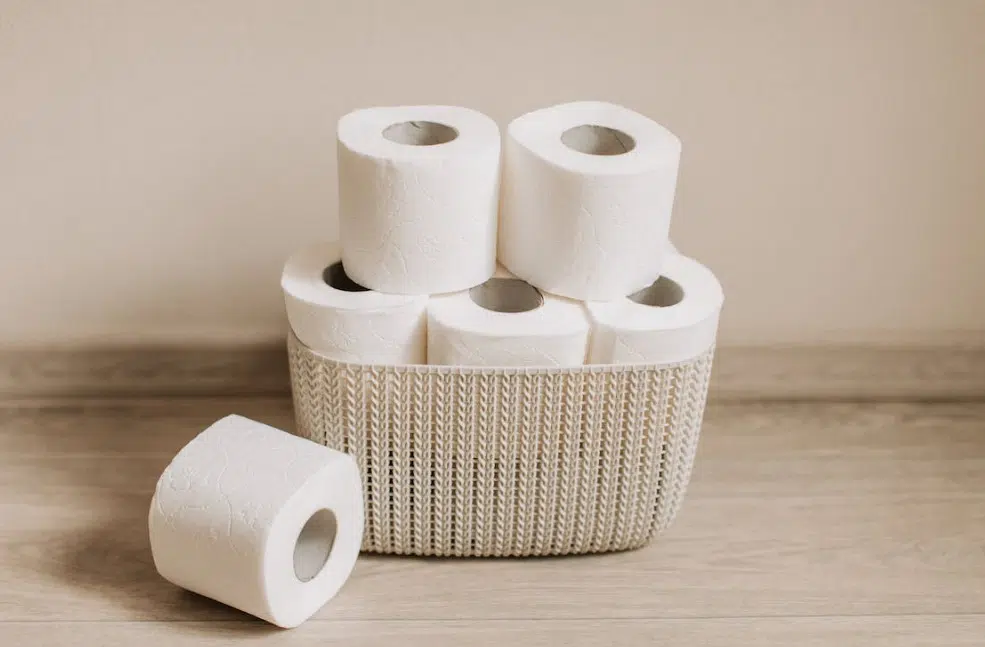
A woven storage basket keeps extra rolls accessible and neatly organized right alongside the vanity.
Smart Bathroom Storage for Everyday Rolls
Because bath tissue is an everyday basic we buy in bulk, keeping extra rolls tidy without cluttering a calm, clean bathroom comes down to smart containment.
Instead of leaving giant plastic wrappers sitting on the floor behind the toilet, try transferring rolls into open wire or woven seagrass baskets. The textured woven material brings warm, organic contrast against smooth ceramic tile while keeping backup supplies within arm’s reach for guests.
If you have open shelving or a small guest powder room, stash four or five rolls inside a tall lidded ceramic canister or a fabric-lined bin. It protects paper from sink splashes and humidity while keeping your space looking intentional and clutter-free.
The Bottom Line on Bathroom Basics
The next time you grab a fresh roll from the linen cabinet, you know the whole story. Why is toilet paper white? It is white because stripping out scratchy brown lignin makes the paper delightfully soft, modern oxygen bleaching keeps it stable on the shelf, and leaving out synthetic dyes protects your skin and home plumbing.
From nineteenth-century paper mills to retro pastel fads, the simple white roll on your wall is a masterclass in everyday household engineering. Sometimes the simplest items in our home have the most interesting stories tucked right inside their core.
Emma D. is the creator, administrator, and voice behind Forum Sever. With a deep-rooted passion for vintage charm and practical living, Emma shares thoughtful homemaking guides, creative DIY projects, heirloom gardening advice, and stories celebrating everyday nostalgia.
Whether reviving timeless family recipes, propagating backyard perennials, or transforming thrifted finds into cozy home centerpieces, her goal is simple: helping readers cultivate a warm, intentional, and handcrafted life. When she isn’t managing the community at Forum Sever, you’ll likely find her in the garden with dirt on her hands, a notebook by her side, and a warm cup of herbal tea nearby.