A quiet morning walk in late autumn has a specific rhythm. Boots crunch against fallen leaves, cool air carries the sharp scent of damp earth, and your mind drifts into an easy daydream. Then, out of nowhere, you spot something that stops you dead in your tracks. Rising straight out of the rotting wood chips sits what looks like a bright red, clawed hand reaching from the soil. Encountering the strange devil’s fingers fungus for the first time is enough to send a quick shiver down anyone’s spine.
It looks less like a woodland plant and more like a prop from an old sci-fi movie. Yet beneath that shocking crimson exterior lies one of the most fascinating, beneficial, and misunderstood organisms in the natural world. Once you understand what this curious creature is doing, the fright turns into pure fascination.
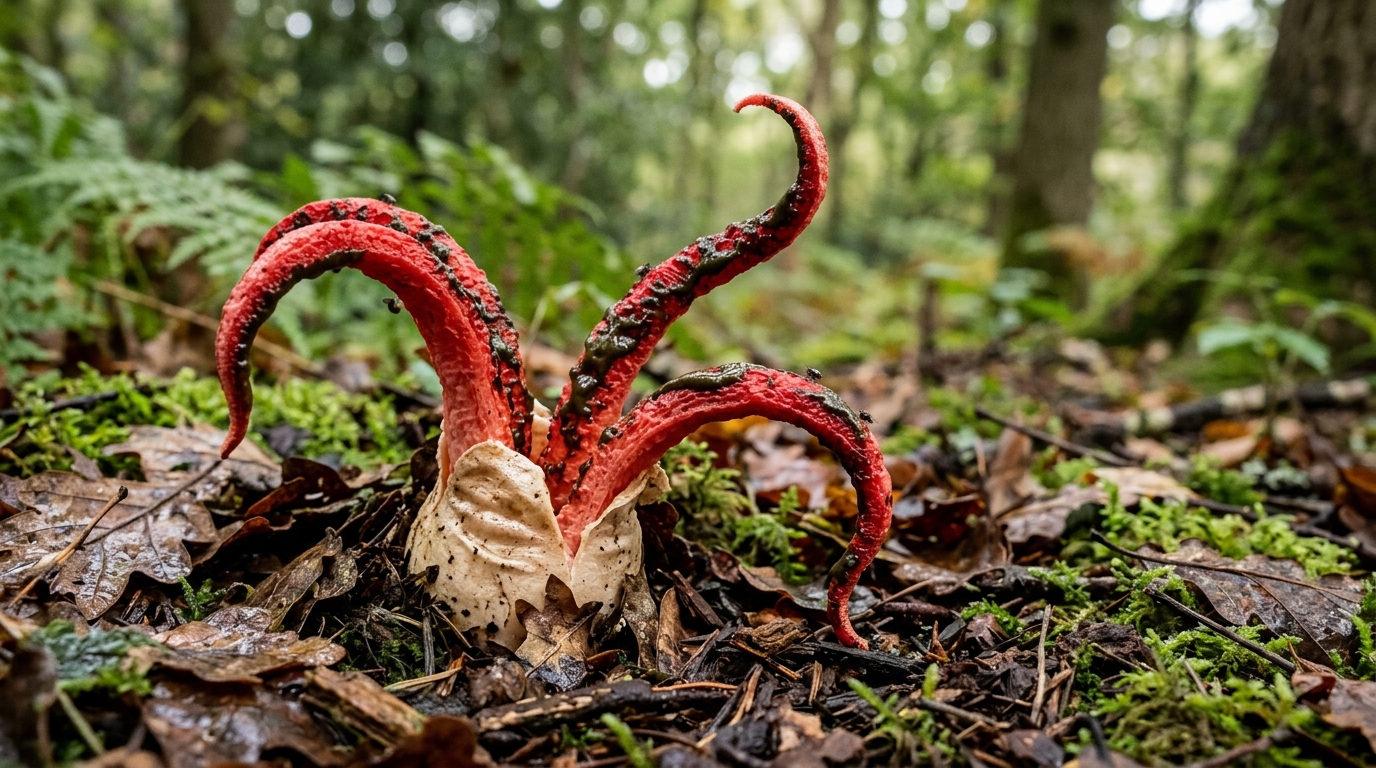
The unmistakable bright red arms of mature Clathrus archeri emerge from a gelatinous egg sac on the damp woodland floor.
What Exactly Is the Devil’s Fingers Fungus?
Known scientifically as Clathrus archeri, this striking organism is a member of the stinkhorn family (Phallaceae). While native to Australia and New Zealand, it was accidentally introduced to Europe and parts of North America over a century ago. Today, it routinely makes surprise appearances in deciduous woodlands, grassy parks, and residential garden borders.
Unlike standard button mushrooms or flat shelf fungi, this variety does not produce traditional caps or gills. Instead, it grows through an elaborate, two-stage transformation that looks straight out of an alien lifecycle diagram.
It begins as an unassuming, whitish-grey structure known to botanists as a “witch’s egg.” This smooth, rubbery bulb sits semi-buried in rich leaf litter or decaying wood chips, completely hidden from casual view. Inside that gelatinous sphere, the bright red arms develop in compressed coils, waiting for the right moisture and temperature cues to erupt.
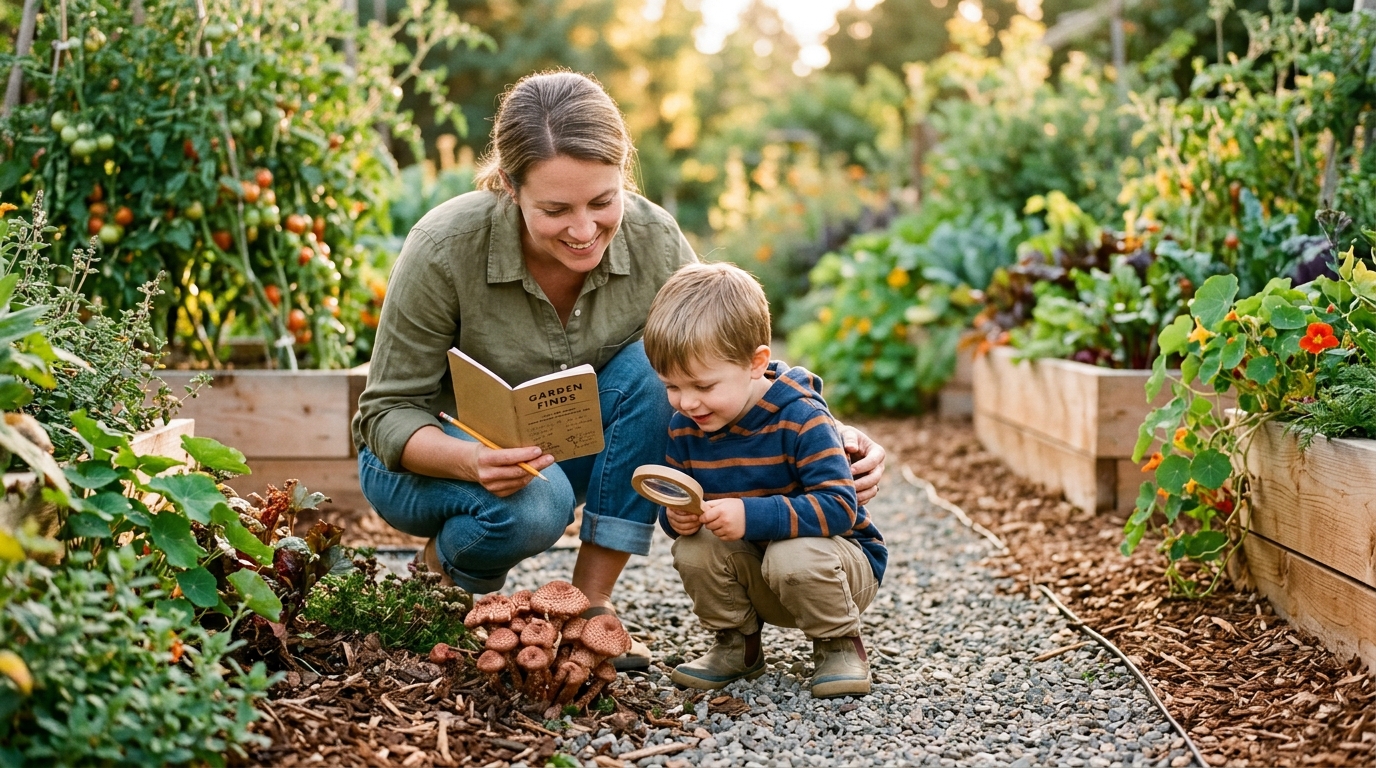
Turning unexpected garden discoveries into quick nature lessons builds confidence and curiosity outdoors.
From “Witch’s Egg” to Alien Tentacles: The Strange Life Cycle
When heavy autumn rain saturates the ground, the gelatinous egg swells and splits open with surprising speed. Within a matter of hours, four to eight vibrant red fingers push through the ruptured sheath, unfolding horizontally like an octopus or reaching upward like a gnarled hand.
The arms have a rough, spongy texture with a porous surface. Along the inside of each finger lies a sticky, olive-brown paste called gleba. This dark coating holds millions of fungal spores, and it holds the secret to how the fungus survives and travels across continents.
Unlike most mushrooms that rely on gentle breeze currents to scatter dry spores across the forest floor, stinkhorns employ a clever biological trick. They recruit the local insect population to do the heavy lifting for them.
“The shocking color and pungent aroma are not meant to frighten humans; they are an ingenious natural billboard designed to attract forest cleanup crews.”
The Science Behind That Unforgettable Odor
If you get close to a mature specimen, you will notice a distinct, pungent aroma that smells strikingly like rotting meat. While that stench might make you take two quick steps backward, to a passing blowfly or beetle, it smells like a banquet.
Insects flock to the bright red arms, feasting on the sweet components within the dark gleba paste. As they walk across the sticky surface, microscopic spores latch onto their legs and wings. When the flies take off and land on surrounding logs or mulch beds, they deposit the spores across new territory, starting the cycle anew.
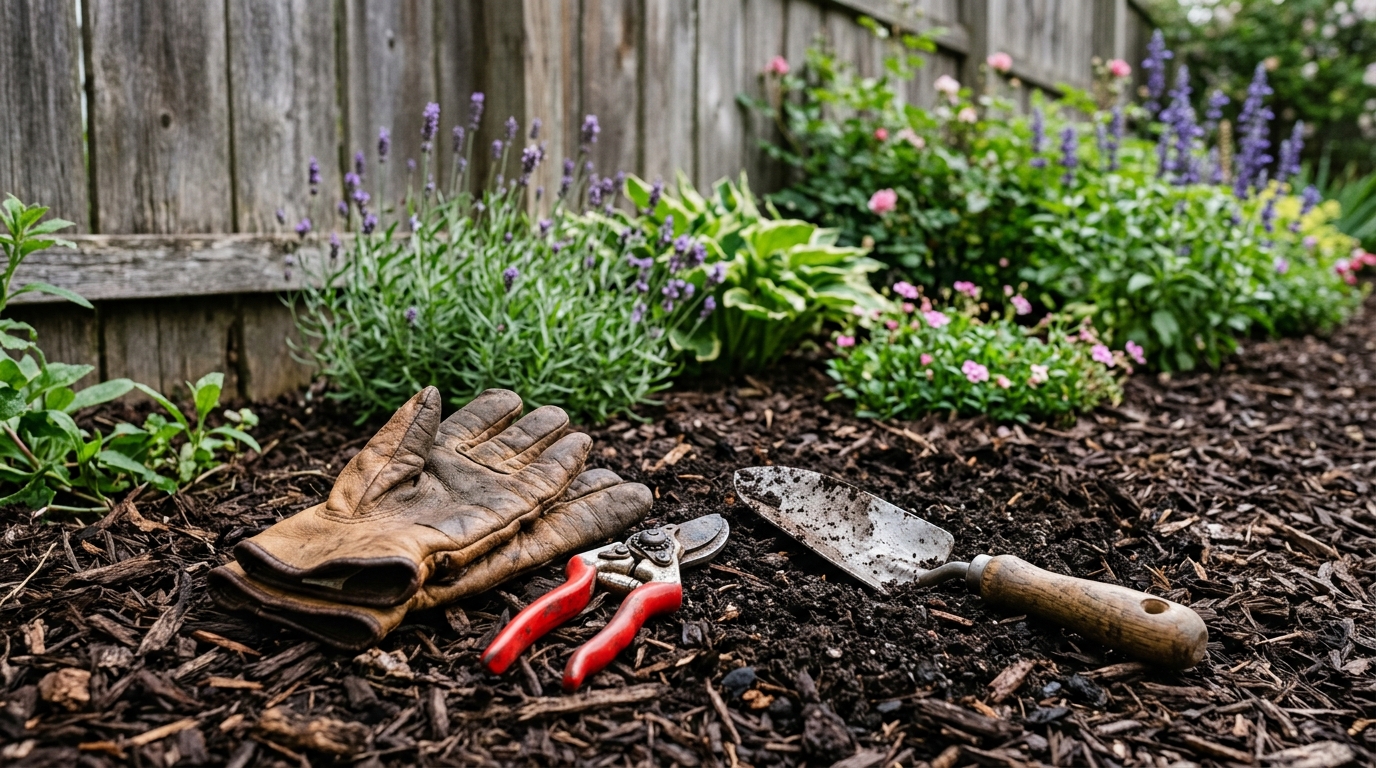
Fresh bark mulch and damp weather create the prime environment for harmless saprophytic fungi to break down organic matter.
What to Do If Stinkhorns Sprout in Your Garden Mulch
Home gardeners frequently wake up to find these odd red fingers poking through fresh bark mulch or wood shavings around their perennial shrubs. Finding the devil’s fingers fungus right next to your front porch can feel alarming, but there is no reason to call in an exterminator.
These organisms are saprophytes, meaning they feed exclusively on dead, decaying organic matter. They do not infect living root systems, harm vegetable plants, or rot healthy garden shrubs. In fact, their underground mycelium networks actively break down tough wood fibers and lignin, converting hard bark into rich, crumbly humus that feeds your soil.
- Leave Them Alone: If they sprout away from high-traffic walkways, simply let them run their course. The visible arms collapse and dry into a harmless brittle crust within forty-eight hours.
- Manual Removal: If the strong scent bothers you or sits too close to an open window, scoop up the egg base and arms with a hand trowel, drop them into a paper bag, and discard them in your outdoor trash bin.
- Aerate Your Mulch: Raking through your wood chips with a garden fork introduces fresh airflow and sunlight, which dries out the upper mulch layer and discourages rapid mushroom flushes.
- Avoid Chemical Sprays: Applying chemical fungicides in home beds disrupts the beneficial bacteria and soil mycorrhizae that keep your garden plants healthy.
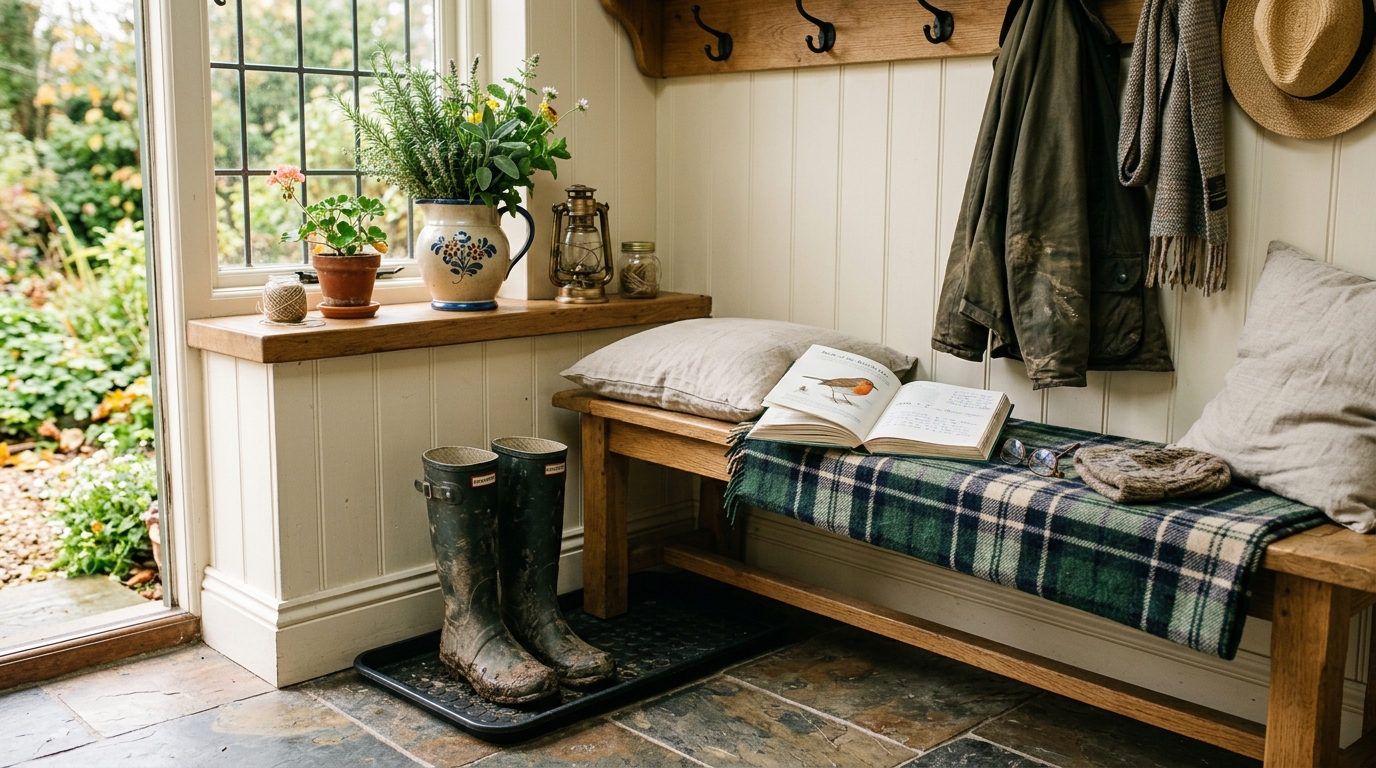
Returning home from a damp forest trail with muddy boots and fresh discoveries is part of the charm of seasonal hiking.
Are Stinkhorns Dangerous to Pets and Curious Kids?
A natural worry for any parent or pet owner is toxicity. The dramatic red coloring naturally screams “danger” to human eyes, making many wonder if accidental contact requires a rush to the clinic.
The good news is that Clathrus archeri is non-toxic. It contains no known deadly alkaloids or dangerous poisons. Touching the fungus will not burn the skin or cause rashes, although you will certainly want to wash your hands with warm water and soap to remove the sticky spore residue and smell.
Dogs are naturally drawn to strong, rotting odors and might rush over to sniff or roll in the gleba slime. While a curious bite might cause mild stomach upset or minor vomiting simply from the foul taste and decaying matter, it does not pose a systemic poisoning risk. Keep an eye on curious pups during wet autumn hikes, and use simple recall commands to steer them clear of pungent patches.
Cultivating Curiosity Instead of Fear on Family Nature Walks
It is easy to let the shocking appearance of strange woodland species trigger alarm. But our natural surroundings are filled with surprising textures, bizarre shapes, and clever evolutionary strategies that keep ecosystems thriving.
When you walk the trails with children, encountering unusual phenomena offers an open door for gentle exploration. Rather than hurrying past or warning them to look away, take a breath, inspect the colors from a safe step back, and talk about how fungi keep the woods clean by turning old fallen wood into fresh new soil.
Nature rarely follows our rules of neatness or conventional beauty. Learning to recognize the remarkable devil’s fingers fungus reminds us that the quiet corners of our forests and backyard beds are full of wonder, mystery, and ingenious life working right beneath our feet.

Emma D. is the creator, administrator, and voice behind Forum Sever. With a deep-rooted passion for vintage charm and practical living, Emma shares thoughtful homemaking guides, creative DIY projects, heirloom gardening advice, and stories celebrating everyday nostalgia.
Whether reviving timeless family recipes, propagating backyard perennials, or transforming thrifted finds into cozy home centerpieces, her goal is simple: helping readers cultivate a warm, intentional, and handcrafted life. When she isn’t managing the community at Forum Sever, you’ll likely find her in the garden with dirt on her hands, a notebook by her side, and a warm cup of herbal tea nearby.