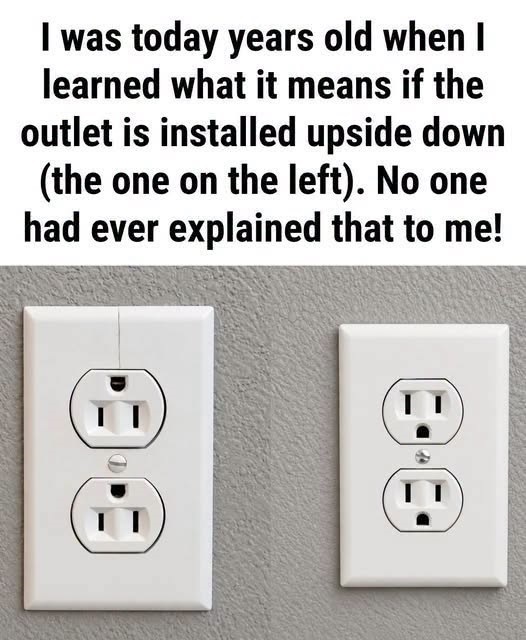
Rearranging living room furniture often leads homeowners to notice unexpected quirks along their baseboards. Specifically, you might spot an electrical receptacle where the round grounding hole sits on top. You may immediately wonder why are some outlets upside down in certain rooms while others look normal. In fact, this reversed position is almost never a sloppy construction mistake.
For decades, master electricians intentionally flipped receptacles to serve specific safety and electrical functions. Therefore, understanding this reversed layout helps you identify switched wall plugs and protect expensive appliances. In addition, knowing how these plugs work eliminates guesswork when setting up lamps or charging stations. Examining the trade history and wiring mechanics reveals why this clever design detail remains so popular.
Why Are Some Outlets Upside Down in Residential Homes?
The Switched Half-Hot Receptacle Tradition
In residential construction, a flipped receptacle almost always signals a switched wall outlet. Electricians frequently call this configuration a half-hot receptacle. Specifically, a wall switch near the room entrance controls power to one of the two plugs.
During the mid-twentieth century, many home builders saved money by skipping overhead ceiling light fixtures. Instead, electricians ran wiring from the entryway wall switch directly to a designated wall receptacle. Consequently, homeowners could plug in a bedside lamp and control room lighting right from the doorway.
To help residents locate this switched plug immediately, electricians installed the duplex receptacle upside down. This visual clue saved homeowners from testing every single socket with a lamp. Thus, the flipped design served as an intuitive, permanent indicator for room lighting controls.
The Mechanical Brass Breakaway Tab Explained
Understanding how a half-hot receptacle functions requires looking at the physical metal hardware. Every standard duplex outlet features two brass screw terminals on the hot side. In addition, a small metal connecting tab joins these two screws together.
When electricians install a switched outlet, they use needle-nose pliers to snap off this brass tab. Removing the tab mechanically separates the top plug from the bottom plug. Consequently, one socket receives continuous line voltage while the other connects directly to the wall switch.
Meanwhile, the silver neutral terminals on the opposite side remain linked by their tab. This shared neutral connection allows current from both devices to return safely through one wire. As a result, you get independent power control from a single wall box without complex wiring.
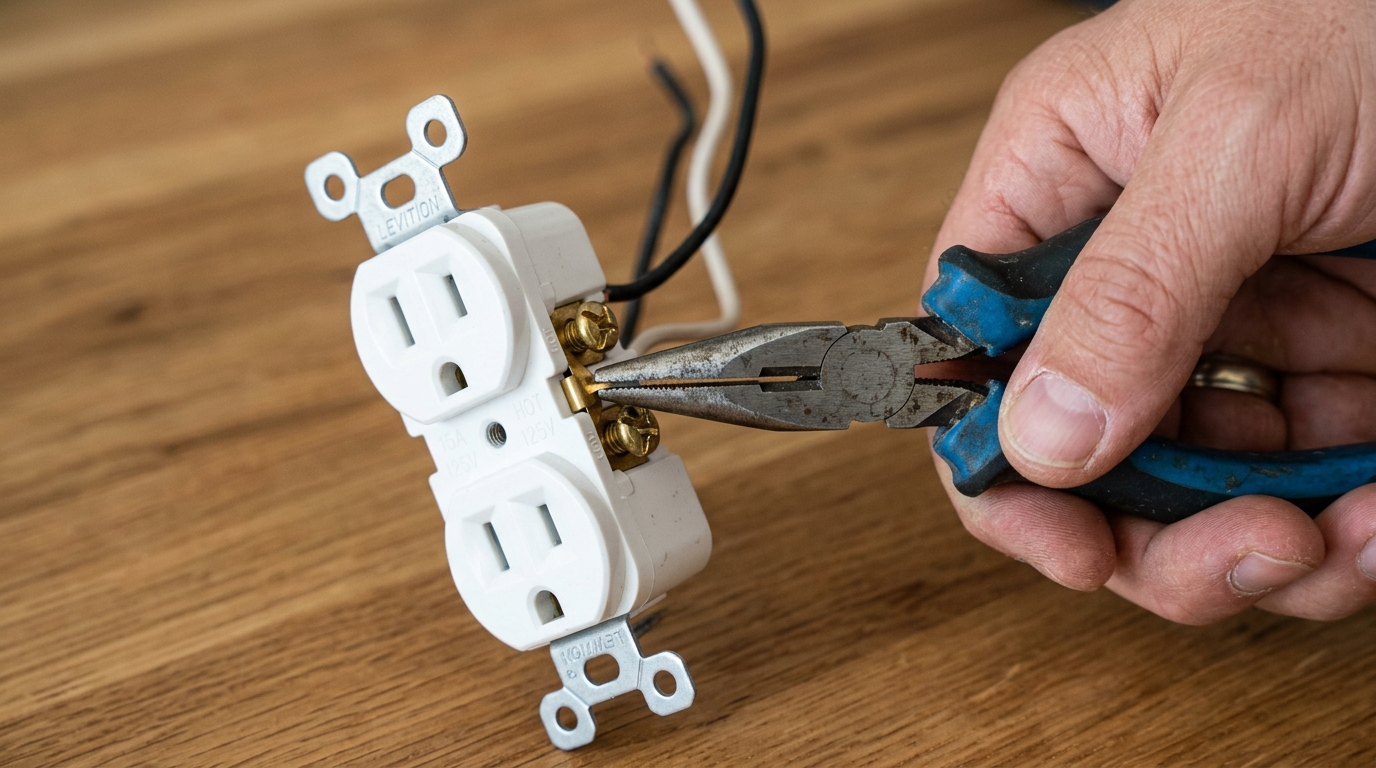
Electricians remove the small brass breakaway tab to separate constant power from switched lighting circuits.
The Gravity Safety Rule: Why Commercial Buildings Flip Outlets
Preventing Dangerous Short Circuits from Falling Metal
While residential homes use flipped plugs for lighting clues, commercial buildings install them for electrical safety. In hospitals, schools, and offices, you will see almost every single receptacle installed ground-up. Specifically, this orientation prevents catastrophic electrical shorts caused by falling conductive objects.
Consider a standard plug that slips slightly loose from the wall box. If the grounding hole sits on the bottom, the two live vertical prongs remain exposed on top. Therefore, a falling paperclip, metal ruler, or dropped coin can bridge those two energized prongs.
That direct bridge creates an instant electrical arc flash, shower of sparks, or fire hazard. However, when the grounding pin sits on top, the falling object hits the unenergized ground pin first. Consequently, the metal object bounces harmlessly away without contacting live 120-volt current.
Hospital Standards and Industrial Equipment Protection
Healthcare facilities enforce strict electrical safety standards across all patient care wings. In fact, organizations like the National Fire Protection Association recommend ground-up orientation in medical areas. Medical rooms feature mobile metal crash carts, IV poles, and surgical trays moving constantly along walls.
If a metal equipment cart scrapes against an outlet, a ground-up pin shields the hot wiring. In addition, the solid cylindrical ground pin offers superior structural stability compared to flat prongs. Therefore, heavy medical equipment plugs remain firmly seated without wobbling loose under heavy vibration.
Furthermore, specialized hospital-grade receptacles undergo rigorous physical testing for blade retention strength. These premium outlets resist crushing impacts from moving beds and cleaning machines effortlessly. Thus, commercial facilities rely on ground-up orientation to safeguard critical life-support systems.
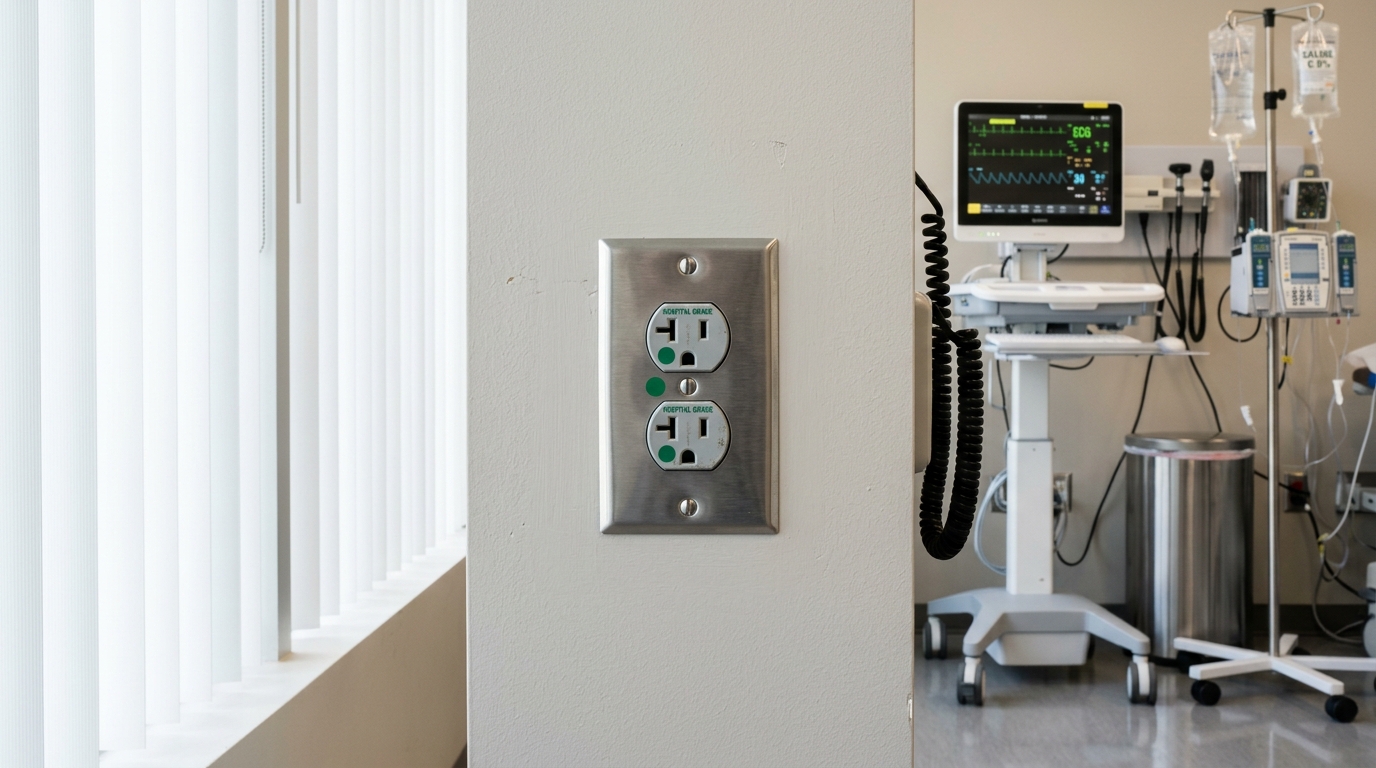
Commercial facilities install receptacles ground-up to prevent stray metal objects from causing dangerous short circuits.
National Electrical Code Guidelines: What the Rules Say
The Official Stance of the National Electrical Code
Many homeowners believe that local building codes strictly mandate which direction electrical outlets must face. However, the National Electrical Code does not specify whether ground pins must face up or down. Specifically, Article 406 of the code focuses heavily on terminal connections, wire sizing, and grounding paths.
As long as the receptacle is grounded securely, both orientations comply with national regulations. Consequently, the physical orientation is left entirely to the discretion of the installing electrical contractor. Local municipal amendments occasionally establish regional preferences, but national codes remain completely flexible.
Therefore, encountering an upside-down plug does not indicate a failed building inspection or illegal wiring. Instead, it reflects intentional trade customs chosen for convenience or site-specific safety. Understanding this code flexibility gives homeowners total peace of mind regarding their home electrical safety.
Regional Trade Habits and Electrician Preferences
Electrical trade practices often vary significantly across different states, cities, and local unions. For instance, union electricians in certain northeastern cities traditionally install every residential receptacle ground-up. They view the ground-pin-up position as the gold standard of professional craftsmanship.
Conversely, residential contractors in suburban developments often install ground pins down for aesthetic uniformity. Most consumer electronics and decorative lamp plugs are molded to hang cords downward naturally. In addition, angled transformer plugs often fit standard ground-down wall plates more neatly.
Moreover, previous DIY homeowners frequently swap out damaged receptacles and orient them randomly. When replacing old ivory outlets with modern white devices, amateurs often overlook original orientation habits. Consequently, an older home may feature a mix of orientations across different rooms.
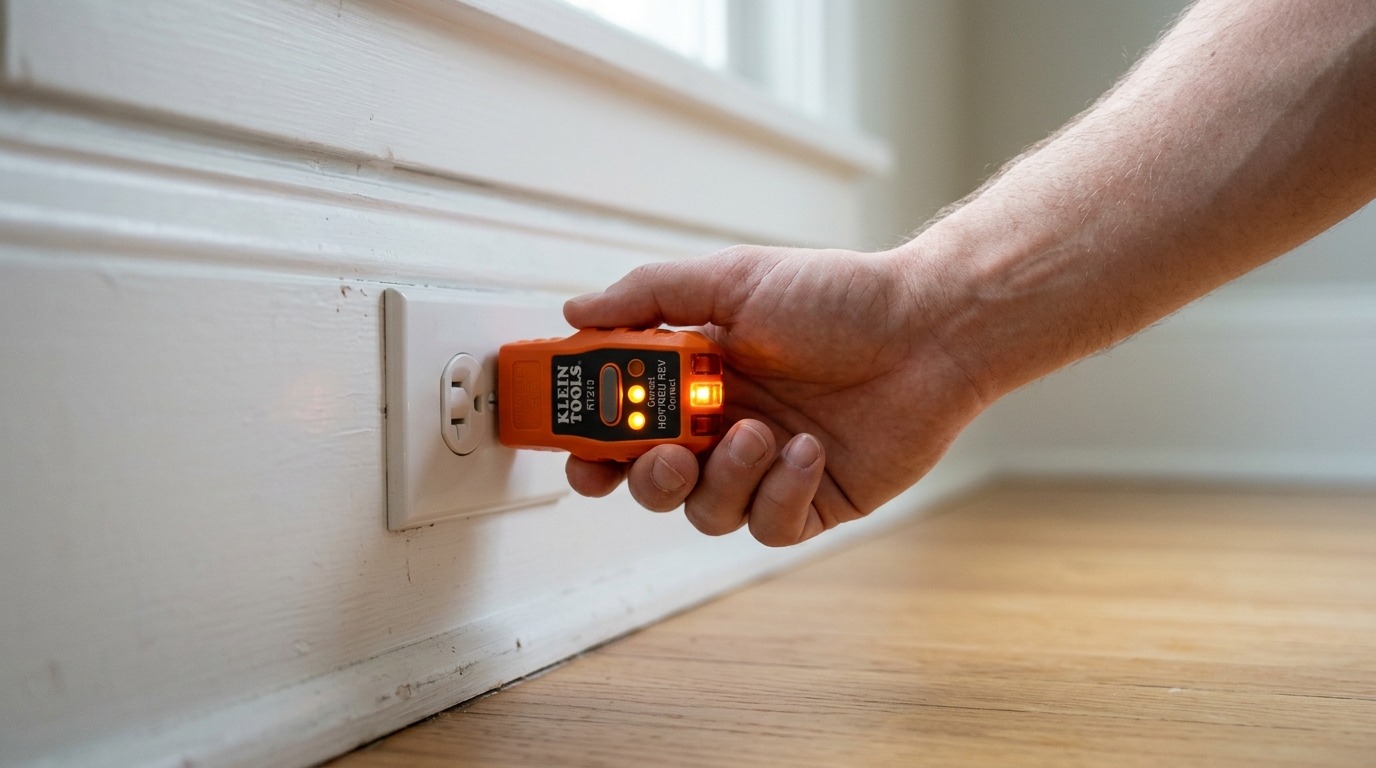
Using a three-prong receptacle tester confirms correct polarity, ground continuity, and switched circuit operation quickly.
How to Test and Map Your Switched Outlets
Step-by-Step Testing with a Simple Lamp
Mapping your home’s switched receptacles takes only a few minutes and requires no complex tools. Follow this simple step-by-step testing process to identify your room controls:
- Step 1: Locate the Flipped Receptacle: Scan the room baseboards for any outlet with the ground hole on top.
- Step 2: Plug in a Working Lamp: Insert a turned-on desk lamp into the top socket of the outlet.
- Step 3: Toggle the Wall Switch: Walk to the entryway switch and flip the toggle back and forth.
- Step 4: Check the Bottom Socket: Move the lamp plug to the bottom socket and repeat the switch test.
- Step 5: Label the Constant Power: Note which socket stays energized continuously for phone chargers and clocks.
If the lamp turns on and off with the switch, you have verified the switched circuit. Meanwhile, the second socket should remain powered constantly to run alarm clocks, televisions, or Wi-Fi equipment. As a result, you eliminate accidental power outages when turning off bedtime lights.
Using a Three-Prong Circuit Tester for Precision
For more thorough diagnostic checks, use an inexpensive three-prong electrical receptacle tester. Plug the tester directly into each socket and observe the illuminated indicator lights on the front. Specifically, two amber lights indicate correct circuit wiring, proper polarity, and active equipment grounding.
Next, flip the wall switch while observing the tester lights on the switched plug. The indicator lights should illuminate and extinguish instantly in response to the switch toggle. Furthermore, this tool helps detect dangerous hidden wiring faults like open grounds or reversed hot-neutral connections.
If the tester indicates an open neutral or reverse polarity, stop using that outlet immediately. These wiring errors create shock hazards and can damage sensitive modern electronics over time. Therefore, testing your outlets ensures both convenient operation and robust household electrical safety.
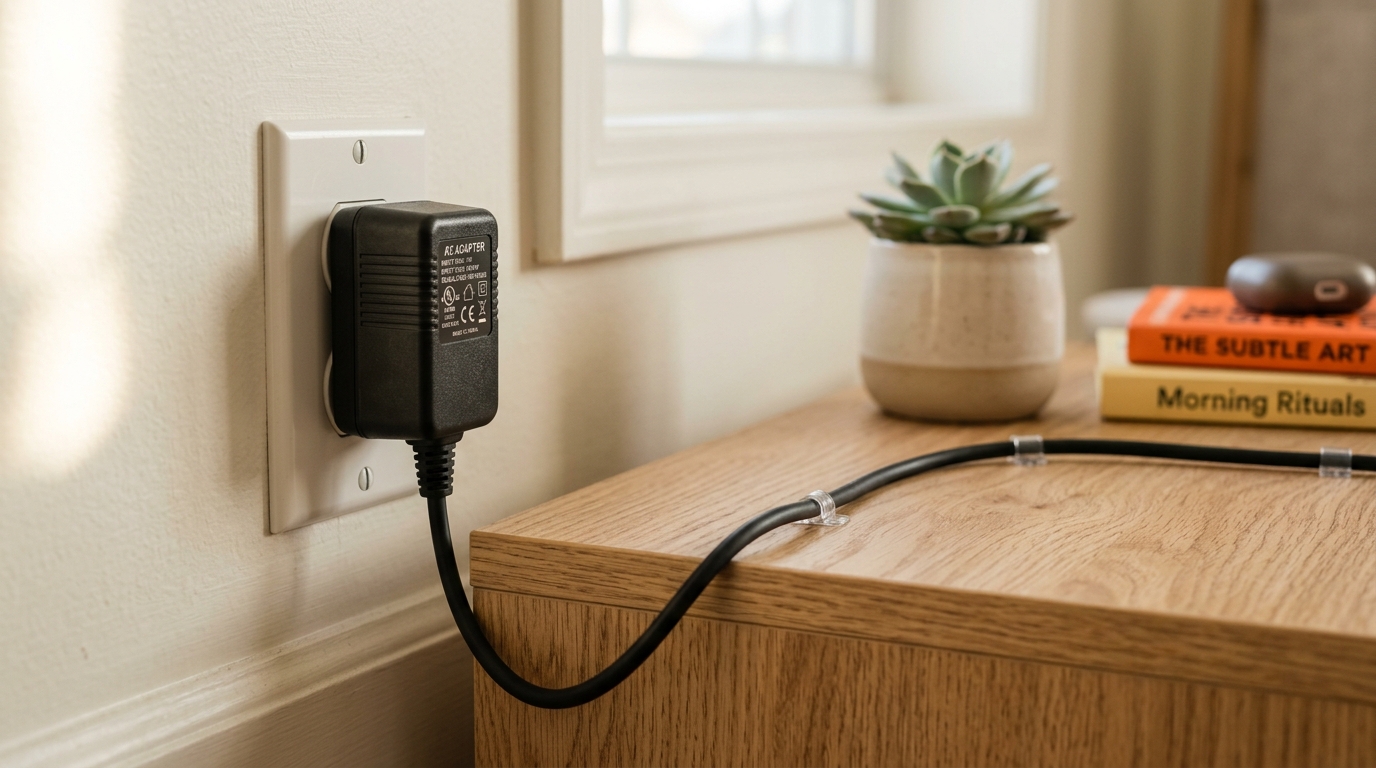
Molded transformer plugs seat securely into ground-up receptacles, preventing loose connections along baseboards.
Troubleshooting Common Switched Outlet Problems
What to Do When the Wall Switch Stops Working
Sometimes a switched outlet suddenly stops responding to its corresponding wall switch. This issue frequently happens when someone replaces an old outlet without understanding split-circuit wiring. Specifically, the installer may have forgotten to break off the brass connecting tab on the new receptacle.
When the brass tab remains intact, continuous line power feeds both sockets simultaneously. Consequently, the wall switch becomes completely useless because continuous current bypasses the switch circuit entirely. Fixing this requires turning off the circuit breaker and removing the tab with pliers.
Alternatively, the wall switch itself may have worn out after thousands of mechanical cycles. Loose terminal screws or cracked internal switch contacts disrupt the circuit flow intermittently. Replacing an inexpensive single-pole wall switch quickly restores smooth, reliable lighting control.
Avoiding Power Loss on Sensitive Electronics
Plugging sensitive digital equipment into a switched socket can lead to frustrating data loss. For example, desktop computers, smart home hubs, and streaming devices shut down abruptly when someone flips the light. Repeated power cuts can corrupt system firmware and shorten electronic hardware lifespans.
Therefore, always plug your computer surge protectors into the unswitched, constant-power socket. Use small color-coded outlet covers or dot stickers to mark the switched socket clearly for family members. This simple visual cue prevents guests and children from accidentally cutting power to critical devices.
In addition, avoid connecting heavy motorized vacuum cleaners or space heaters to switched circuits. High-amperage appliances can overload older 15-amp wall switches and cause internal contact pitting. Consequently, keeping heavy loads on dedicated unswitched circuits preserves your home wiring.
Should You Flip Your Outlets to Face Normal?
Weighing Aesthetics Against Electrical Functionality
Some homeowners feel frustrated by a single upside-down outlet disrupting the visual symmetry of a room. While flipping the outlet right-side up is physically possible, consider its original purpose first. Changing the orientation removes the helpful visual indicator for you and future home buyers.
If you choose to rotate the receptacle, always practice strict electrical safety protocols. First, shut off the correct circuit breaker at the main service panel before touching any tools. Next, verify that power is completely dead using a reliable non-contact voltage tester.
Carefully unscrew the receptacle mounting screws, rotate the metal yoke 180 degrees, and tighten the connections. Ensure the bare copper ground wire remains securely attached to the green grounding screw. However, if you feel uncertain about handling live household wiring, always hire a licensed professional electrician.
Appreciating the Thoughtful Details of Home Wiring
Discovering why are some outlets upside down transforms a puzzling home quirk into an appreciated design feature. Whether acting as a handy lighting indicator or shielding circuits against falling metal debris, flipped receptacles serve meaningful purposes. In addition, understanding split-tab wiring empowers homeowners to manage their electrical systems with confidence.
The next time you spot a reversed plug in your bedroom or living room, test its switch control. Embrace this clever electrical tradition that keeps your household safe, functional, and well-organized. By respecting the craftsmanship behind your walls, you enjoy a more comfortable and efficient home.

Emma D. is the creator, administrator, and voice behind Forum Sever. With a deep-rooted passion for vintage charm and practical living, Emma shares thoughtful homemaking guides, creative DIY projects, heirloom gardening advice, and stories celebrating everyday nostalgia.
Whether reviving timeless family recipes, propagating backyard perennials, or transforming thrifted finds into cozy home centerpieces, her goal is simple: helping readers cultivate a warm, intentional, and handcrafted life. When she isn’t managing the community at Forum Sever, you’ll likely find her in the garden with dirt on her hands, a notebook by her side, and a warm cup of herbal tea nearby.