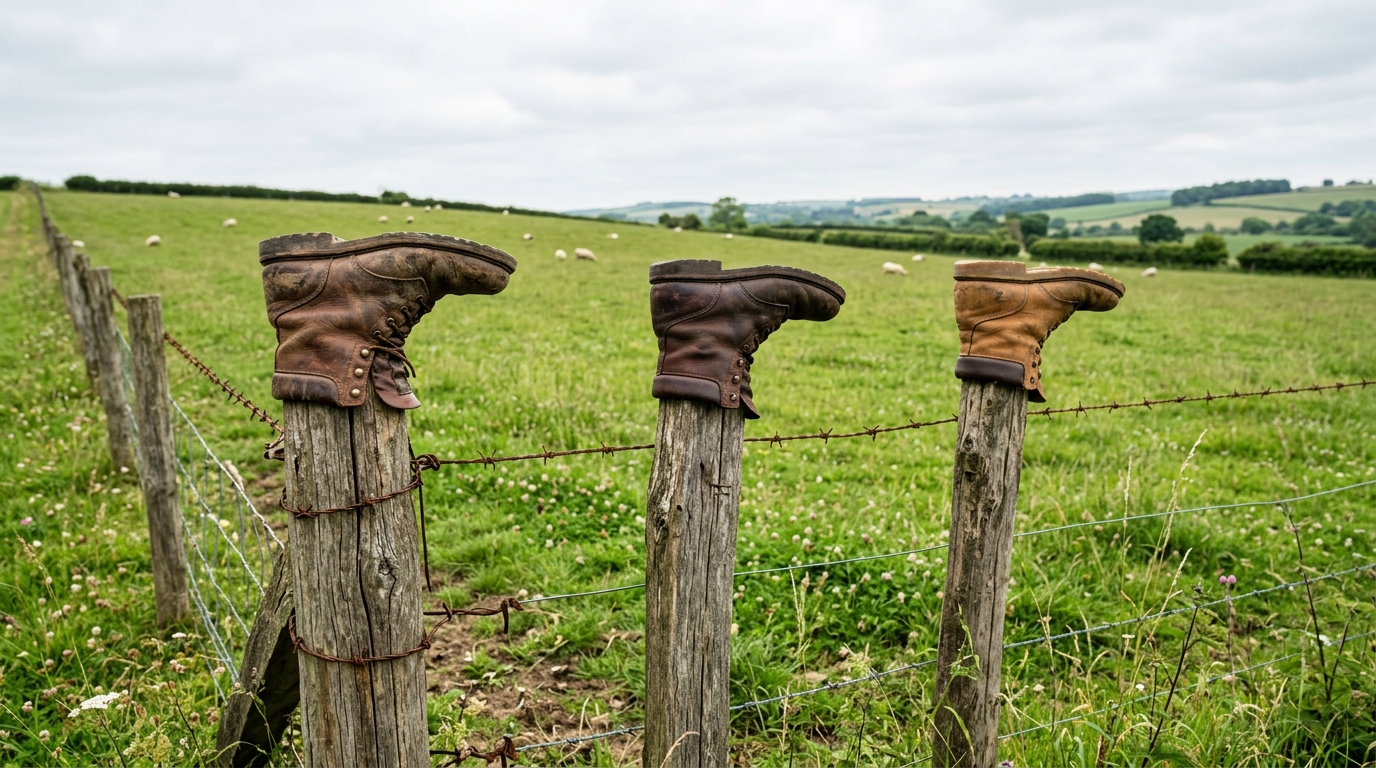
Driving through rural farmland, you will frequently spot old boots on fence posts along open country roads. This weathered sight often sparks curiosity among travelers and homeowners alike. However, this classic country custom is far more than casual yard art. Specifically, placing inverted footwear on posts serves practical wood preservation needs, ranching safety, and rich agricultural traditions.
For generations, homesteaders relied on resourcefulness to protect their property and equipment. Therefore, worn-out work boots were never tossed into the trash without purpose. In addition, rural communities developed unique unspoken communication codes using these fence markers. Today, modern gardeners and homesteaders continue this practice for both structural protection and rustic outdoor charm.
The Practical Wood Science: Why Boots on Fence Posts Save Money
Preventing End-Grain Water Damage and Rot
The primary structural reason for placing footwear on timber is moisture control. Specifically, the exposed top of a wooden post reveals open end-grain wood fibers. These vertical pores draw rainwater deep into the heart of the post through capillary action.
Consequently, standing water accelerates internal fungal decay and rot. As a result, uncapped wooden posts often rot from the inside out within just five years. However, an inverted boot acts as a waterproof protective roof over the wood grain.
Water rolls off the rubber sole and oiled leather sides during heavy storms. Therefore, the delicate timber core stays dry throughout the wettest seasons. This simple barrier can double or triple the lifespan of untreated wooden boundary posts.
Protecting Timber from Sun Cracking and Splitting
Intense outdoor sunlight poses another serious threat to untreated wooden fence lines. For instance, continuous UV exposure dries out natural wood moisture unevenly. As a result, large vertical splits and checks form across the top surface.
These deep cracks create entry channels for rainwater, frost, and boring insects. Furthermore, winter freezing expands trapped moisture, widening the splits rapidly. Placing a heavy boot over the top provides dependable shade against harsh solar heat.
Consequently, the wood maintains a stable moisture level without radical temperature swings. This affordable shield prevents costly post replacements across long property lines. Thus, old work boots provide exceptional long-term utility for frugal landowners.
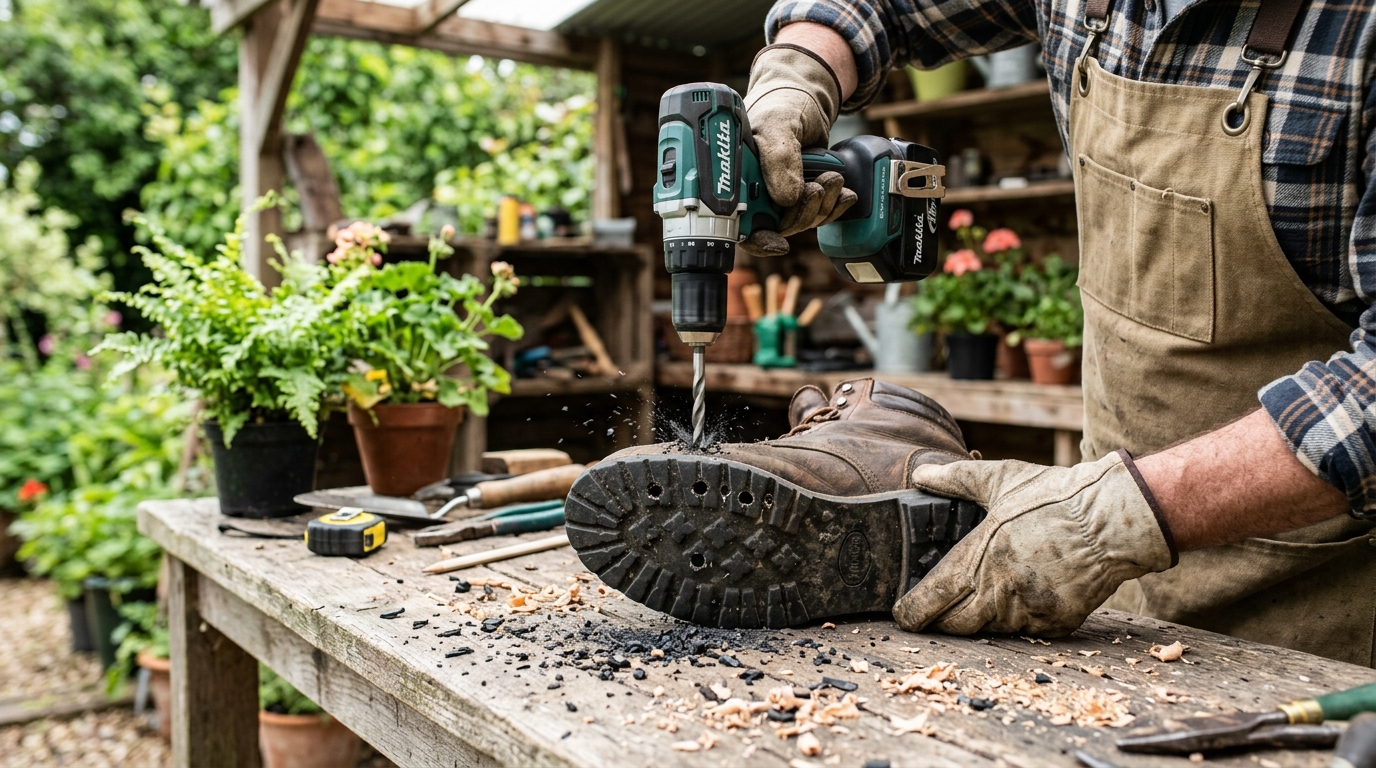
Adding drainage holes allows excess moisture to escape, protecting both the leather and the wooden post beneath.
Pest Control and Ranching Safety Benefits
Deterring Aggressive Stinging Insects
Hollow steel posts and cracked timber attract various unwanted outdoor pests. Specifically, paper wasps, hornets, and yellow jackets love building nests inside dark post cavities. These aggressive stinging insects create serious hazards for farmers inspecting boundary lines.
Covering the top opening with a sturdy work boot seals off the void completely. Therefore, wasps cannot enter to build hidden colonies near human walkways. In addition, small songbirds and rodents are prevented from falling into hollow pipes.
This simple physical barrier creates a safer yard and pasture perimeter. Furthermore, eliminating nesting sites reduces the need for harsh chemical pesticide sprays around your garden. Consequently, the entire ecosystem around your property borders remains balanced and safe.
Covering Hazardous Sharp Metal Tops
Steel T-posts and aged wooden posts often have jagged tops and protruding nails. For example, broken fence tops can easily injure cattle, horses, or curious pets. Moreover, ranchers working in deep winter snow could suffer bad falls onto sharp metal edges.
Placing thick leather or rubber footwear over the post creates a soft, blunt cap. As a result, livestock rubbing against the fence line avoid dangerous cuts and scratches. Similarly, gardeners working along property lines gain valuable bump protection.
Therefore, this rustic solution delivers immediate physical safety benefits across the homestead. In addition, the dark outline makes the fence posts clearly visible against deep winter snowbanks. Thus, utility and safety work together across every season.
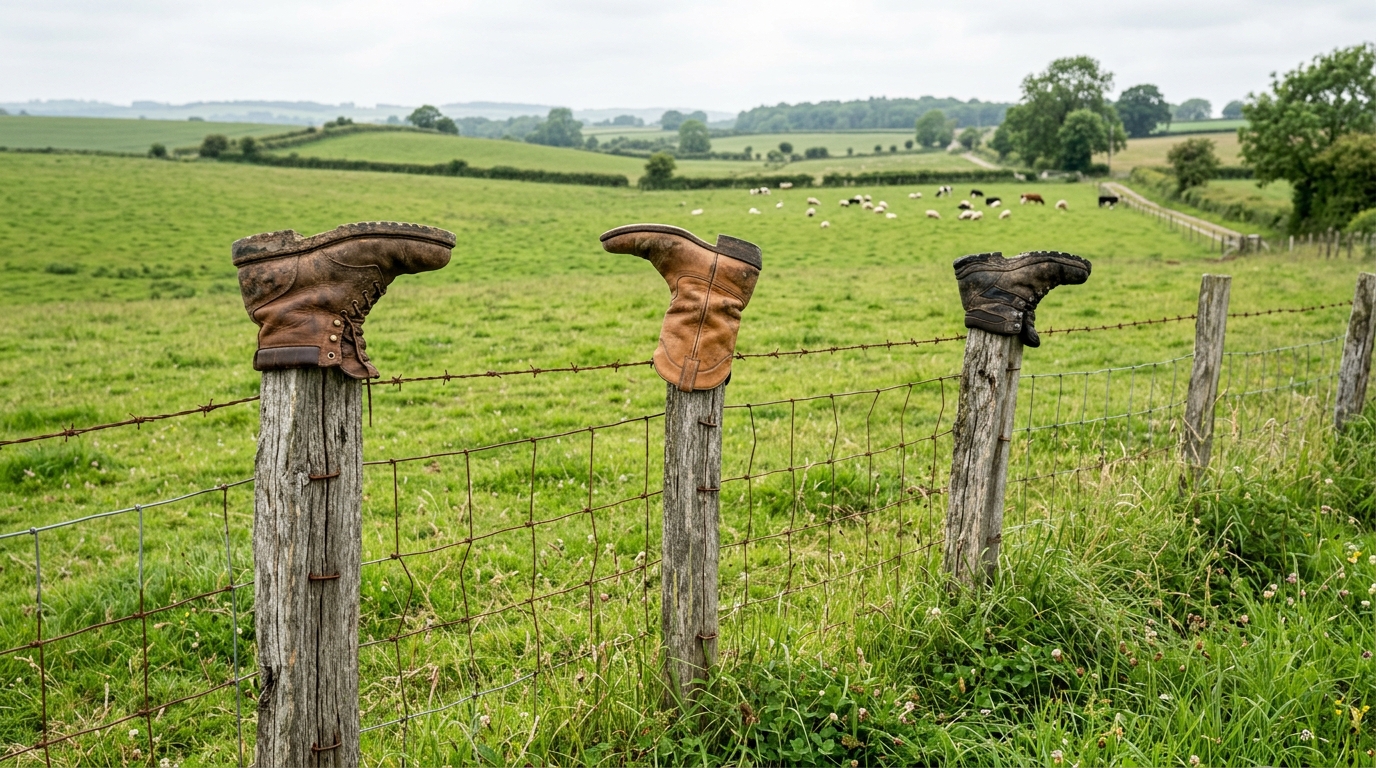
Capping wooden fence posts with old boots shields exposed end-grain fibers from damaging rain and sun exposure.
The Cultural Lore and Traditions of Boots on Fence Posts
Honoring Fallen Ranchers and Faithful Horses
Beyond practical wood protection, this iconic custom carries deep emotional meaning throughout ranching history. For instance, many rural families place a solitary boot on a post to honor a deceased loved one. This silent tribute marks the passing of a rancher who dedicated their life to working the soil.
Similarly, the tradition extends to honoring loyal working horses that passed away. In equestrian circles, placing boots on a pasture post shows gratitude for a faithful companion. It tells passing neighbors that a valued partner completed its final journey across the pasture.
These quiet memorials require no polished brass plaques or formal ceremony. Instead, the worn leather speaks directly to the shared bonds of agrarian life. Consequently, seeing a solitary boot encourages a moment of quiet respect for past labor.
Frontier Navigation and Silent Rural Communication
Before modern street signs and digital maps, travelers relied on visual landmarks for navigation. Therefore, ranchers often mounted distinct colored boots to mark hidden driveway turns and property entrances. Directions like “turn left past the brown work boot” provided clear guidance on rural backroads.
In addition, boot placement served as a silent messaging system between distant neighbors. For example, a boot pointing toward the house signaled that the farmer was home and welcoming visitors. Conversely, a boot turned toward the road indicated the owner was away working distant fields.
Furthermore, completing a long season of manual labor earned a boot its post retirement. After years of mending fences and herding cattle, retired boots were displayed with pride. Thus, each weathered boot tells a personal story of honest hard work.
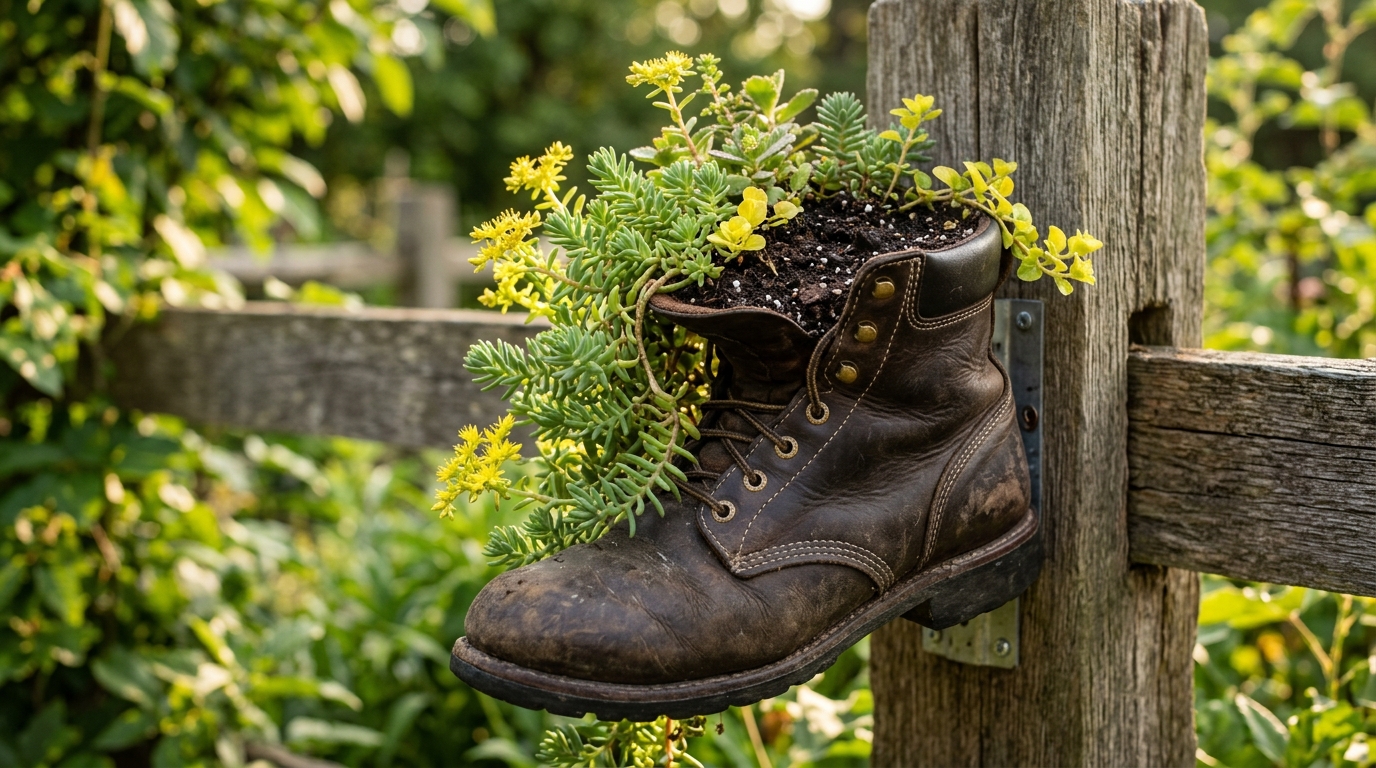
Upcycling retired work boots into vertical fence planters adds greenery while honoring rural gardening traditions.
How to Upcycle Old Boots for Your Garden Fence
Preparing and Weatherproofing Worn Leather
You can easily recreate this charming country tradition along your own garden borders. First, clean the old leather boot thoroughly with warm water, mild soap, and a stiff brush. Remove all dried mud, manure, and road salt from the seams and crevices.
Next, let the footwear dry completely in a shaded, well-ventilated outdoor spot. Once dry, apply a generous coating of natural beeswax or boiled linseed oil. This protective treatment restores flexibility to the leather and shields it against rain rot.
Finally, drill two small ventilation holes near the toe box using a hand drill. These holes allow condensation to escape, preventing trapped moisture against the post. Consequently, your upcycled project will withstand extreme outdoor weather for many years.
Step-by-Step Guide to Secure Post Mounting
Proper mounting ensures your decorative boot remains secure during intense seasonal windstorms. Follow these simple steps for a secure, long-lasting installation:
- Step 1: Check the Post Top: Ensure the timber surface is clean, level, and free of active wood rot.
- Step 2: Position the Footwear: Slide the boot collar completely over the post top until seated firmly.
- Step 3: Secure with Hardware: Drive a 2-inch stainless steel screw through the inner heel into the wood.
- Step 4: Add a Washer: Use a wide rubber washer under the screw head to prevent tearing the material.
- Step 5: Verify Alignment: Ensure the toe points in your desired direction for optimal drainage.
This quick installation process protects your fence posts against severe wind lift. In addition, using corrosion-resistant hardware prevents unsightly rust stains from dripping down your wooden posts. Thus, your boundary markers remain secure and attractive through every storm.
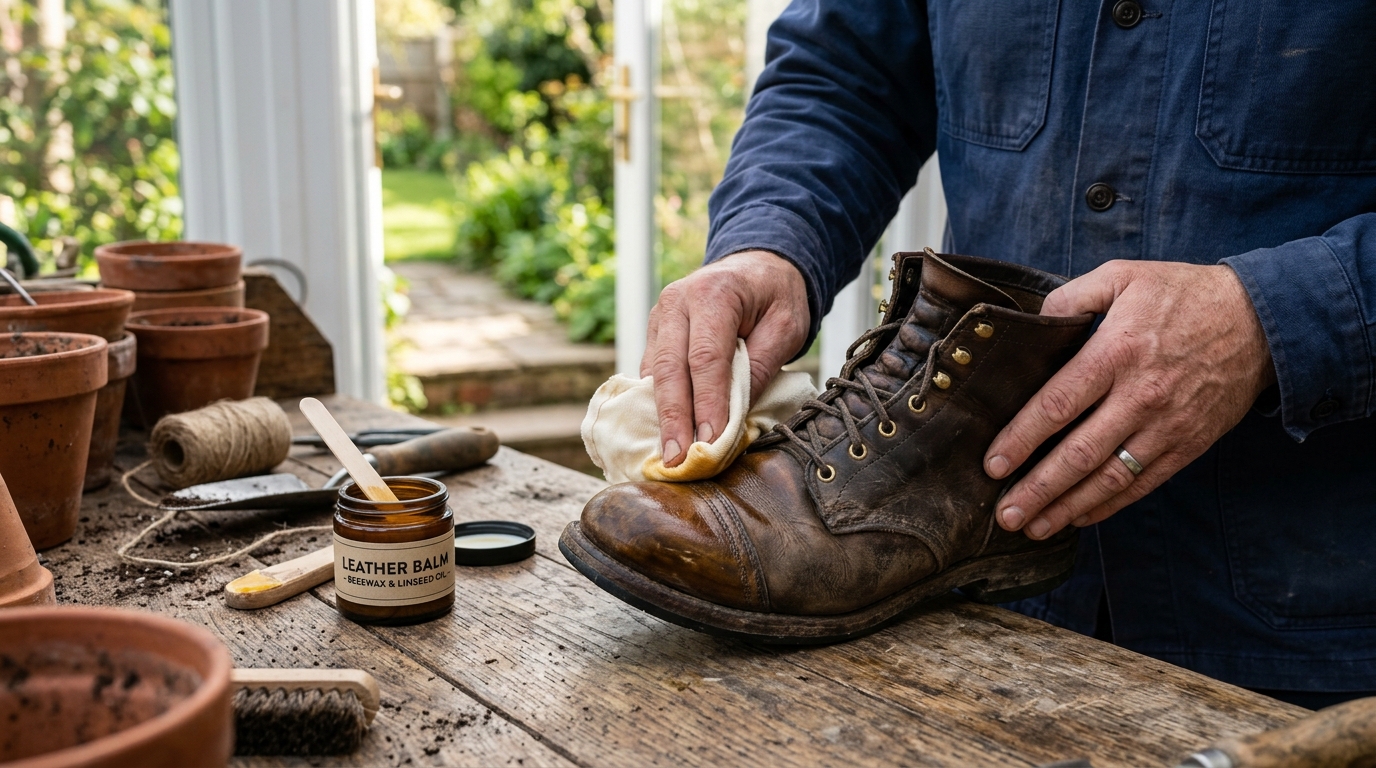
Treating vintage leather with natural wax conditioners prevents cracking and extends outdoor longevity.
Transforming Fence Boots into Thriving Vertical Planters
Choosing the Right Soil Mix and Drainage Materials
Turning retired footwear into vertical garden planters is a wonderful way to add garden greenery. However, proper internal layering is necessary to keep your plants healthy. First, line the lower foot area with an inch of coarse gravel or expanded clay pebbles.
This bottom layer prevents the drainage holes from clogging with wet soil. Next, fill the upper boot with a lightweight, well-draining potting blend containing perlite and compost. Avoid heavy garden topsoil, which compacts tightly and suffocates delicate plant roots.
In addition, mix in a slow-release organic fertilizer to nourish your plants through the growing season. This rich growing medium retains balanced moisture while allowing excess water to drain freely. As a result, your fence-top plants will flourish with vibrant color and vigor.
Selecting Hardy Plants for Vertical Containers
Because boots hold a limited volume of soil, select drought-tolerant plant varieties. For example, hardy succulents like hens-and-chicks and trailing stonecrop thrive in shallow containers. These tough plants tolerate intense sun exposure and require minimal watering.
Alternatively, culinary herbs make delightful choices for sunny garden fence lines. Specifically, creeping thyme, oregano, and rosemary produce aromatic foliage and lovely small flowers. For shady perimeters, consider planting vibrant trailing ivy or delicate woodland mosses.
Furthermore, colorful annuals like pansies, petunias, and trailing lobelia provide stunning warm-season displays. These cascading blooms spill over the leather collar, softening the rustic appearance. Therefore, you can tailor your plant selections to match your garden style.
Troubleshooting Common Outdoor Fence Boot Problems
Preventing Mold and Internal Wood Rot
If you notice musty smells or white mold forming inside the boot, moisture is trapped. Therefore, inspect the drainage holes immediately to clear out any packed dirt or debris. In addition, lift the boot slightly to allow airflow around the wooden post top.
To prevent rot in rainy regions, wrap the post top in breathable asphalt roofing felt first. Then, place the boot over the felt-covered timber for a double layer of protection. Consequently, the wood grain stays dry while allowing natural vapor expansion.
Similarly, avoid synthetic plastic boots that do not breathe in hot summer weather. Genuine leather and breathable canvas allow humidity to escape naturally. Thus, selecting the right materials prevents mold growth and preserves your wooden fence line.
Managing Winter Freezing and Soil Heaving
Cold winter climates require special care for planted fence boots. Specifically, wet potting soil expands when frozen, which can split old leather seams. Therefore, transition your planter boots into dormant winter mode before the first hard freeze.
Remove annual plants and compost in late autumn, allowing the internal soil to dry. Alternatively, swap out summer annuals for cold-hardy evergreen sprigs, pinecones, and red winterberry branches. This seasonal update keeps your fence line festive without risking moisture damage.
In addition, reapply a quick layer of leather balm before winter storms arrive. This waxy barrier repels snow, sleet, and road salt effortlessly. Consequently, your rustic fence markers emerge in excellent condition when spring returns.
Long-Term Care for Outdoor Leather Accents
Maintaining outdoor leather requires minimal effort once or twice every year. For instance, inspect your fence boots every spring after the snow melts. Wipe away accumulated pollen, dirt, and spider webs using a damp cloth.
Next, check the mounting screws to ensure winter winds have not loosened the hold. Tighten any loose hardware to keep the boot sitting firmly over the post center. Furthermore, reapply a thin coat of linseed oil to prevent summer sun cracking.
These simple upkeep steps take only a few minutes per post each season. In return, your rustic outdoor displays will last for decades without deteriorating. Therefore, consistent seasonal maintenance delivers outstanding visual rewards across your landscape.
Bringing Rural Charm and Protection to Your Homestead
The timeless tradition of displaying boots on fence posts blends genuine practical science with rich rural history. By protecting exposed wood end-grain from rot, resourceful farmers saved valuable time and money. Meanwhile, they created unforgettable cultural markers that still inspire modern homesteaders today.
Whether you want to prevent post decay or craft unique vertical planters, this practice delivers exceptional value. Specifically, repurposing worn footwear brings authenticity, safety, and creative greenery to any garden perimeter. Embrace this iconic country custom on your property to celebrate agricultural history and smart outdoor design.

Emma D. is the creator, administrator, and voice behind Forum Sever. With a deep-rooted passion for vintage charm and practical living, Emma shares thoughtful homemaking guides, creative DIY projects, heirloom gardening advice, and stories celebrating everyday nostalgia.
Whether reviving timeless family recipes, propagating backyard perennials, or transforming thrifted finds into cozy home centerpieces, her goal is simple: helping readers cultivate a warm, intentional, and handcrafted life. When she isn’t managing the community at Forum Sever, you’ll likely find her in the garden with dirt on her hands, a notebook by her side, and a warm cup of herbal tea nearby.