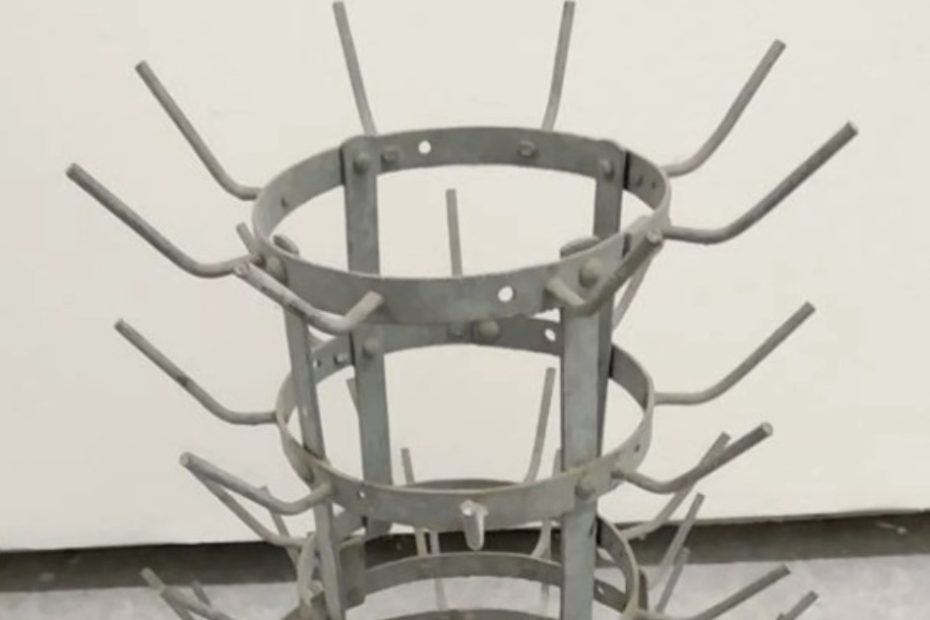
An authentic French zinc bottle tree showcases classic heavy rivets and multi-tiered construction.
You stumble into your kitchen before sunrise, craving that first rich sip of hot coffee. However, digging through cluttered, teetering cabinets for your favorite ceramic mug instantly ruins the calm morning mood. Bringing an authentic French bottle drying rack into your space fixes countertop chaos while delivering unmatched rustic charm.
Originally forged for nineteenth-century European dairy houses, these sculptural iron towers have quickly become coveted vintage organization pieces. Today, they effortlessly bridge the gap between historic craftsmanship and smart daily storage. Let us explore the rich history, savvy styling ideas, and simple restoration tricks behind this timeless metalwork treasure.
What Is a Vintage French Bottle Drying Rack?
Affectionately known across French country estates as a porte-bouteilles or a hérisson (the French word for hedgehog), these racks solved a major daily chore. Before the era of plastic containers and electric appliances, rural homesteads relied on heavy glass jugs for fresh spring water, morning dairy, pressed apple cider, and homemade vinegar.
Washing narrow glass containers by hand trapped stubborn moisture inside, which quickly bred mold and sour odors. French blacksmiths solved this headache by crafting conical metal frames lined with upward-angled iron prongs. Sliding wet vessels upside down allowed water to drain freely while air circulated inside, cutting drying time in half.
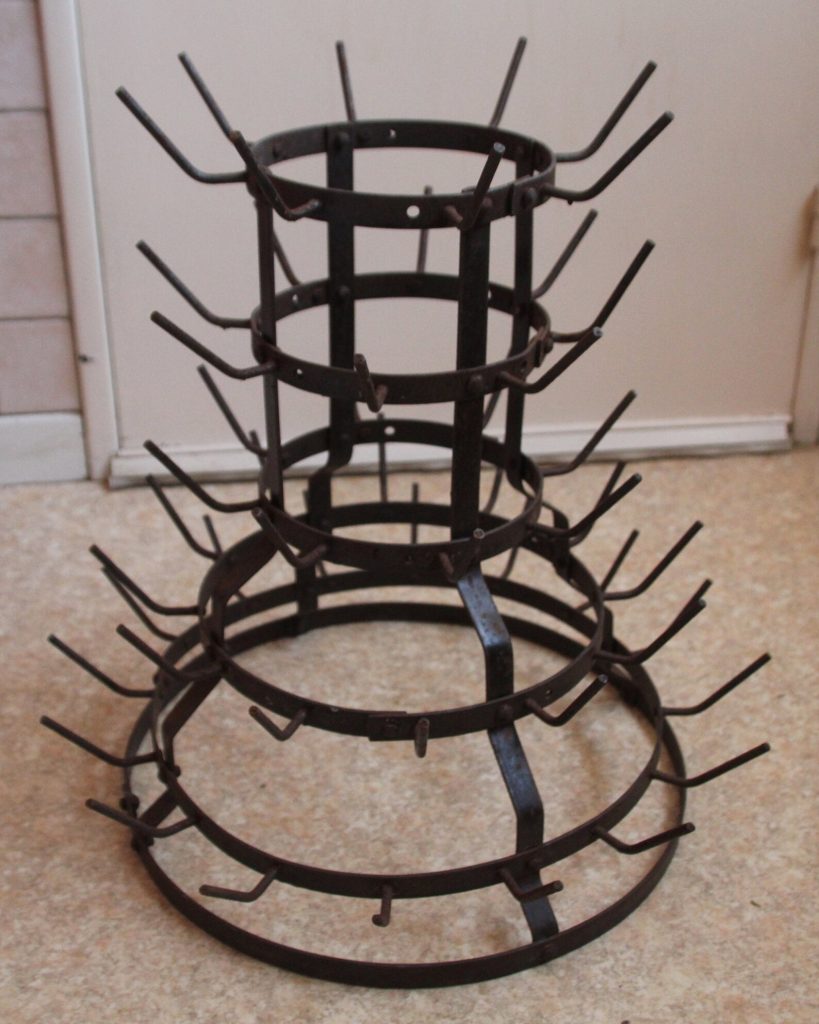
Heavy dark iron and hand-bent prongs distinguish authentic nineteenth-century country drying stands.
In fact, this everyday tool made art history in 1914 when modern artist Marcel Duchamp purchased one at the Bazar de l’Hôtel de Ville in Paris. By displaying it purely as art, he created one of the world’s very first famous ready-made sculptures.
Spotting Authentic Antiques vs. Cheap Reproductions
Because rustic French country decor remains wildly popular, retail reproduction stands flood modern home goods aisles. If you want authentic history, solid weight, and true character, keep an eye out for these key construction clues.
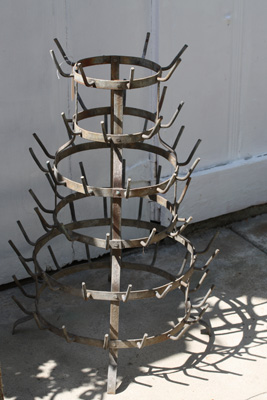
Multi-tiered floor models offer generous vertical storage with a charming, weathered patina.
- Hand-Hammered Rivets: Genuine period pieces feature solid iron rivets securing each circular tier to the vertical backbone. Cheap modern copies usually rely on flimsy spot welds or visible hex screws.
- Substantial Iron Weight: Authentic antique iron racks feel surprisingly heavy in your hands. As a result, they never wobble or tip over when loaded with heavy stoneware pottery.
- Subtle Imperfections: Look closely at the prong angles. Hand-forged nineteenth-century pieces show slight variations in spacing, proving real human blacksmith work rather than automated factory stamping.
- Natural Zinc Oxidation: True galvanized vintage racks develop a soft, chalky white-gray patina over decades of moisture exposure instead of uniform silver spray paint.
Creative Ways to Style a Bottle Tree in Your Home
You do not need an antique dairy collection to put one of these rugged metal stands to work. In fact, their smart vertical design provides functional storage across almost every room in your home.
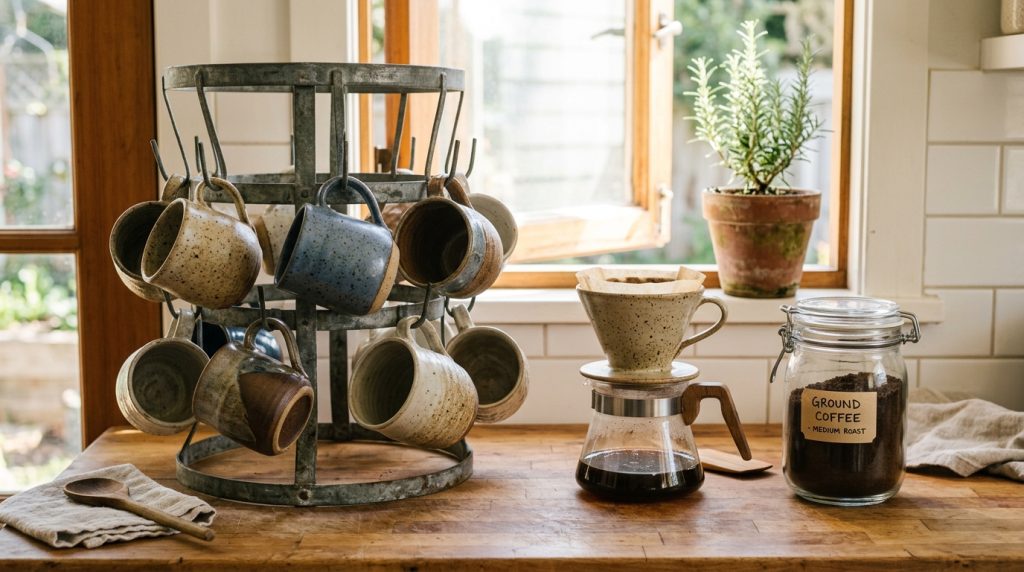
Use sturdy metal pegs to keep your favorite ceramic mugs organized right beside your pour-over setup.
1. The Ultimate Morning Coffee Station
Transform a tabletop rack into an accessible mug stand right next to your kettle or espresso machine. Hook your favorite handcrafted pottery cups and enameled mugs by their handles. It frees up precious shelf space while turning your cup collection into intentional kitchen art.
2. Inverted Glassware and Carafe Storage
Store your everyday ribbed tumblers, vintage juice glasses, and glass water carafes right on your counter. Storing cups upside down keeps dust out of the interior and lets clean glassware air out naturally between meals.
3. Upside-Down Garden Herb Drying Tree
Harvest bundles of fresh rosemary, lavender, oregano, and chamomile from your backyard garden beds. Tie the leafy stems with natural jute twine and hang them from the top spikes in a warm, dry corner to cure homegrown seasoning for winter stews.
4. Craft Room Twine and Ribbon Organizer
Tired of craft drawers filled with tangled spools? Slide rolls of baker twine, burlap ribbon, and linen tape directly onto the metal prongs. You can easily pull and snip the exact length you need without spools rolling away.
Pro Tip: Always balance heavy stoneware items evenly around the lower rings first. Distributing the weight across opposite sides keeps the center of gravity low and prevents accidental tips.
Cleaning, Rust Removal, and Natural Metal Care
When you bring home an antique iron stand from a barn sale or country auction, it often carries layers of dust and surface oxidation. Restoring the metal safely for kitchen use requires only a few natural pantry staples.
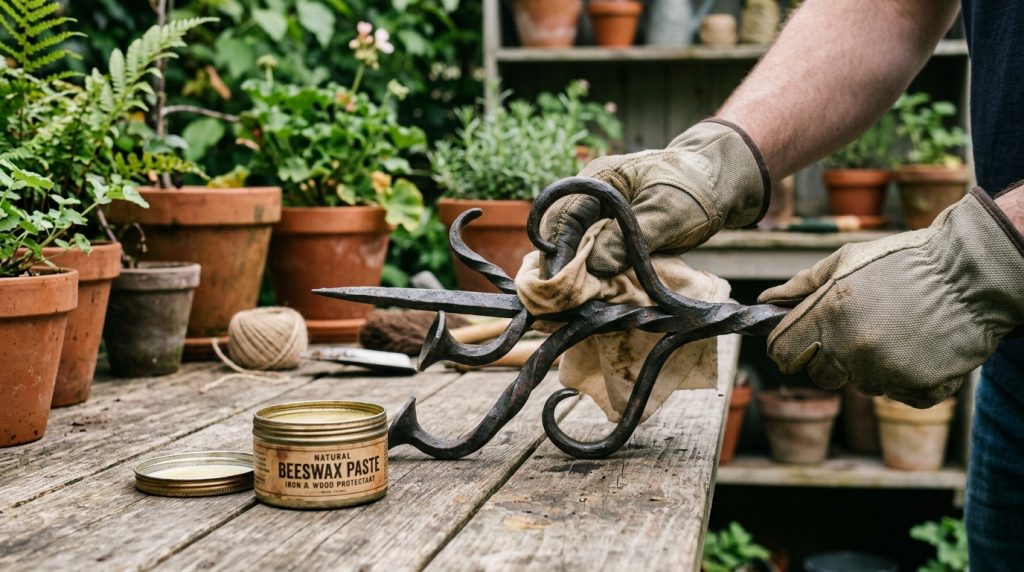
Rubbing food-grade beeswax paste into warmed iron deepens the natural finish and locks out moisture.
Step 1: Knock Away Loose Flakes
Take the stand outdoors and scrub the surface with a soft brass-wire brush. Brass bristles easily dislodge crusty grime and loose oxidation without gouging the vintage iron underneath.
Step 2: Wash with Natural Soap
Wash down the entire frame with warm water and eco-friendly castile soap, using a stiff nylon sponge to remove trapped dirt. Rinse thoroughly and dry the metal immediately using an old cotton towel to prevent flash rust.
Step 3: Seal with Food-Grade Beeswax Paste
Warm the metal gently using a household hairdryer or by placing the stand in the warm afternoon sun. Then, rub a generous layer of natural beeswax paste or food-grade mineral oil across the metal using a clean rag. The wax sinks deep into the metal pores, creating a moisture-resistant barrier that darkens the finish beautifully.
Step 4: Protect Delicate Countertops
Raw iron feet can easily scratch butcher block or polished quartz surfaces. Simply stick three or four clear silicone bumper pads to the bottom metal ring before placing the stand on your counter.
Frequently Asked Questions
How much does an authentic antique French bottle rack cost?
Tabletop four-tier models generally sell between $75 and $175 at antique markets. Larger commercial floor-standing versions with six or more rings frequently command $300 to $500 depending on overall condition and proven provenance.
Can I keep an antique metal rack outdoors on my patio?
Yes, vintage zinc-galvanized frames hold up exceptionally well outdoors. Use them near your potting bench to hold hand trowels, shears, and inverted small terra cotta pots.
Add Enduring Character to Your Daily Routine
Finding smart storage that adds authentic character to modern living can feel challenging. A genuine French bottle drying rack delivers practical vertical organization, historic metal craftsmanship, and everyday functionality in one bold package. Hunt for a sturdy piece at your local flea market this season and enjoy effortless, clutter-free farmhouse living every single day.

Emma D. is the creator, administrator, and voice behind Forum Sever. With a deep-rooted passion for vintage charm and practical living, Emma shares thoughtful homemaking guides, creative DIY projects, heirloom gardening advice, and stories celebrating everyday nostalgia.
Whether reviving timeless family recipes, propagating backyard perennials, or transforming thrifted finds into cozy home centerpieces, her goal is simple: helping readers cultivate a warm, intentional, and handcrafted life. When she isn’t managing the community at Forum Sever, you’ll likely find her in the garden with dirt on her hands, a notebook by her side, and a warm cup of herbal tea nearby.