Saturday morning room sweeps have a way of testing your nervous system. You walk in armed with an empty laundry basket and good intentions, ready to rescue stray socks and reclaim dirty water glasses. But every parent knows that quiet flash of adrenaline when your eyes snag on something unidentifiable lurking near the baseboards. When it comes to identifying chocolate bloom on candy, that momentary jolt between motherly terror and hilarious relief is a rite of passage.
My knees hit the floorboards last weekend when I spotted a cluster of brittle, chalky, pale fragments shoved between the bedpost and the nightstand. In a split second, my brain bypassed common sense and sprinted straight into a full-blown parental panic. Was it contraband? Chemical residue? Some bizarre new teenage trend I had not read about yet?
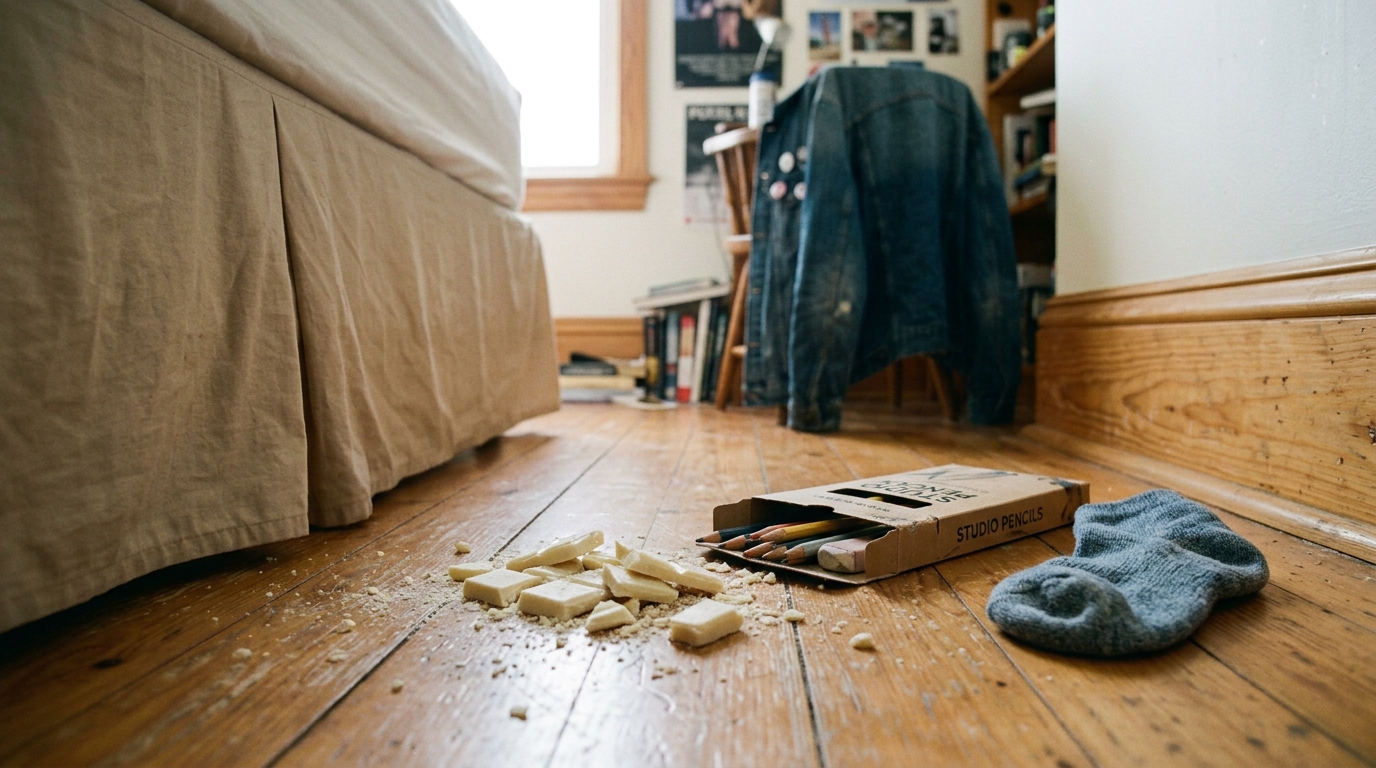
A harmless forgotten treat can look surprisingly ominous when discovered in the shadows under a bed.
The Heart-Stopping Moment: When Your Imagination Runs Wild
Every mother carries an invisible library of quiet worries. We try to give our teenagers independence and space to grow, but our protective instincts stay on high alert. When you spot a mysterious, powdery substance scattered across the floor, your mind does not calmly suggest confectionary science.
I crouched beside the bed, holding my breath as I reached for one of the dry, crumbly pieces with trembling fingers. It felt rough, cold, and strangely light. My pulse hammered in my ears while I turned the fragment over in my palm, mentally drafting a frantic speech about safety and honesty.
Then I caught a faint, unmistakable scent. It was not plaster, drywall, or anything illicit. It smelled like warm vanilla bean and rich cocoa butter. I pinched the fragment between my thumb and forefinger, and within seconds, the powdery white crust softened into a familiar, slick sheen. It was simply an old, neglected square of white chocolate that had slipped behind the headboard months ago.
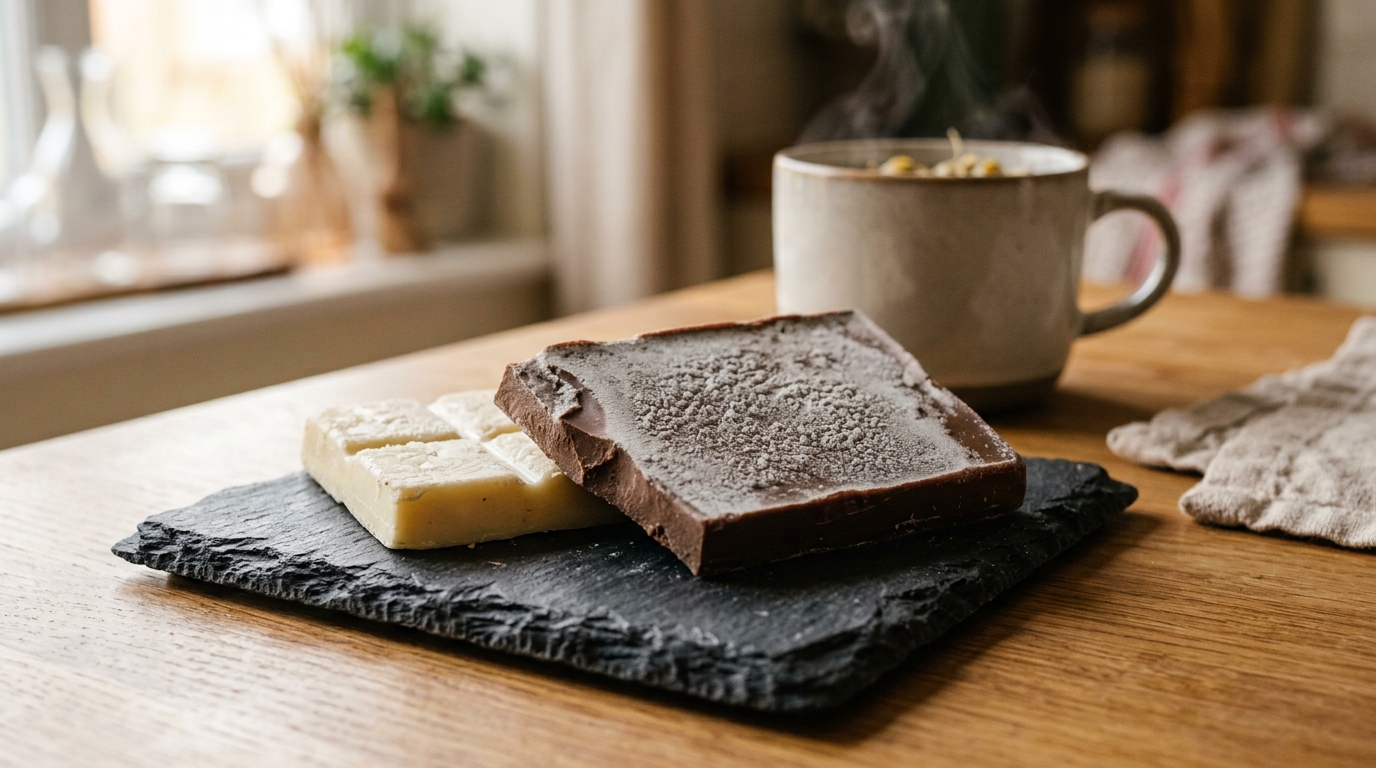
Temperature swings cause cocoa butter to separate and rise to the surface, creating that strange chalky bloom.
The Food Science: Identifying Chocolate Bloom on Candy
What turns a smooth confection into a chalky, frightening mystery on the floor? The culprit is a completely natural physical reaction known as chocolate bloom. While it looks startling and unappetizing, it is merely food chemistry playing out in slow motion.
Chocolate is a delicate emulsion of cocoa solids, sugar crystals, and cocoa butter. When a candy bar sits in an unstable environment, the stable structure breaks down. Warm bedroom afternoons followed by cool evening drafts cause the fats or sugars to separate from the emulsion and migrate directly to the outer surface.
There are two distinct types of bloom that can make an innocent sweet treat look like something dug out of a construction site:
- Fat Bloom: This happens when cocoa butter melts and rises to the outer surface, then cools and recrystallizes into uneven, whitish film patterns. It feels slightly greasy when rubbed and melts instantly with body heat.
- Sugar Bloom: This occurs when humidity or moisture condenses on the chocolate surface. The moisture dissolves the surface sugar crystals, which then dry into a hard, dusty, matte crust that feels gritty to the touch.
“Bloom is never dangerous or toxic; it is simply cocoa butter and sugar crystals rearranging themselves when exposed to shifting bedroom temperatures.”
Bloom vs. Mold: The Simple Kitchen Scratch Test
Finding old food tucked under furniture raises immediate questions about mold. Fortunately, telling the difference between harmless bloom and unwanted mold takes only a few seconds using simple sensory checks.
First, try the warmth test. Rub a small piece between your fingertips. Fat bloom dissolves immediately into a smooth oil because cocoa butter melts at human body temperature. Mold will stay fibrous, spongy, or crusty under your fingers.
Second, check the texture under a flashlight. Bloom lies flat as a dry, powdery film across the surface contours of the chocolate. Mold grows upward in fuzzy, web-like structures and often carries an earthy, sour stench rather than a sweet, buttery aroma.
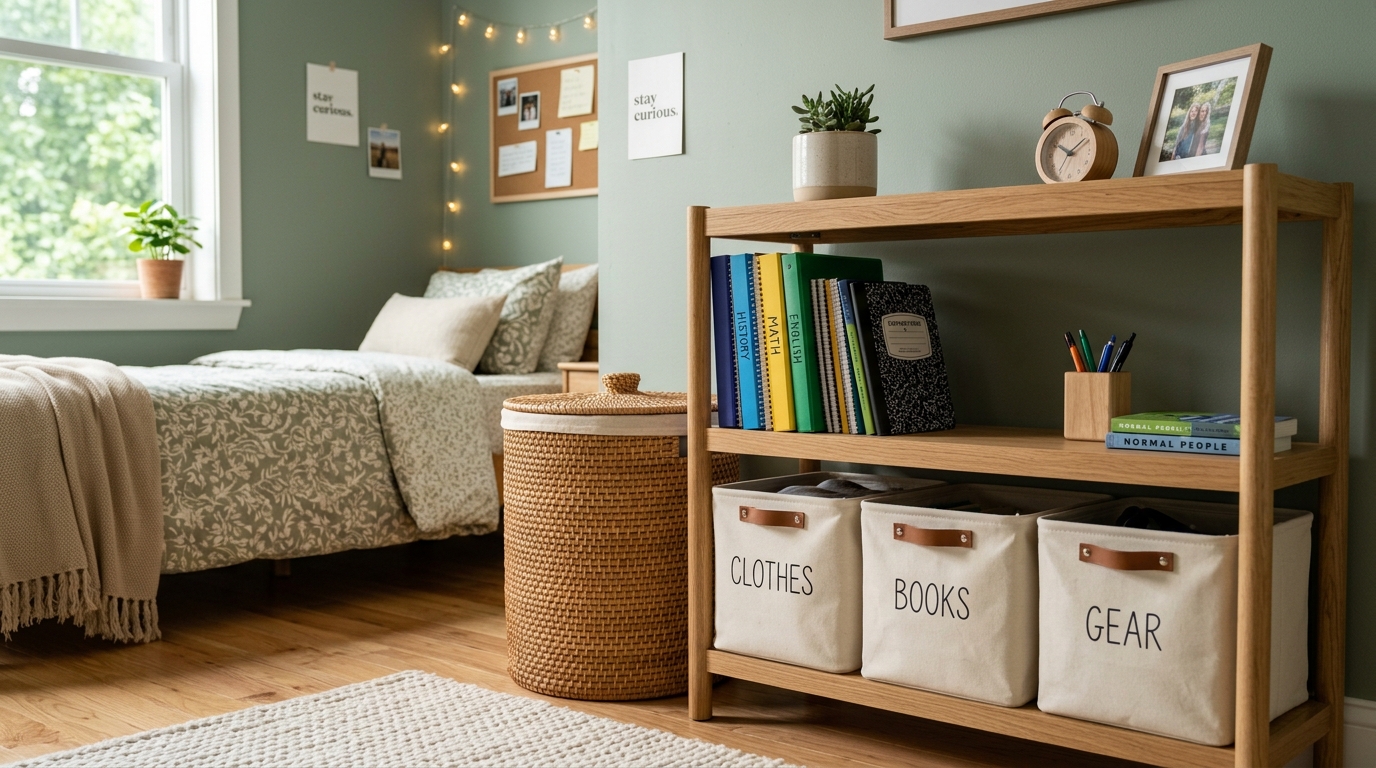
Simple room organization systems keep stray snacks from migrating into forgotten corners.
Managing the Chaos: Sane Bedroom Rules for Growing Kids
A stray square of bloomed candy is harmless, but it highlights how easily food migrates into teenage hideaways. Bedrooms should be cozy sanctuaries, not secondary pantry storage where forgotten snacks attract ants or mystery stains. Setting simple, respectful household routines helps keep the chaos contained without turning into the house warden.
1. Establish a Designated Snack Caddy
Banishing all snacks from a teen’s room is often an uphill battle. Instead, place a lidded plastic tub or wooden caddy on their desk for wrapped items. Keeping snacks in one visible spot prevents treats from tumbling into the dark gap behind the mattress.
2. The Weekly Sunday Dish Sweep
Make dish retrieval a low-stress, routine event. Place a designated plastic collection tote in the hallway every Sunday afternoon. Teens can quickly clear their desks, dressers, and nightstands of cups, bowls, and wrappers without facing a lecture.
3. Keep a Handheld Dustbuster in the Hallway
Make cleaning accessible. A lightweight, cordless vacuum hung near the linen closet allows kids to quickly sweep up cracker crumbs, pencil shavings, or dropped craft supplies before they turn into floorboard archaeology.

Approaching domestic surprises with curiosity and humor keeps lines of communication wide open.
How to Talk to Your Teen Without Sounding Accusatory
When you discover something odd in your child’s space, that initial jolt of parental anxiety can make you react sharply. But launching an intense interrogation over an innocent misunderstanding damages trust and shuts down open conversations.
Take a breath and verify the facts before asking questions. Examine the item in good light, test it, and gather your composure. When you do bring it up, lead with lighthearted humor rather than suspicion.
Later that afternoon, I held up the mysterious fragment and asked my son, “Did you leave a vintage piece of candy to age gracefully behind your nightstand, or are we running a science experiment?” He laughed, turned red, and remembered buying a specialty white chocolate bar after track practice three months earlier.
A playful approach opens the door for honesty. When children see that you stay calm and avoid jumping to dramatic conclusions, they feel safe coming to you with the real challenges that actually matter.
Finding Humor in Everyday Homemaking
Parenting is full of unexpected jump-scares. One day you are calmly folding laundry, and the next you are running forensic tests on a dusty corner of the carpet. Learning the fine art of identifying chocolate bloom on candy reminds us to take a breath, smile at our own runaway imaginations, and give our kids the benefit of the doubt.
The next time you spot something strange under a piece of furniture, hold back the panic for just a minute. Pick it up, give it a sniff, and remember that life with growing kids is wonderfully messy, deeply sweet, and almost always less terrifying than we think.

Emma D. is the creator, administrator, and voice behind Forum Sever. With a deep-rooted passion for vintage charm and practical living, Emma shares thoughtful homemaking guides, creative DIY projects, heirloom gardening advice, and stories celebrating everyday nostalgia.
Whether reviving timeless family recipes, propagating backyard perennials, or transforming thrifted finds into cozy home centerpieces, her goal is simple: helping readers cultivate a warm, intentional, and handcrafted life. When she isn’t managing the community at Forum Sever, you’ll likely find her in the garden with dirt on her hands, a notebook by her side, and a warm cup of herbal tea nearby.