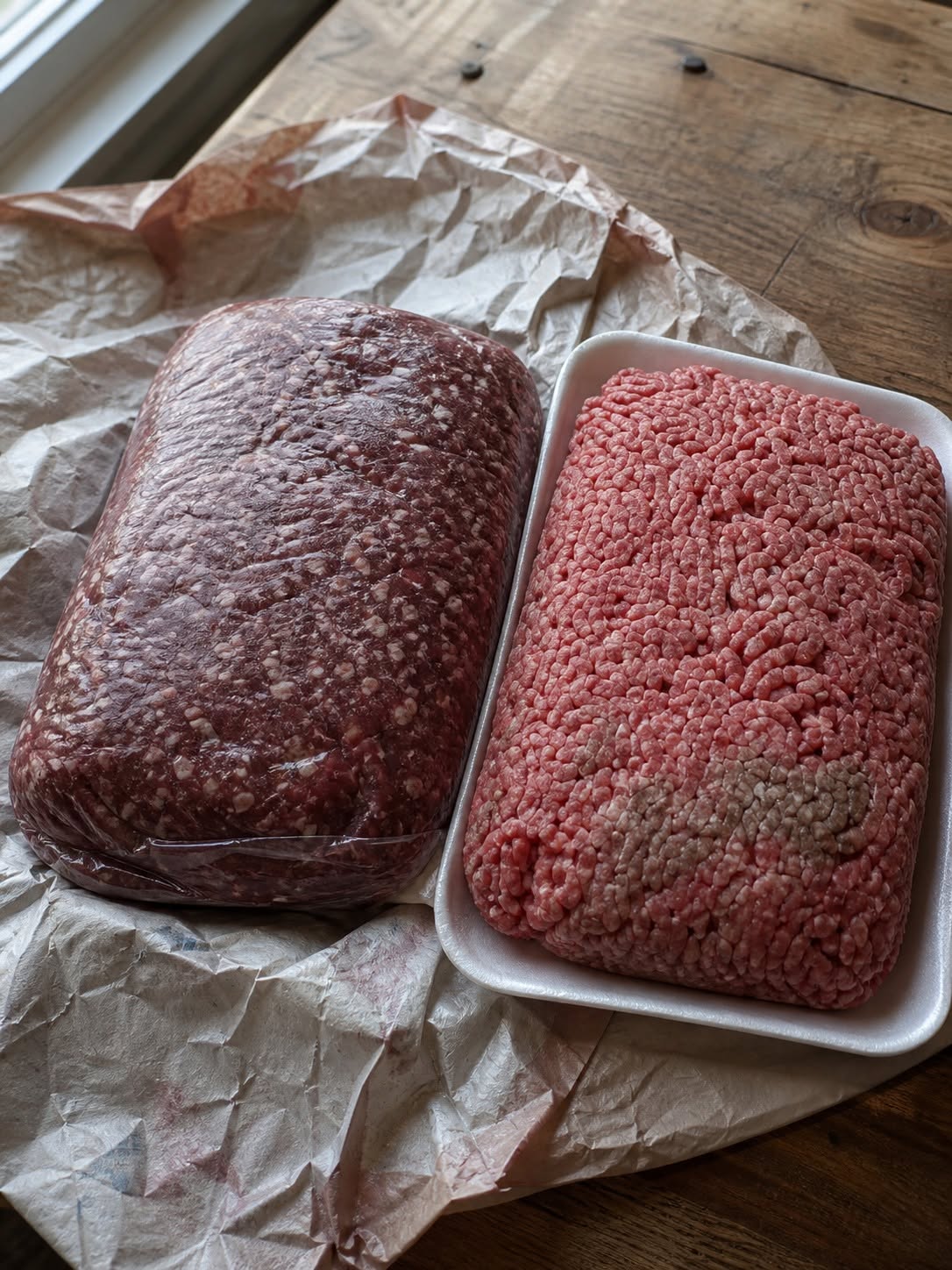
You can spot the difference the second it hits the pan. One burger patty shrinks into a gray puddle of cloudy water, spitting grease across the stovetop, while the other stays plump, sizzling with a deep, earthy aroma that fills the whole kitchen. If you have ever wondered why home cooks obsess over local pastures, comparing farm-raised beef vs store-bought beef reveals far more than simple grocery store marketing.
The divide between supermarket meat counters and small family acreage changes everything from how you sear a steak to how much actual food ends up on your plate. Getting to the bottom of this difference helps you spend your food budget with real confidence.
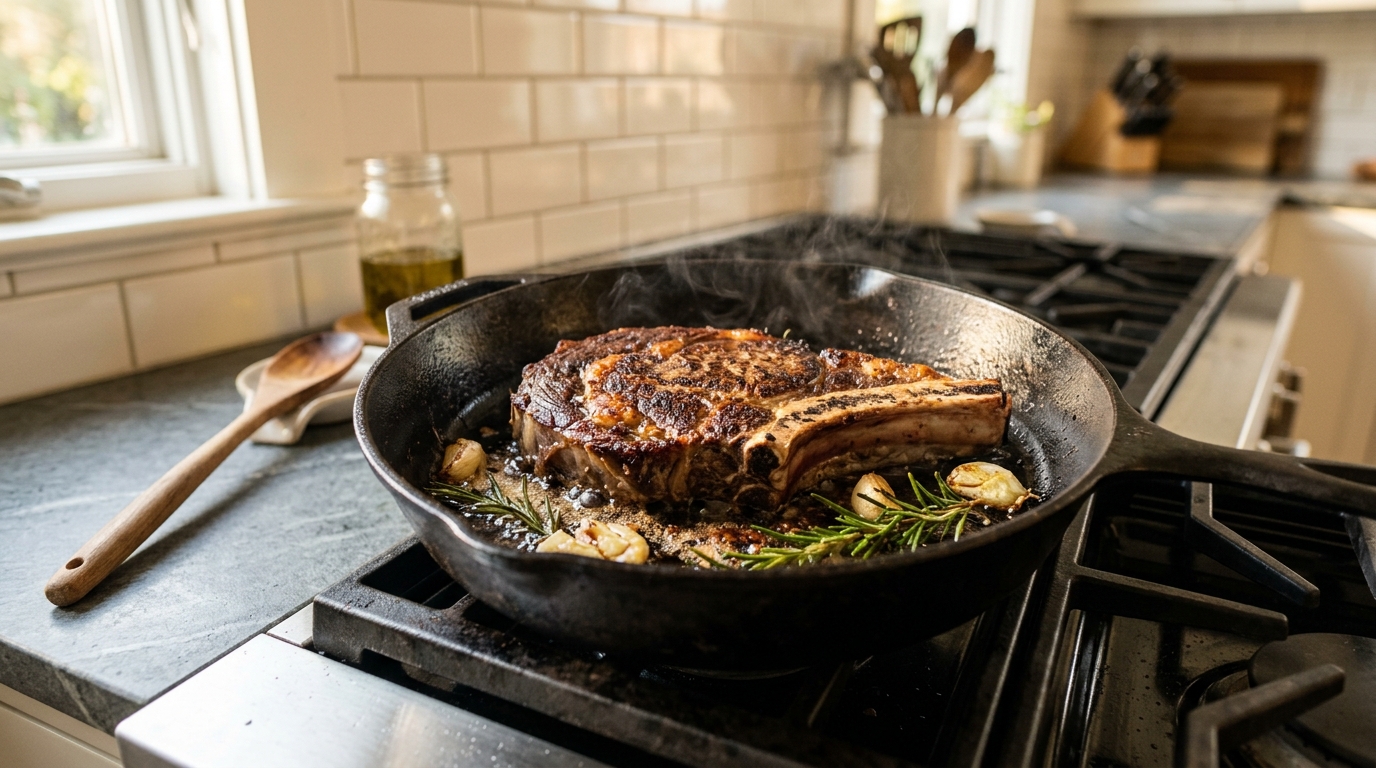
A quick sear in a hot cast-iron skillet brings out the deep, savory crust of lean pasture-raised beef.
The Pan Test: Why Farm-Raised Meat Cooks Completely Differently
Supermarket ground beef often leaves home cooks frustrated. You drop what looks like a thick pound of meat into a hot pan, only to watch it steam instead of sear. Commercial operations frequently process meat under conditions that retain added moisture, and supermarket cuts rarely receive the traditional dry-hanging time that butcher-sourced meat enjoys.
Farm-raised cattle are generally processed at smaller, regional facilities where carcasses hang in temperature-controlled coolers for ten to twenty-one days. This hanging period allows natural enzymes to break down tough muscle fibers while moisture gently evaporates. The result is concentrated beef flavor and a noticeable lack of watery pooling in your skillet.
Because pasture-grown beef has less water weight and leaner muscle structure, it behaves differently under heat. It cooks roughly thirty percent faster than conventional grain-fed beef. If you leave a grass-finished sirloin on the grill for your usual grocery-store timing, you will end up with a dry, tough dinner. Pull it off the heat just before medium-rare, let the juices settle for ten minutes, and the texture stays tender and juicy.
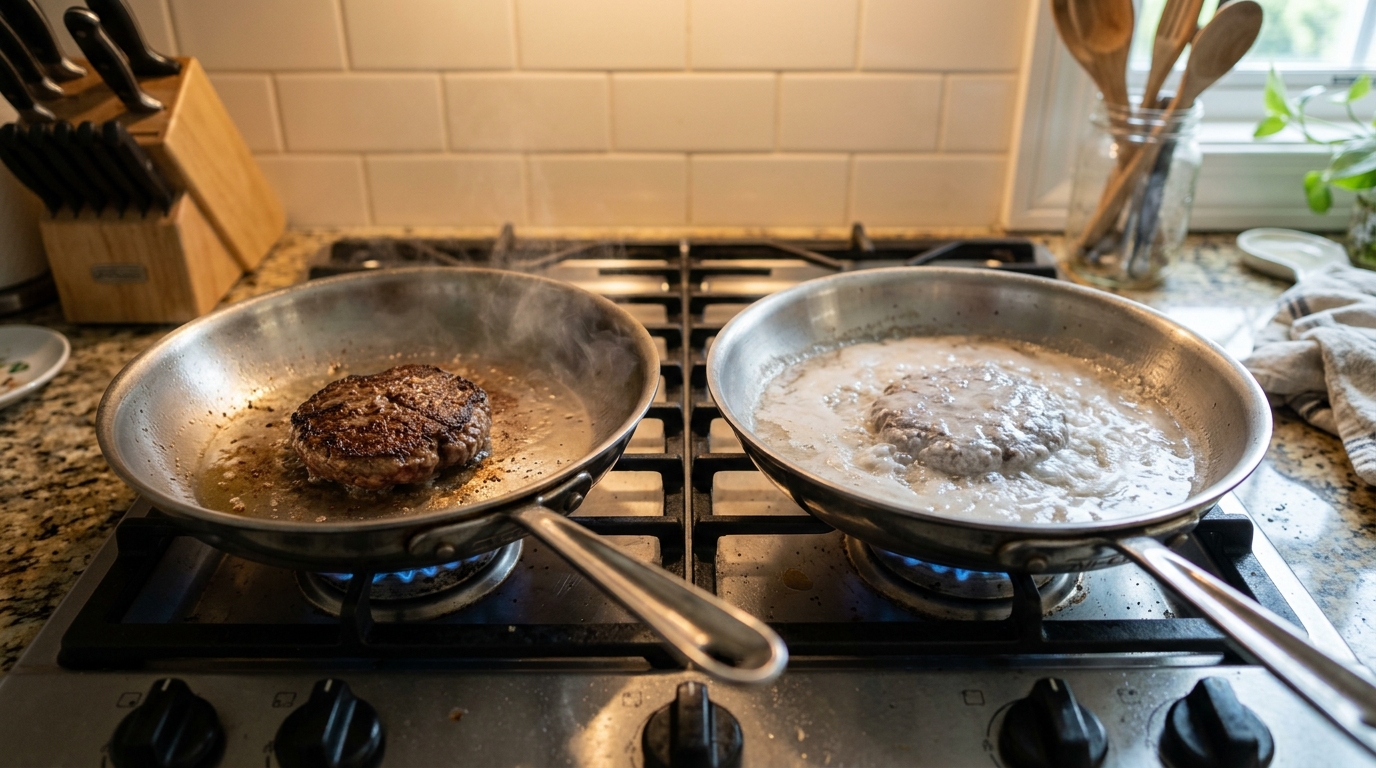
Notice the pan moisture: pasture-raised meat browns quickly, while water-chilled supermarket cuts often steam in pooled liquid.
Grass, Sun, and Soil: Where Real Meat Flavor Begins
Conventional supermarket beef comes from a streamlined industrial model. Cattle start on pasture before moving to commercial feedlots for their final months, eating high-starch rations of corn, soy, and distiller grains designed to pack on fat quickly. This system creates a very mild, predictable, buttery fat profile that most grocery shoppers consider standard.
Small-farm cattle spend their days moving across fields, eating a shifting salad of orchard grass, clover, alfalfa, and wild herbs. That diverse forage packs the animal’s fat with beta-carotene, often giving the fat caps a creamy, distinctly yellow tint rather than bright bleached white.
Take a bite of beef raised purely on pasture, and you will notice an earthy, mineral-rich richness that tastes like beef used to taste decades ago. The meat carries notes of the local soil and forage, giving every farm its own unique character.
“When cattle graze on varied pasture forage, the meat develops a complex mineral depth that heavy grain finishing simply cannot replicate.”
The Truth About Fat Marbling and Texture
Industrial feedlots excel at producing dense flecks of intramuscular fat known as marbling. That heavy grain diet forces rapid fat deposits between muscle fibers, making conventional choice and prime cuts extremely forgiving if overcooked on a weeknight.
Pasture-raised animals stay active. They walk hills, graze slopes, and build denser muscle fibers with leaner marbling. While the fat cap on the edge of the cut may be thick and flavorful, the interior of the meat demands a gentler touch in the kitchen to keep its natural juices locked inside.
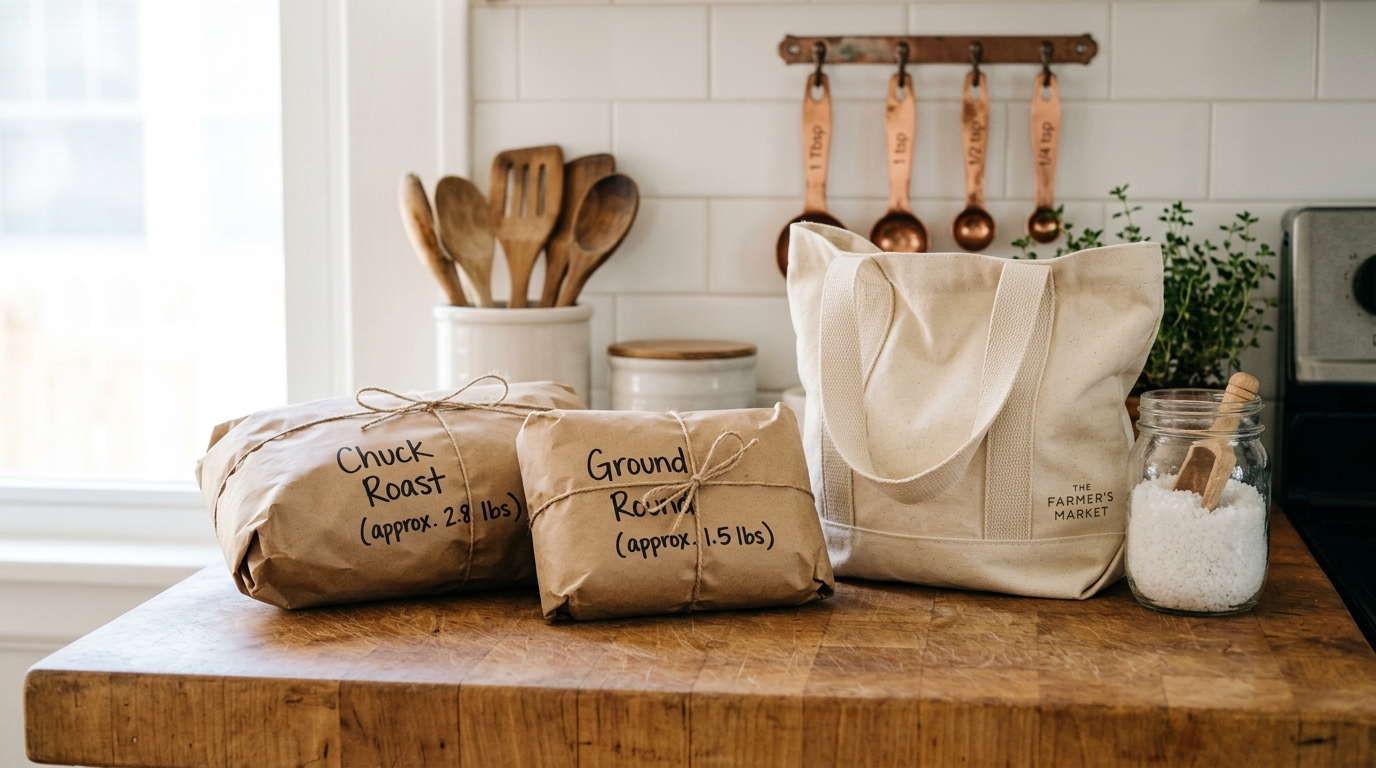
Stocking up on freezer-wrapped cuts directly from local growers saves money and keeps your weeknight dinners grounded.
Freezer Math: The Real Economics of Buying Direct
Sticker shock at the farmers’ market is real when you compare individual packages of pasture steaks to bulk supermarket club packs. When a small grower charges twelve to fourteen dollars a pound for ground beef, it feels expensive up front. But looking at the total yield and purchasing options paints a very different picture.
- Hanging Weight vs. Take-Home Yield: When you buy a quarter or half cow, you pay based on hanging weight (the carcass after dressing). Expect to bring home about sixty to sixty-five percent of that weight in usable, wrapped cuts once bone and trim are removed.
- Freezer Space Rules: A good rule of thumb is one cubic foot of freezer space for every thirty-five to forty pounds of wrapped meat. A small seven-cubic-foot chest freezer easily holds a quarter cow with room to spare.
- Balanced Cut Distribution: A direct farm share provides a balanced mix of ground meat, slow-cooking roasts, soup bones, and premium steaks, bringing your average per-pound cost across all cuts down significantly.
When you account for the water lost in supermarket packages and the premium quality of farm-cut roasts and steaks, buying bulk shares directly from a local grower often rivals standard grocery prices pound for pound.
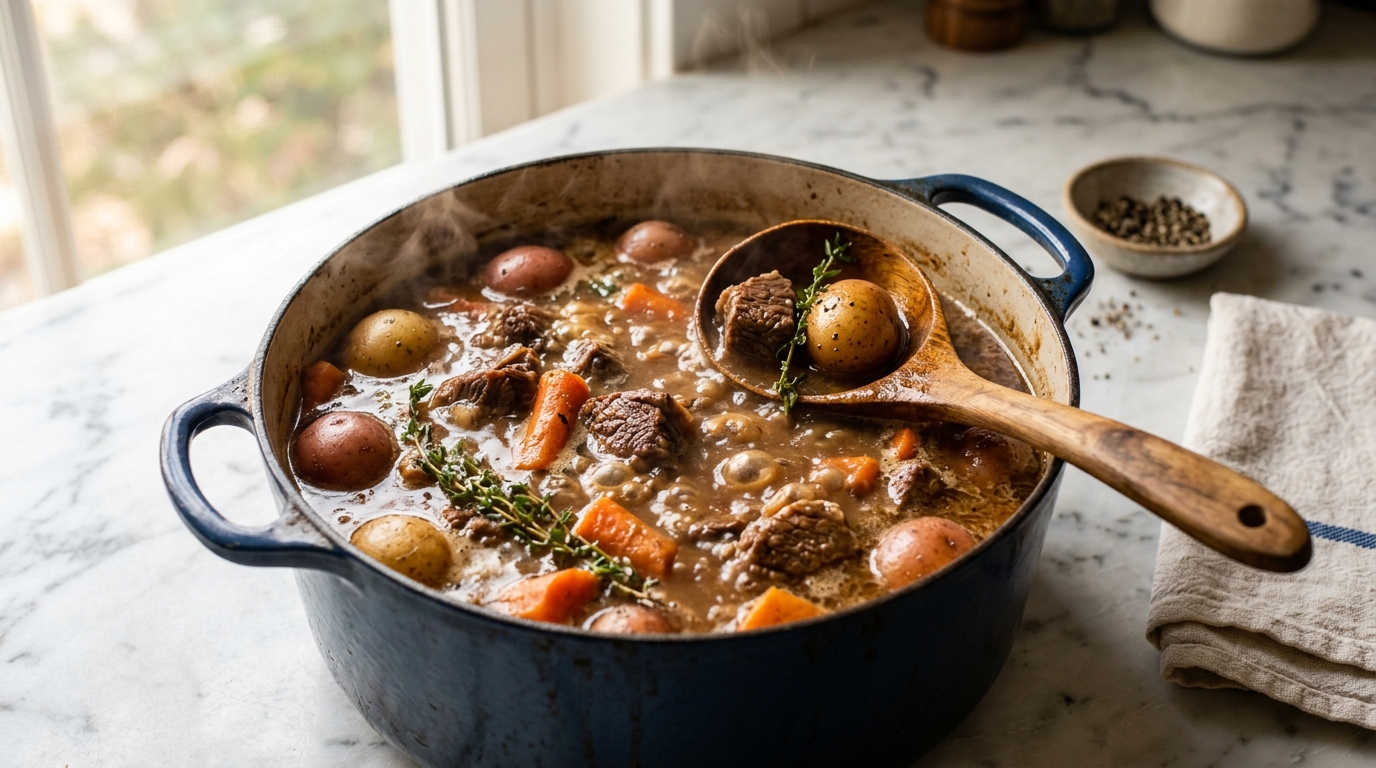
Long, slow braises unlock the tender, rich character of grass-fed chuck and bone-in stew cuts.
Everyday Kitchen Rules for Cooking Farm-Raised Cuts
Making the switch to pasture-raised beef requires minor adjustments at the cutting board and the stove. Since the meat is naturally leaner and less diluted by water, simple cooking habits make a dramatic difference on the dinner plate.
1. Bring the Meat to Room Temperature
Cold, dense beef muscle tenses up when dropped onto hot metal. Take your steaks or roasts out of the refrigerator thirty to forty minutes before cooking. Letting the chill lift ensures the interior warms evenly without burning the exterior crust.
2. Lower Your Cooking Heat
High, aggressive burner heat dries out lean grass-fed fibers before the center reaches temperature. Sear quickly in a heavy skillet to develop color, then drop the burner to medium-low or slide the pan into a warm oven to finish cooking gently.
3. Use Good Fats and Simple Seasonings
Because pasture-raised cuts are lean, coating them with a splash of olive oil, grass-fed butter, or tallow before seasoning helps lock in surface moisture. Keep seasonings straightforward with coarse sea salt, freshly cracked black pepper, and crushed garlic so the natural pasture notes stay front and center.
4. Braise Low and Slow for Rich Stews
Cuts like chuck, brisket, and shank shine when simmered gently in a heavy Dutch oven. Use rich homemade beef bone broth, a splash of raw apple cider vinegar, fresh thyme, and aromatic root vegetables. The connective tissue melts into gelatin, creating a thick, spoon-coating sauce without any artificial thickeners.
Making the Choice for Your Family’s Kitchen
Deciding between farm-raised beef vs store-bought beef does not have to be an all-or-nothing household rule. Many practical home cooks keep their freezers stocked with bulk ground beef and whole roasts from a trusted nearby farm, while relying on the supermarket for quick weeknight staples when schedules get tight.
Knowing where your food comes from, how the animals were tended, and how those factors change the chemistry of your cooking turns an ordinary dinner into something truly nourishing. Pay attention to how the meat behaves in your pan, adjust your flame, and enjoy the honest, deep flavor of real pasture on your table.

Emma D. is the creator, administrator, and voice behind Forum Sever. With a deep-rooted passion for vintage charm and practical living, Emma shares thoughtful homemaking guides, creative DIY projects, heirloom gardening advice, and stories celebrating everyday nostalgia.
Whether reviving timeless family recipes, propagating backyard perennials, or transforming thrifted finds into cozy home centerpieces, her goal is simple: helping readers cultivate a warm, intentional, and handcrafted life. When she isn’t managing the community at Forum Sever, you’ll likely find her in the garden with dirt on her hands, a notebook by her side, and a warm cup of herbal tea nearby.