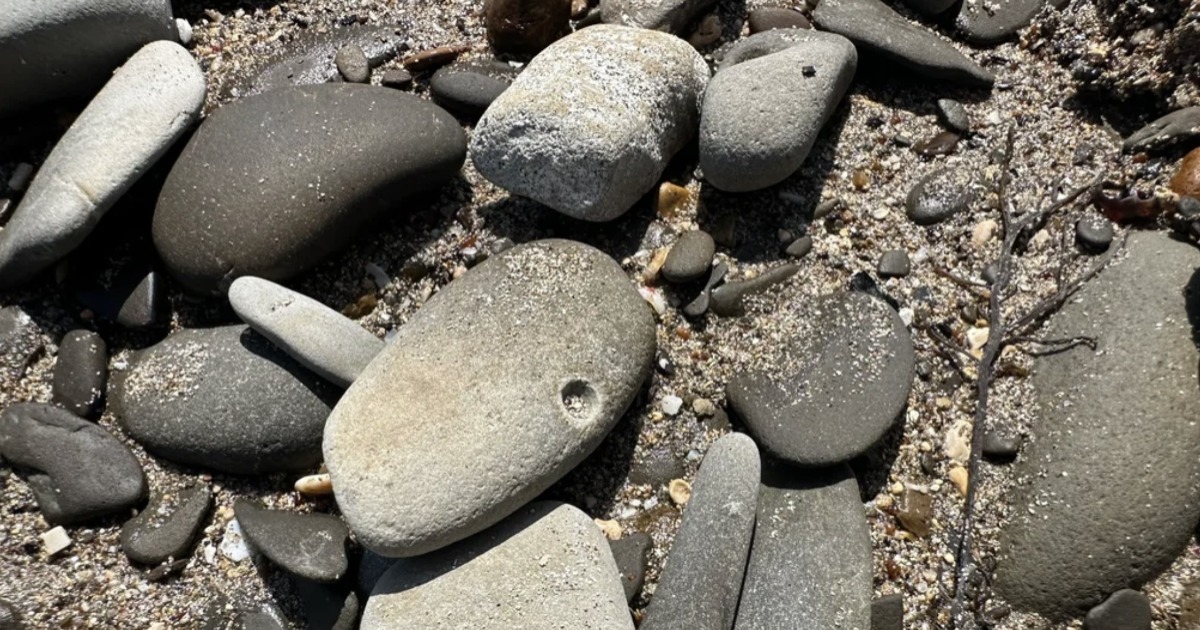
There is a quiet thrill in walking along the shoreline on a crisp morning, boots crunching against damp gravel while the salty breeze clears your mind. You look down into the wet shingle, and a peculiar shape catches your eye. It is a smooth, rounded beach pebble with a clean, round window running straight through its center.
Pick it up, hold it to the horizon, and you are holding one of the coast’s most intriguing treasures. Known across centuries as witch stones, adder stones, or hag stones, these natural curiosities look so neat you might swear someone took a mechanical drill bit to the rock. Yet the real story behind how they form is far more fascinating than anything made in a workshop.

Finding a holed stone along the shoreline feels like uncovering a tiny coastal secret shaped by decades of rolling tides.
What Is a Hag Stone?
At its simplest, a hag stone is any rock or pebble that features a naturally occurring hole bored all the way through from one side to the other. You will find them on pebbled coastlines, rocky shorelines, and occasionally along fast-moving riverbeds throughout the world.
While moving water and tumbling grit can grind holes into stones over long stretches of time, many of the neatest, most circular holes found along ocean shores begin with a humble marine creature: the piddock clam. These remarkable bivalves turn solid coastal stone into their private sanctuaries, kickstarting a natural crafting cycle that takes decades to finish.
Old coastal lore says that water cannot rot a true hag stone, and iron cannot break its charm. In reality, it is the patient dance between biology and geology that gives these pebbles their lasting magic.
The Surprising Little Engineers: How Piddock Clams Bore Rock
Piddocks (members of the bivalve mollusk family Pholadidae) are master stone masons of the intertidal zone. Unlike common mussels or oysters that anchor themselves to the outside of a rock face, piddocks make their homes deep inside solid stone, chalk, shale, and stiff clay.
When a young piddock settles on a soft rock bed below the tide line, it begins an astonishing excavation project. The front edge of its shell features rough, file-like ridges that function just like a rasp. Using a strong, fleshy muscular foot as an anchor, the clam rotates back and forth in a steady, grinding rhythm.
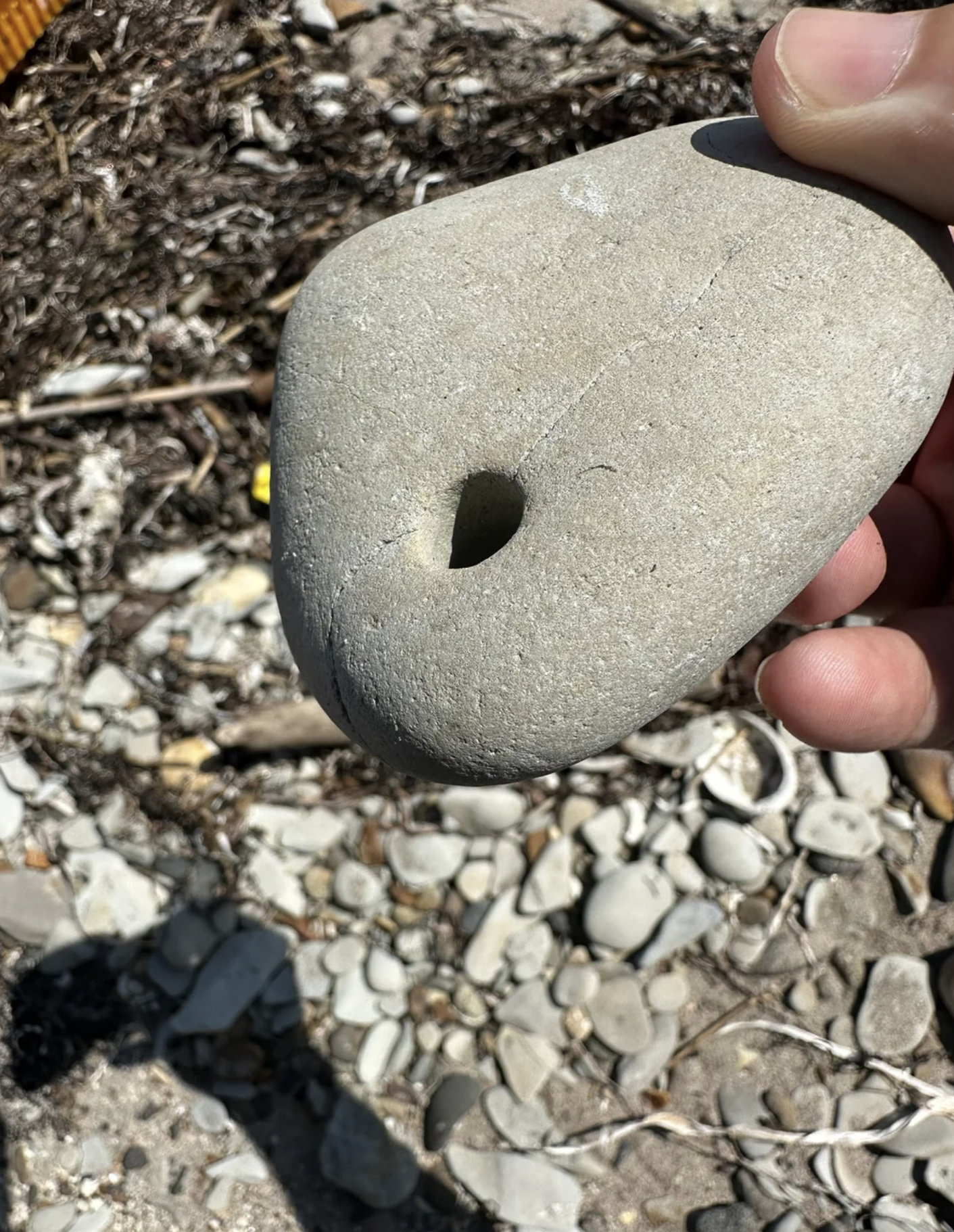
A water-smoothed beach pebble displaying the distinctive teardrop entry bore carved by a coastal piddock clam.
Millimeter by millimeter, the clam grinds away the mineral surface. As the animal grows larger inside its safe stone tunnel, it widens the inner chamber, creating a snug home with a narrower opening to the sea. Piddocks even have a hidden trick: many species, including the common piddock (Pholas dactylus), produce a soft, luminous green bioluminescence, glowing gently inside their dark stone galleries.
The Tumbling Journey: How Rough Burrows Become Smooth Stones
The clam lives out its lifespan inside that cozy stone pocket, pulling plankton through its siphon. Once the clam dies, the vacant burrow remains behind in the rocky reef or coastal cliff face. That is when the second phase of crafting begins.
Winter storms batter the coast, sending waves crashing against the honeycombed cliffs. Weakened by dozens of old clam burrows, chunks of shale, limestone, or sandstone break free and tumble down into the surf. Trapped in the churning ocean washing machine, coarse sand and smaller pebbles wash through the empty hollows.
Decades of rhythmic wave action grind away the jagged exterior edges. As the rock wears thinner and thinner from both sides, the blind clam burrow eventually breaks through the opposing wall. The rough tunnel becomes a smooth, rounded hole, and the heavy boulder shrinks into a palm-sized pebble ready for beachcombers to find.
How to Spot a Real Hag Stone (and Spot the Imposters)
Not every holed rock on the beach shares the same history. If you want to know whether your find came from a patient piddock clam or another natural process, inspect the shape closely under good light.
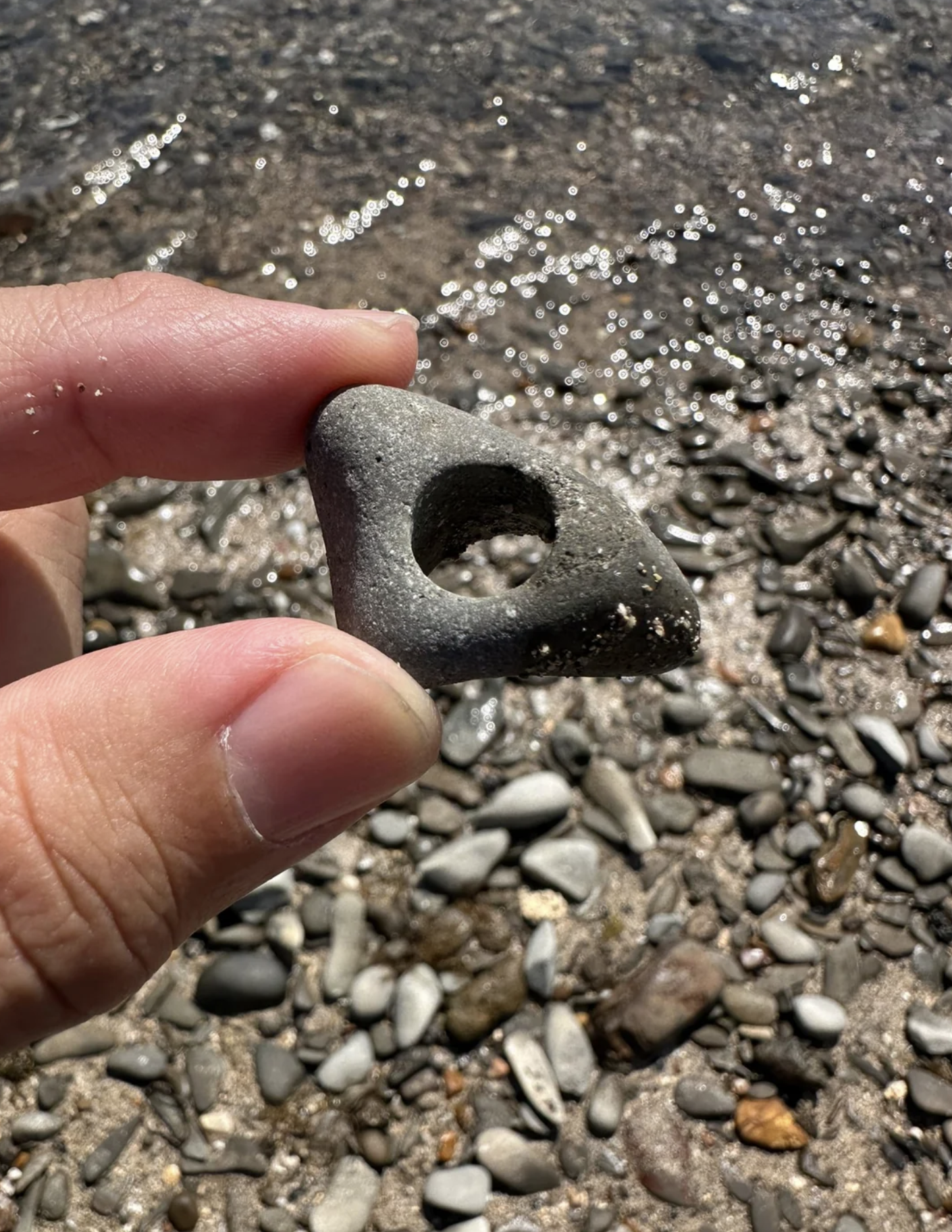
Examining the internal taper and organic ridging inside the burrow reveals a true natural origin rather than a modern drill hole.
- Hourglass or Conical Shape: Clam-made holes rarely run dead-straight like a pipe. They usually taper slightly toward one side or widen in the belly where the clam’s body rested.
- Microscopic Growth Ridges: If the stone hasn’t been completely buffed flat by coarse sand, you can often feel faint, concentric ridges along the inner wall left by the turning shell.
- Sponge vs. Clam Holes: Boring sea sponges (Cliona celata) also hollow out rock and old oyster shells, but they leave behind clusters of tiny, pinhead-sized Swiss cheese holes rather than one pronounced tunnel.
- Water Vortex Eddy Potholes: Stones shaped entirely by swirling water eddies tend to have wide, bowl-shaped indentations that may only break through on very thin edges.
- Man-Made Drill Holes: Modern industrial stones or masonry rubble show dead-parallel walls, sharp entry borders, and uniform tooling grooves. Nature keeps things softer and slightly asymmetrical.
Folklore, Fairy Sight, and Old Hearth Charms
Long before marine biologists identified piddock behavior, coastal communities had their own explanations for these strange, eye-like stones. Across the British Isles, Scandinavia, and Northern Europe, finding a naturally holed pebble was considered a stroke of immense good fortune.
Because running water was believed to hold pure, protective energy that dark spirits could not cross, any stone shaped and pierced by moving water inherited those same shielding powers. People gathered them to protect homes, barns, and coastal fishing boats.
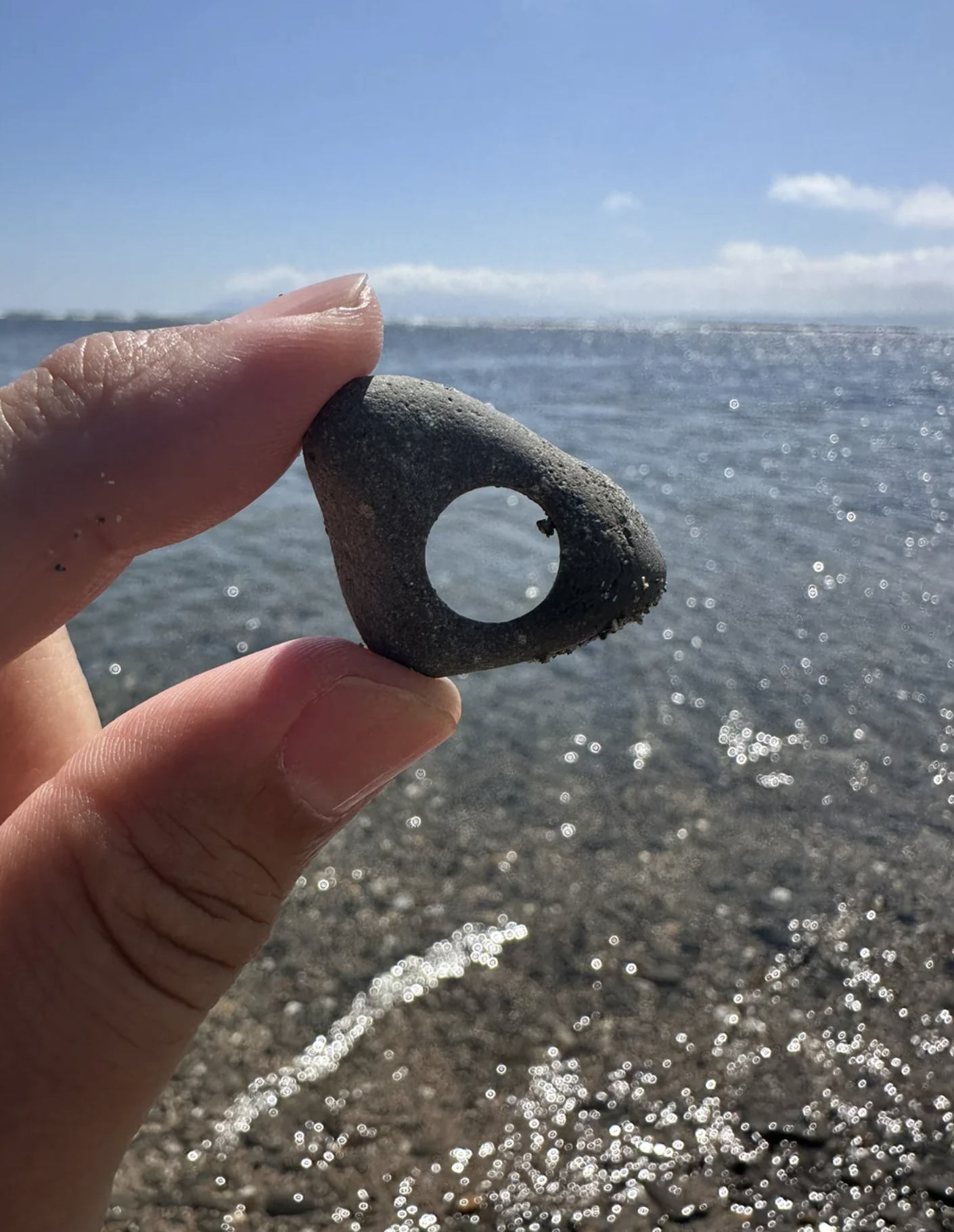
Holding a smooth hag stone toward the sparkling ocean horizon, honoring the old tradition of peering through the window of the sea.
In Scottish and English folklore, farmers hung these pebbles on iron keys inside stables to keep the “night-mare” from exhausting their horses before sunrise. Dairy maids hung them above butter churns and milk buckets to prevent milk from turning sour. Fishermen tied them with cord to their boats, trusting the stone to keep them safe through heavy squalls.
Perhaps the most famous belief involves second sight. Old tales whispered that closing one eye and peering through the stone’s opening allowed you to see through illusions, spot fairies hidden in the heather, and recognize true intentions in strangers.
Charming Ways to Style and Display Hag Stones at Home
Bringing a hag stone home is a lovely way to add grounded, organic texture to your living space. You do not need ornate displays; these stones shine best when styled with simple, natural materials.
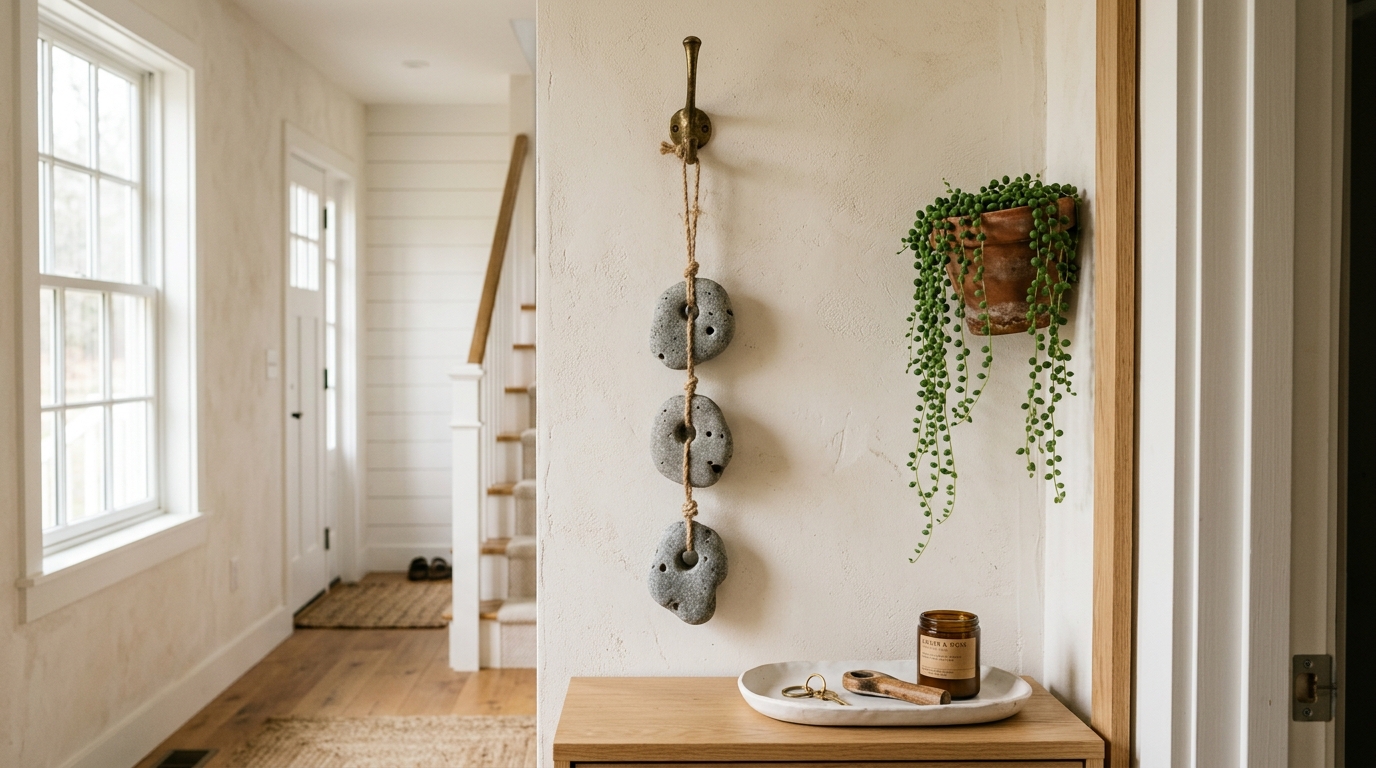
Strung on simple jute cord, beach-found stones make understated wall accents that bring coastal memories indoors.
Here are a few tasteful, cozy ways to incorporate them into your daily surroundings:
- Entryway Door Talisman: Thread a piece of raw jute twine or braided hemp cord through the hole and tie it to your front door handle or a brass wall peg in the foyer as a nod to traditional welcoming charms.
- Kitchen Windowsill Vignette: Rest two or three smooth stones beside a potted rosemary plant or small terracotta herb planter where the afternoon light can shine through the openings.
- Tactile Reading Weight: Keep a smooth, palm-sized stone on your bedside table or study desk to hold down the pages of your favorite garden journal or recipe notebook.
- Garden Wind Mobile: String several small holed stones together along untreated cotton cord, alternating with small pieces of driftwood, and hang them from a patio branch where they can sway gently in the breeze.

A sunny kitchen windowsill makes an easy resting spot for beach finds alongside fresh culinary herbs.
Ethical Beachcombing: Shoreline Etiquette
Part of the joy of beachcombing is preserving the coast for wildlife and fellow walkers. When hunting for stones along your favorite shore, keep a few respectful habits in mind to protect fragile habitats.
Always inspect the stone before tucking it into your pocket. If the burrow is still home to a living anemone, small crab, or marine worm, gently return it to a sheltered tide pool. Living tide pool ecosystems depend on these crevices for survival during low tide.

Simple crafts with raw linen thread let you turn a favorite beach find into a soothing daily bookmark or pocket keepsake.
Be mindful of local coastal regulations. Some heritage beaches and protected nature reserves legally restrict the removal of shingle to prevent coastal erosion and protect nesting shorebirds. Taking one or two modest keepsakes from common public beaches is wonderful, but leaving plenty behind ensures the shore keeps its wild, natural beauty.
A Small Piece of Coastal Wonder
Whether you treasure them for their rich folklore, display them on a sunny windowsill, or simply admire the quiet diligence of the piddock clam, finding hag stones reminds us of nature’s slow artistry. The next time you walk the shore at low tide, cast your eyes down toward the wet gravel. You might just spot a small stone window waiting to tell you its story.

Emma D. is the creator, administrator, and voice behind Forum Sever. With a deep-rooted passion for vintage charm and practical living, Emma shares thoughtful homemaking guides, creative DIY projects, heirloom gardening advice, and stories celebrating everyday nostalgia.
Whether reviving timeless family recipes, propagating backyard perennials, or transforming thrifted finds into cozy home centerpieces, her goal is simple: helping readers cultivate a warm, intentional, and handcrafted life. When she isn’t managing the community at Forum Sever, you’ll likely find her in the garden with dirt on her hands, a notebook by her side, and a warm cup of herbal tea nearby.